Slowplaying Too Often
Slowplaying too often is a value leak that lets opponents draw out cheaply. Learn when to trap, when to bet big hands fast, and how to spot the mistake.
On this page · 6 sections
Slowplaying is one of the most satisfying moves in poker when it works, and one of the most expensive habits when it becomes a default. Players fall in love with the trap: check the monster, let the opponent hang themselves, win a huge pot. The reality is that the trap works only under specific conditions, and most of the time betting your strong hands fast makes more money. Slowplaying too often is a value leak dressed up as sophistication, and it costs you both in missed bets and in giving opponents free cards to draw out.
Why Fast Play Usually Wins
Betting a strong hand does two profitable things at once. It builds the pot while you are ahead, and it charges opponents who have draws or worse made hands. A big hand that never gets bet cannot win a big pot, that is the core problem with over-slowplaying. Every checked street with a monster is a street of value you may never get back, because the board can change and your opponent’s hand can dry up.
There is also a protection cost. On coordinated boards, checking a strong-but-vulnerable hand invites free cards that complete flushes and straights. The pot you were trying to grow gets handed to a rivered draw instead. Fast play collects money and denies equity in the same motion.
The Three Conditions for a Good Slowplay
Slowplaying is correct only when all three of these are true at once:
- Your hand is very strong and hard to outdraw. Top set or better on a dry board, not a vulnerable one pair.
- The board is dry. Few turn cards can give your opponent a better hand or a strong draw.
- Your opponent will bet if you check. There is no point trapping a passive player who will simply check behind, you have to have someone willing to fire.
Miss any one of these and you should bet. Against a calling station who will pay you off anyway, there is no reason to slowplay, just bet and let them call.
A Worked Example
You have pocket aces on a flop of Ks 9h 4c, a fairly dry board, and you flopped top set of, wait, you have an overpair, aces, not a set here. Let us make it cleaner: you hold Kd Ks for top set on Ks 9h 4c. This is the textbook slowplay candidate, monster hand, dry board, and if your opponent is aggressive you can check to induce a bluff.
Now change one card. The flop is Ks 9s 8s, three spades. Your top set is suddenly vulnerable to a made flush and to spade draws, and straight cards loom on the turn. Slowplaying here is a mistake, you must bet to charge the draws and protect your equity. Same hand, completely different play, dictated by board texture. And if instead of top set you only have an overpair like queens on that wet board, slowplaying is even worse, your hand is not strong enough to give free cards.
Slowplaying Against the Wrong Opponent
The single most common slowplay error is trapping a player who was never going to bet for you. If your opponent is passive, checking your monster just gives them a free card and forfeits a street of value, they were happy to check behind and see another card. Against passive and station-type players, the correct play with a big hand is almost always to bet, and to bet a size they will call. Save the check-trap for aggressive opponents who reliably barrel when you show weakness.
Common Slowplaying Mistakes
- Slowplaying on wet boards, handing free cards to flush and straight draws.
- Trapping passive opponents who will not bet, costing you a street of value.
- Slowplaying vulnerable hands like one pair or a weak overpair that are not strong enough to give free cards.
- Checking multiple streets with a monster until the pot is too small to matter.
A Checklist Before You Trap
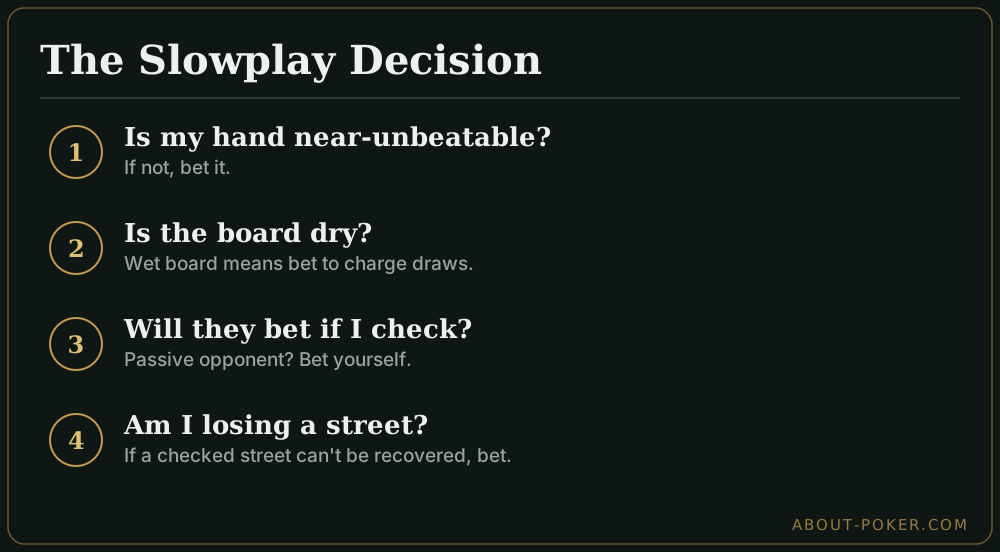
Before you check a big hand, run through this quick test:
- Is my hand nearly unbeatable right now? If not, bet.
- Is the board dry? If it is wet, bet to charge draws.
- Will my opponent bet if I check? If they are passive, bet yourself.
- Am I giving up a street I cannot recover? If yes, lean toward betting.
If you cannot answer yes to the first three, do not slowplay. Bet your strong hands, size them well, and let opponents pay you. Good bet sizing with a fast-played monster nearly always beats the elegant trap that wins a small pot or, worse, loses a big one to a free card.
Frequently asked
When should you slowplay in poker?
Slowplay only when three things line up: your hand is very strong and unlikely to be outdrawn, the board is dry so few turn cards hurt you, and your opponent is aggressive enough to bet if you check. If any of those is missing, especially on wet boards or against passive players, you should bet your strong hands rather than trap.
Why is slowplaying a mistake?
Slowplaying too often costs you value in two ways. On wet boards it gives opponents free cards to outdraw you cheaply, and against passive players who will not bet for you, checking simply loses a street of value you could have collected. Both add up over time and cap your win rate with your biggest hands.
Should you slowplay a set?
Usually not on a coordinated board. A set is strong but vulnerable to flushes and straights, so on wet boards you should bet to charge draws and build the pot. Slowplaying a set is only reasonable on very dry boards against an aggressive opponent who will bet into you if you check.
What is the difference between fast play and slow play?
Fast play means betting and raising your strong hands right away to build the pot and charge draws. Slow play means checking or just calling to disguise your strength and induce action later. Winning players fast play most of their big hands and reserve slowplaying for a narrow set of ideal conditions.