JJ vs AK: Preflop Odds & Equity
Pocket jacks vs ace-king is the classic tournament race — jacks are a slight ~56/44 favorite. Here are the exact equities and how to play the flip.
On this page · 7 sections
You look down at J♠ J♥, the chips fly in, and villain turns over A♣ K♦. Take the good news first: you are the favorite, about 56/44, and will win a little more than half the time. This is the classic tournament race, and it is the hand that ends more deep runs than almost any other. The whole flip comes down to whether ace-king pairs up.
The headline equity
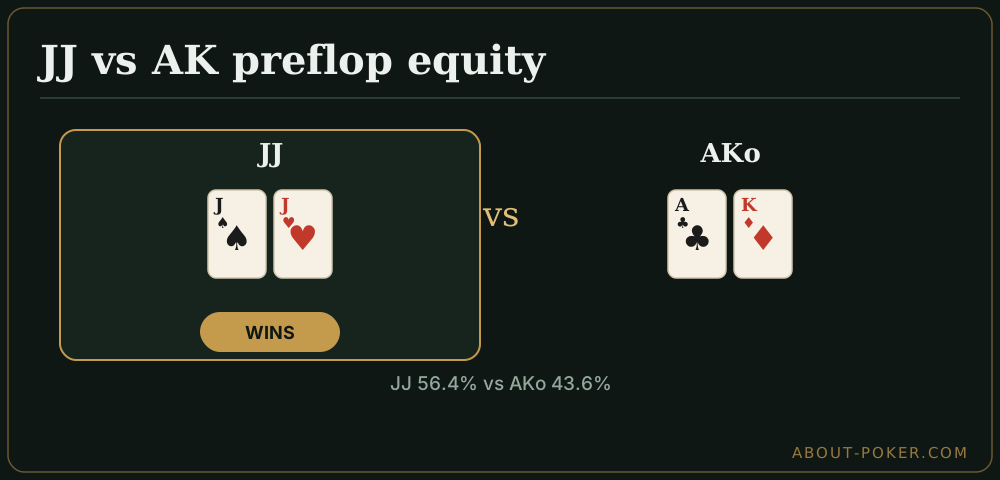
Every figure comes from a full board run cross-checked against a Monte Carlo simulation:
| Matchup | JJ equity | AK equity |
|---|---|---|
| JJ vs AKo (offsuit) | 56.4% | 43.6% |
| JJ vs AKs (suited) | ~54% | ~46% |
Jacks win a bit more than half the time. Suited ace-king closes the gap with extra flush outs, but the jacks stay ahead in every version.
Why jacks are the favorite
Jacks are a made pair; ace-king is not. To win, ace-king must improve. To lose, the jacks just need the board to miss the big cards. That head start is why a middling pair is favored over two premium overcards.
What ace-king is chasing:
- Pair an ace: three aces remain.
- Pair a king: three kings remain.
- That’s six overcard outs, plus straights and flushes.
Six outs across five cards has ace-king pairing about half the time — just short of overcoming the jacks’ lead. The jacks also flop a set about 11.8% of the time, protecting them on the boards where ace-king does pair.
The real problem: overcards flop constantly
Being 56% preflop is comforting; playing jacks postflop is not. At least one overcard to the jacks — a queen, king, or ace — flops roughly 57% of the time. So more than half the flops bring a card that could have paired ace-king or improved a bigger pair, and you are guessing whether your overpair is still good.
That awkwardness is why jacks are famous for being hard. They are too strong to fold preflop and too vulnerable to feel safe after the flop.
A worked example
You call an all-in with J♠ J♥ for a 100 big blind effective pot against A♣ K♦. You’re 56.4% — about 56 big blinds of equity.
Flop Q♥ 7♠ 2♦: no ace or king paired, but that queen is an overcard. Your jacks are still ahead against unpaired ace-king — you’re around 88%, because ace-king now needs an ace or king on two cards. Flip the flop to A♦ 9♣ 4♥ and it inverts: ace-king pairs top pair, jumps to about 87%, and your jacks are down to two remaining jacks. That single flop card decides the race, which is why the money you make with jacks is mostly made before the flop — through fold equity.
How stack depth changes the decision
The raw 56/44 edge is fixed, but the correct play with jacks against a possible AK swings with the stack depth, because deeper stacks mean more chances to be outplayed on the awkward flops. Short — roughly 15 to 25bb — jacks are close to a pure shove or call: there is little postflop poker left, so you cash in the 56% edge directly and let the cards run. This is where jacks are easiest, because the overcard problem barely gets to bite.
At medium depth, around 40 to 60bb, you gain real fold equity by shoving or 3-betting, and picking up the pot without a race is strictly better than flipping. This is the sweet spot where the money is made before the flop rather than in it. Deep — 100bb and beyond — jacks become genuinely tricky: stacking off preflop risks running into the three bigger pairs (QQ, KK, AA) that crush you, and playing a big pot postflop means navigating the roughly 57% of flops that bring an overcard. Deep-stacked, jacks often prefer a single raise and careful pot control over a preflop all-in. The rule: the shallower you are, the more you commit jacks on their equity; the deeper you are, the more you play them cautiously and lean on fold equity.
How JJ stacks up against the rest of the range
It helps to place jacks in the full pecking order rather than just against AK. Against the three pairs above them, jacks are a big underdog — roughly a 4-to-1 dog to QQ, KK, or AA, winning only around 19% as the smaller pair chasing a set. Against AK they are the 56/44 favorite covered here. Against two undercards or a dominated hand like a smaller pair, they are a strong 80%-plus favorite. That spread is exactly why jacks feel awkward: when the chips go in against a tight range, you are usually either flipping with AK or crushed by a bigger pair, and it is hard to tell which. The wider the opponent’s range, the better jacks look, because more of that range is the hands jacks dominate; the tighter the range, the more jacks are stuck between a coinflip and a disaster.
From equity to a decision
At 56/44, the surrounding math beats the flip itself:
| Situation | Read | Line |
|---|---|---|
| Call all-in with JJ vs AK | ~56% | Fine on equity; weigh tournament life |
| Shove JJ and pick up folds | — | Best case — win without racing |
| Deep stacks, big overcard flop | — | Pot control; your overpair may be behind |
Lock in the anchor — JJ is a ~56/44 favorite over AKo, ~54/46 vs AKs — and jacks stop being scary. You are ahead of ace-king; you are behind only the three pairs above you. Since the flip is nearly even, the profit comes from fold equity when you apply pressure and pot odds when you call. Turn that into a real line with preflop all-in odds, and work through the poker odds & math hub.
Frequently asked
What are the odds of JJ vs AK preflop?
Pocket jacks win about 56% of the time against offsuit ace-king, with ace-king around 44%. Against suited ace-king it is roughly 54/46. Jacks are the slight favorite in this classic race.
Is calling all in with JJ against AK correct?
As a 56% favorite, calling is fine on pure equity. In tournaments, though, the risk of busting can make a fold or a shove of your own preferable when stacks are deep enough that you have fold equity.
Why are pocket jacks considered a tricky hand?
Jacks are strong preflop but land in an awkward middle: they beat most hands yet are only a coin flip against ace-king and a big dog to the three pairs above them. Overcards to the jacks appear on most flops.
How often does an overcard flop against jacks?
At least one card higher than a jack (Q, K, or A) appears on the flop roughly 57% of the time. That is why jacks are uncomfortable to play postflop even when they start ahead of ace-king.