PLO Pot Control
Pot control keeps you out of stack-off spots with vulnerable hands. Learn when to check, size down, and cap the pot in PLO to avoid paying off the nuts.
On this page · 6 sections
Pot control is the quiet skill that keeps PLO winners out of disaster. The game is full of hands that look strong — top set, a good two pair, a non-nut flush — but are one card or one bad opponent away from being second best. Because pot-limit Omaha equities run close and the second-best hand is so common, the ability to keep pots small with vulnerable holdings is worth more than any flashy bluff. Here is how to do it.
Why pot control matters in PLO
In Hold’em, top pair top kicker is often willing to stack off. In PLO that same instinct is a leak, because four-card hands mean your opponent connects more ways and the nuts change fast. A hand that is 55 percent now can be 35 percent after a turn card. Pot control means recognizing hands that are good enough to win a medium pot but not good enough to play a stack-off pot — and keeping the pot in the medium range on purpose.
The cost of getting this wrong is asymmetric. When you build a huge pot with a vulnerable hand, you lose a stack the times you are behind and win only a normal pot the times you are ahead. Controlling the pot flattens that curve. For the broader postflop framework, see our PLO postflop strategy guide.
The pot-limit format is your friend
A structural feature helps you here. Because no bet can exceed the current pot, the size of the pot on the flop caps the size of every future bet. If you check the flop, the turn bet can only be as large as a smaller pot, and the river bet smaller still. Simply declining to bet or raise early mechanically limits how much money can go in later. This is unique to pot-limit games, and it is a free pot-control tool. The mechanics are laid out in pot-limit betting explained.
When to control the pot
Reach for pot control when three things are true: your hand is good but not the nuts, the board or opponent can plausibly beat you, and building the pot mainly gets called by better. Typical candidates include middle or bottom set on a wet board, a non-nut flush, top two pair on a coordinated board, and one-pair-plus-weak-draw hands. In all of these, a large bet gets folds from worse and calls or raises from better — the worst possible split.
Conversely, do not pot-control the nuts or a monster draw. Those hands want a big pot. Pot control is specifically for the middling, vulnerable region of your range.
A worked example
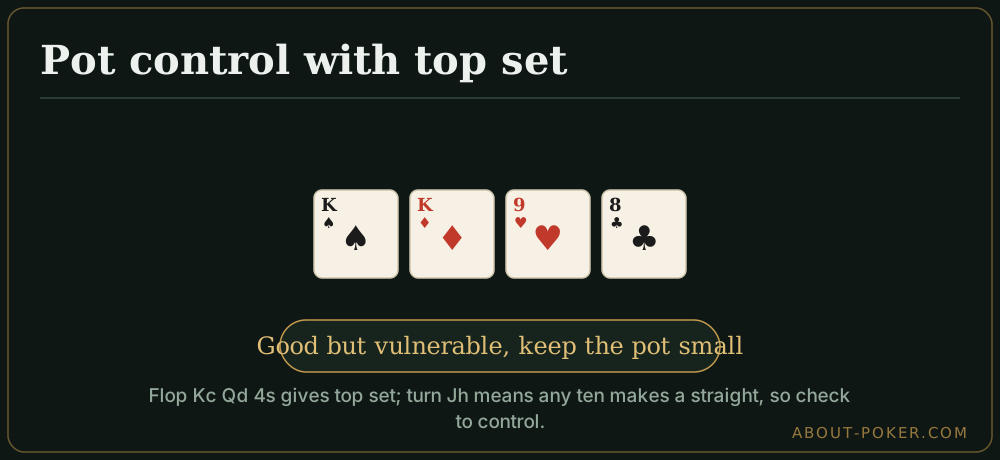
You hold Ks- Kd-9h-8c and the flop comes Kc-Qd-4s, giving you top set. Strong, but this is PLO: an opponent could easily have Q-J-T-9 for a wrap plus overpair, or A-J-T-x drawing to Broadway, or two pair with a redraw. You bet the flop for value and get called. The turn is the Jh — now any ten completes a straight and the board is soaking wet.
Rather than fire a second pot-sized barrel and commit toward a stack-off, you can check to control the pot. Your top set still has equity and can improve to a full house, but blasting into this board only folds worse and stacks you against the made straight. Checking keeps the pot small, lets you see a cheap river, and caps how much you lose if you are already beaten. If the river bricks and pairs the board, your full house redraw may even let you value bet safely.
Sizing as a pot-control lever
Pot control is not only checking. You can also size down. A half-pot bet with a vulnerable value hand keeps the pot smaller than a full pot-sized bet while still charging draws and getting thin value. Smaller sizing tells a different story and keeps you from committing your stack by accident. Use it when you want to bet for protection and value but do not want to play for stacks.
Balance matters against strong opponents: if you only ever check your medium hands, observant players will barrel you off them. Mix in occasional checks with strong hands and occasional bets with medium ones so your checking range is not purely capped. The full pillar of Omaha and PLO strategy ties these ideas together across formats.
Pot control checklist
Before you fire, ask four questions. First, is my hand the nuts or a monster draw — if so, build the pot instead. Second, is my hand good but vulnerable to the many draws PLO offers. Third, does betting mostly fold worse and get called by better. Fourth, can I check or size down to keep the pot in a range I am comfortable losing. When your hand lives in the vulnerable middle, choose the smaller pot. Discipline here saves more stacks than any bluff wins.
Frequently asked
What is pot control in PLO?
Pot control means keeping the pot small with hands that are good but not the nuts, so you do not stack off as a favorite to lose. In PLO you do this by checking back, sizing down, and declining to build a pot you cannot win at showdown.
Why is pot control more important in PLO than Hold'em?
Because equities run close and the second-best hand is common, one-pair and non-nut hands lose big pots often in PLO. Controlling the pot limits how much you lose when your good-not-great hand is actually behind.
Does the pot-limit format help with pot control?
Yes. Because bets cannot exceed the size of the pot, checking early keeps future bets smaller. A checked flop caps how large the turn and river bets can grow, which is a built-in pot-control tool unique to pot-limit games.