Seven-Card Stud Fifth Street Play
Fifth street is where the bets double in seven-card stud. Learn commitment math, when to bet big, when to fold draws, and how to read three-street boards.
On this page · 6 sections
Fifth street is the money street in seven-card stud. In fixed-limit games the bet size doubles here, so a single call costs as much as two earlier streets combined. You now hold five of your seven cards, opponents show three up cards each, and the decisions you make define whether you’re playing for the whole pot. Loose fifth-street calls are among the most expensive leaks in the game. If you’re still learning the streets, review the seven-card stud rules before diving in.
The double-bet turning point
On third and fourth street, bets are at the small size. Starting on fifth street, they climb to the big-bet size and stay there through seventh street. That single change reshapes correct strategy: hands you could speculate with cheaply on fourth street now cost double to continue. The players who profit are the ones who tightened up before the bets grew, entering fifth street with either strong made hands or genuinely live draws. This discipline is central to sound seven-card stud strategy.
Reading three up cards per opponent
By fifth street every opponent shows three of their cards. That’s a lot of information. Two spades on one board plus a paired door on another tells you real stories. Ask: does anyone show a possible flush or straight coming? Does an open pair threaten trips or two pair? Your read on their up cards, combined with the dead cards that kill their draws, should drive whether you value bet, raise, or lay down.
Commitment math and pot odds
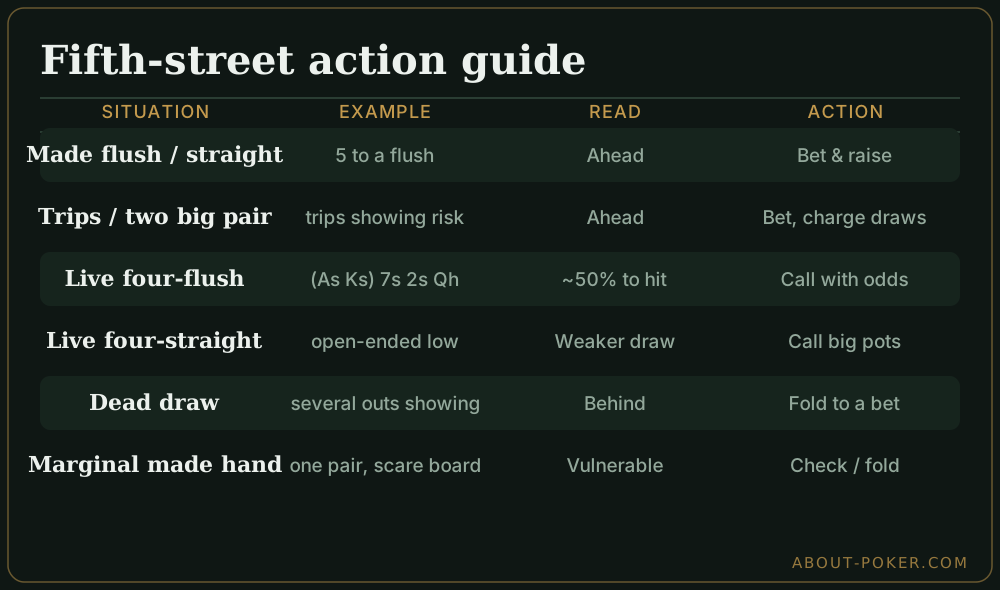
Fifth street is where pot commitment becomes real. If the pot holds, say, 10 big bets and it costs you 1 to call with a live draw, you only need to win about 1 time in 11 to break even on that call — and a live four-flush wins far more often than that. Conversely, betting a marginal made hand into a scare board can be a disaster when you can’t fold anyone out and you’re behind.
A live four-flush (four to a flush with two cards to come) completes roughly half the time by seventh street when the suit is fully live. A live four-straight (open-ended) is weaker but still often worth a big-bet call given a large pot. Dead draws — where several of your outs are showing elsewhere — should hit the muck. Cross-check specific numbers against the seven card stud odds page.
A worked fifth-street example
You hold (A♠ K♠) 7♠ 2♠ Q♥ — that’s four spades showing your draw is very much alive, plus two overcards. Scanning the boards, only one other spade is exposed, so eight or nine of your suit are still live. The pot has grown to about 9 big bets after an opponent showing an open pair of nines bets.
You are getting roughly 9-to-1 immediately, and your live four-flush completes about half the time over the next two cards. Even ignoring the extra equity from pairing an ace or king, calling is clearly correct — a fold here would be a large mistake. You call, planning to raise if you hit the flush and to reevaluate if you brick sixth street.
Betting your made hands for value
When you hold a strong made hand — trips, two big pair, or a completed flush or straight — fifth street is the moment to charge draws. Because the bet doubled, every call from a drawing hand now pays you at the higher rate, and every fold denies your opponent a cheap card. Do not slow-play strong hands into obvious draws on fifth street; the correct play is almost always to bet and raise, making draws pay the maximum. Slow-playing here typically costs you value and lets live draws in cheap.
Fifth-street decision checklist
- Is the pot big-bet size now? Yes on fifth — recalculate everything at the higher stake.
- What do their three up cards threaten? Flushes, straights, and open pairs all change your line.
- Is my draw live? Count exposed suit and connecting cards; fold dead draws to big bets.
- Am I committed? Large pots with reasonable hands often mean you’re calling down.
- Do I have a made hand? Bet and raise to charge draws — don’t slow-play into obvious outs.
Play fifth street tightly and aggressively — fold dead draws, call live ones with the right price, and bet your value hands hard — and you’ll capture the pots that matter when the stakes are highest.
Frequently asked
Why is fifth street important in seven-card stud?
Fifth street is the first street where bets are made at the big-bet size in fixed-limit stud, so the money roughly doubles. Because you now hold five of seven cards and are often near pot-committed, fifth street sets whether you're playing for the whole pot. Loose fifth-street calls are one of the most expensive leaks in the game.
When do bets double in seven-card stud?
In fixed-limit seven-card stud, bets are at the small-bet size on third and fourth street, then jump to the big-bet size on fifth, sixth, and seventh street. An exception on fourth street: if a player shows an open pair, betting may be at the big-bet size early. Fifth street is the reliable point where the stakes climb.
Should I chase a flush draw on fifth street?
Only if the draw is live and the pot odds justify it. With two cards to come, a live four-flush has roughly a 1-in-2 chance to complete by seventh street, but a dead flush draw with several of your suit exposed should usually be folded to a big bet. Count your live suit cards before calling.
What does it mean to be committed on fifth street?
Being committed means the pot has grown so large relative to the remaining bets that folding your reasonable hand would be a mistake, even against likely-best hands. Strong made hands and big live draws that call a fifth-street bet are frequently committed to see the river. Recognizing commitment stops you from folding correct calls or bluffing where you can't fold out anyone.