Multiway Bet Sizing
Multiway pots change everything about bet sizing. Learn why you bet bigger and bluff less with more players in, and how to size for value across two opponents.
On this page · 7 sections
Most bet-sizing advice assumes a heads-up pot — you versus one opponent. Add a second or third player and the math shifts underneath you. Multiway pots reward bigger value bets, punish loose bluffs, and demand more respect for the board, because with more ranges in play, someone is far more likely to have something real. Sizing multiway is a different game.
The Core Shift: More Players, More Real Hands
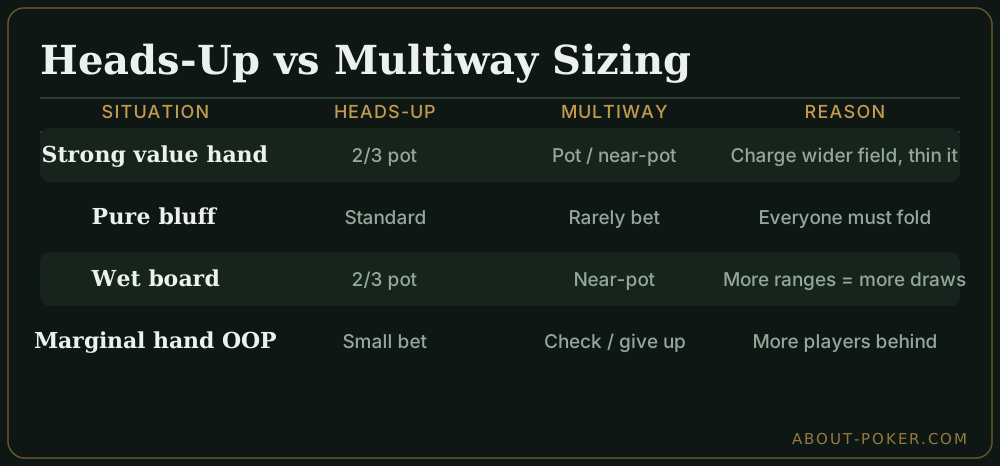
The governing fact of multiway pots is simple: every additional opponent is another range that could contain a strong hand. In a heads-up pot, your opponent misses the flop most of the time. In a three-way pot, the odds that at least one of them connected — pair, draw, or better — climb sharply. That single change drives every sizing adjustment: you value bet bigger, you bluff far less, and you respect aggression more. The strategic backbone here is covered in multiway pot strategy.
Bet Bigger for Value and Protection
When you do have a strong hand multiway, size up. Two reasons converge. First, value: with more players in, the range that continues against your bet is wider and stronger, so a bigger bet gets paid by more second-best hands. Second, protection: multiway boards are more likely to give someone a draw, and you need to charge those draws a real price. A bet that would be fine heads-up often has to grow multiway to deny equity to the several draws that multiple ranges contain. The underlying value-sizing logic — size to the hands you beat — still applies, just calibrated for a wider calling field; see value bet sizing.
Bluff Far Less
The flip side is that pure bluffs crater in value multiway. A bluff needs everyone to fold. Against one opponent that might happen half the time; against two, you need both to fold, and the combined probability collapses. If each player folds 60% of the time independently, your bluff succeeds only 36% of the time three-way instead of 60% heads-up. Multiway, you should be checking most of your air and betting a range that’s heavily weighted toward genuine value and strong semi-bluffs — hands that can improve and win at showdown even if called.
A Worked Example
You raise with A-A and get two callers — a three-way pot of $45. The flop comes Q-J-8 with two clubs, a wet board where at least one of two opponents can easily have a piece.
Heads-up, you might bet two-thirds pot here. Multiway, you size up to a near-pot bet of $40. The reasoning: with two ranges in, the chance that someone holds a queen, a straight draw, or a flush draw is high, and you must charge all of that equity while there’s more of it to charge. A smaller bet lets a flush draw call cheaply behind, and now you’re facing a second player too — a dangerous spot to give a free-rolling draw. The big bet folds out the marginal made hands and thins the field to at most one caller, which is exactly what your aces want: a big pot against a single opponent rather than a bloated multiway mess. If both call the pot-sized bet, you slow down and reassess, because two callers on a wet multiway board is a genuine warning.
Thin the Field, Then Simplify
A key multiway goal is field reduction. Aces, sets, and strong top pairs generally play best against one opponent, not two. A larger bet does the thinning for you, folding out the marginal hands that would have peeled cheaply and leaving you in a cleaner heads-up spot on the turn. This is why “bet big to isolate” is a multiway staple with strong-but-vulnerable hands. On wet textures the effect compounds — the same sizing-up logic from sizing on wet boards applies with extra force when multiple ranges each bring their own draws.
Position and Multiway Sizing
Position matters even more multiway because there are more players who can act after you. Out of position into two opponents, a check-and-give-up with marginal hands is often wiser than a bet that gets called or raised behind by someone who woke up with a hand. In position, you get to see how both opponents act before committing, which lets you size more confidently when they show weakness and shut down when they don’t.
A Multiway Sizing Checklist
- Value hands: size up (two-thirds pot to full pot) to charge wider calling ranges and thin the field.
- Bluffs: drastically reduce them — someone usually has enough to call.
- Wet boards multiway: size up hard; multiple ranges mean more draws to charge.
- Goal: thin the field to one opponent with strong-but-vulnerable hands.
- Two callers is a warning: slow down and re-evaluate on the turn.
- Respect aggression: a raise multiway is stronger on average than the same raise heads-up.
Multiway pots reward discipline: bet big when you’re ahead, bluff rarely, and remember that with more players in, “someone has it” is usually true.
Frequently asked
Should you bet bigger in multiway pots?
Often yes, especially for value and protection. With more players in, someone is more likely to have connected with the board, so you need a larger bet to charge draws and get value from the range that continues. But you also bet far less often as a bluff.
Why do you bluff less in multiway pots?
Every extra opponent is another player who might have a hand strong enough to call or raise. Your bluff needs everyone to fold to succeed, and the chance of that drops sharply with each additional player, so pure bluffs lose a lot of value multiway.
How does board texture affect multiway sizing?
It amplifies everything. On a wet board multiway, size up hard to protect against the many draws several ranges contain. On a dry board multiway you can still bet smaller for value, but be more cautious because someone is more likely to have hit.