Can You Talk About Your Hand
Can you talk about your hand in poker? Heads-up you can even bluff verbally, but in a multiway pot discussing live cards breaks the rules. What's allowed.
On this page · 7 sections
“Can I just tell the guy I’ve got aces to scare him off?” Sometimes yes, sometimes it’s a violation — it all hinges on how many players are in the pot and whether you’re telling the truth. Table talk is one of the trickiest etiquette-and-rules areas in poker. This guide sorts out what you can say, when you can say it, and the line between legal gamesmanship and a rules-breaking disclosure.
The short answer: it depends on the pot
There is no blanket ban on talking, but there are firm limits rooted in the one player to a hand rule: each player must act on their own, with their own information. Heads-up, you have wide freedom — including lying about your cards. In a multiway pot, you must not truthfully reveal your hand, discuss folded cards, or say anything that could unfairly steer the players still deciding. Talking is fine; disclosing real information to the wrong audience is not. It all sits on the foundation of good poker etiquette.
Heads-up: talk (and bluff) freely
When only you and one opponent remain, verbal misdirection is a legitimate weapon. You can claim you have the nuts, groan as if you missed, or announce a bluff you don’t have. Your opponent knows the words are unreliable — that’s the game. This kind of “speech play” is fully legal heads-up because there’s no third party to protect. The only limits are the general ones: don’t slow-roll, don’t be abusive, and don’t stall to gain an edge.
Multiway: keep your real hand to yourself
Add a third live player and the freedom evaporates for true statements about your cards. You cannot say “I actually have a flush” while others are still deciding, because that’s real information corrupting their choices. You also cannot reveal what you folded, coach another player, or comment on the likely strength of someone else’s hand. The distinction that matters: bluffing (false) talk is treated differently from truthful disclosure, and even permissible talk becomes risky when a third player can act on it.
The absolute no-gos
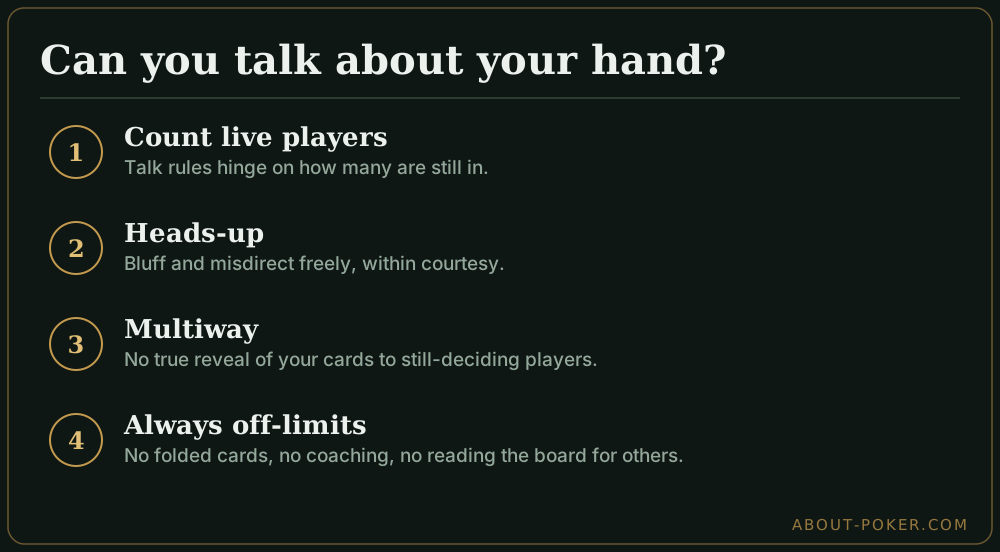
Some things are off-limits regardless of how many players are in the pot:
- Revealing folded cards while the hand is live. If you mucked the 8 that would have made someone’s straight, saying so influences the pot.
- Advising another live player on how to play. Every player is on their own — that’s the whole point of the rule.
- Reading the board out loud to help someone, e.g. pointing out a possible straight to a player who hasn’t noticed.
These break the one-player-to-a-hand rule directly and can get your hand killed or draw a penalty. And of course, you must still respect acting in turn — talking is never a substitute for a proper action.
Worked example
You raise and get two callers, so three of you see the flop. On the turn, before the last player has acted, you announce, “I flopped a set, this is over.” If it’s true, that’s a violation — you’ve handed real information to a still-deciding opponent in a multiway pot; the dealer can warn you and your statement may be treated as binding-adjacent action. Change one thing: the third player folds the turn, leaving you heads-up. Now the same line — “I flopped a set” — is fine, whether it’s true or a bluff, because there’s no third party left to protect. And if you’d been bluffing the whole time, even multiway the false claim is judged less harshly than a true reveal, though needling talk can still draw a warning. When you win by talking your opponent into folding, you don’t even show — see winning without showing.
Common mistakes to avoid
- Telling the truth multiway. A real reveal is the classic violation. If you must talk in a multiway pot, keep it about nothing.
- Discussing a hand you folded. You’re out — say nothing about the live board or your dead cards.
- Helping a friend read the board. Kind instinct, illegal action.
- Slow-rolling with speech. Dragging out talk to torment an opponent is bad etiquette even when it’s technically legal.
Quick checklist
Count the live players first. Heads-up? Talk, tease, and bluff away, within the bounds of courtesy. Three or more? Say nothing true about your cards, nothing about what you folded, and nothing that coaches another player. When in doubt, stay quiet — silence never breaks a rule, and it keeps your information exactly where it belongs.
Frequently asked
Can you talk about your hand in poker?
It depends on the situation. Heads-up against one opponent you have wide latitude, including bluffing about what you hold. But in a multiway pot you cannot reveal or discuss your actual cards, and you can never disclose folded cards or coach other players while a hand is live.
Can you lie about your hand in poker?
Heads-up, yes — verbal misdirection like claiming you have a monster when you're bluffing is a legal part of the game. What you cannot do is truthfully reveal your hand in a multiway pot, disclose folded cards, or make statements about the strength of another live hand that could influence the action unfairly.
What is the one player to a hand rule?
It means each player must make their own decisions with their own information, without help. You cannot discuss the contents of a live hand with others, ask for advice on how to play, or reveal what you folded. The rule keeps every active player's decision independent and their information private.
Can you talk during a hand you folded?
You should stay quiet about the live hand. Once you fold you are out, and commenting on the board, the action, or what you would have hit can influence the players still in the pot. Discussing the hand only becomes fully fair once it is over.