How to Run a Charity Poker Night
How to run a charity poker night that raises real money — legal checks, buy-in and add-on structure, blind schedule, prizes, and a clear night-of run sheet.
On this page · 6 sections
A charity poker night is one of the best fundraisers there is: it is social, competitive, and people happily pay to play a game they already love. Done right, it can raise far more than a raffle or bake sale while giving guests a genuinely fun evening. Done carelessly, it can run four hours too long, confuse first-timers, or land your organization on the wrong side of gaming law. This guide walks you through both the money side and the mechanics.
If you have ever hosted a casual game, much of the setup will feel familiar — start from how to set up a home poker game and scale it up.
Step 1: Check the law and get your permit
Before anything else, confirm what is legal where you live. Many jurisdictions permit charitable gaming only when a registered nonprofit holds a permit, and they frequently cap buy-in amounts, total prizes, and how proceeds are split. Some require a licensed operator or that a set percentage go to the cause. This is not optional and it is not the same everywhere — check your local and state or provincial gaming authority in writing, and keep the permit on hand the night of the event.
Step 2: Design a fundraiser-friendly structure
The trick is to separate the cause money from the prize competition. A clean model:
- Entry fee (e.g., $50) — most or all of this goes to the charity.
- Optional rebuys and add-ons — players who bust early can buy back in for more chips; sell an add-on at the first break. These voluntary purchases are where the real money comes from.
- Mulligans — a one-time “get out of a bad hand free” chip top-up players can buy pre-game.
Set clear chip amounts for each purchase and post them so nobody feels nickel-and-dimed. For a refresher on stack denominations and colors, see poker chip values and colors.
Step 3: Build a blind schedule that fits the clock
Nothing sinks a charity night like a tournament that will not end. Decide your target finish time and work backward. A good rule of thumb: 15- to 20-minute blind levels with antes starting a few levels in keep the action moving. Give everyone a starting stack that lasts long enough to feel meaningful — a common choice is a stack worth roughly 50–100 big blinds at the opening level — but let the blinds climb steeply after the first break so the field thins on schedule.
Announce the last add-on level clearly; once add-ons close, the tournament accelerates toward a natural finish.
Step 4: Prizes, payouts, and the run sheet
Keep prizes modest and, where possible, donated — restaurant gift cards, a signed jersey, a weekend getaway. Donated prizes mean more entry money reaches the cause and can simplify the legal picture. Pay a small top-heavy structure (say, top three) so there is drama at the final table without draining the fund.
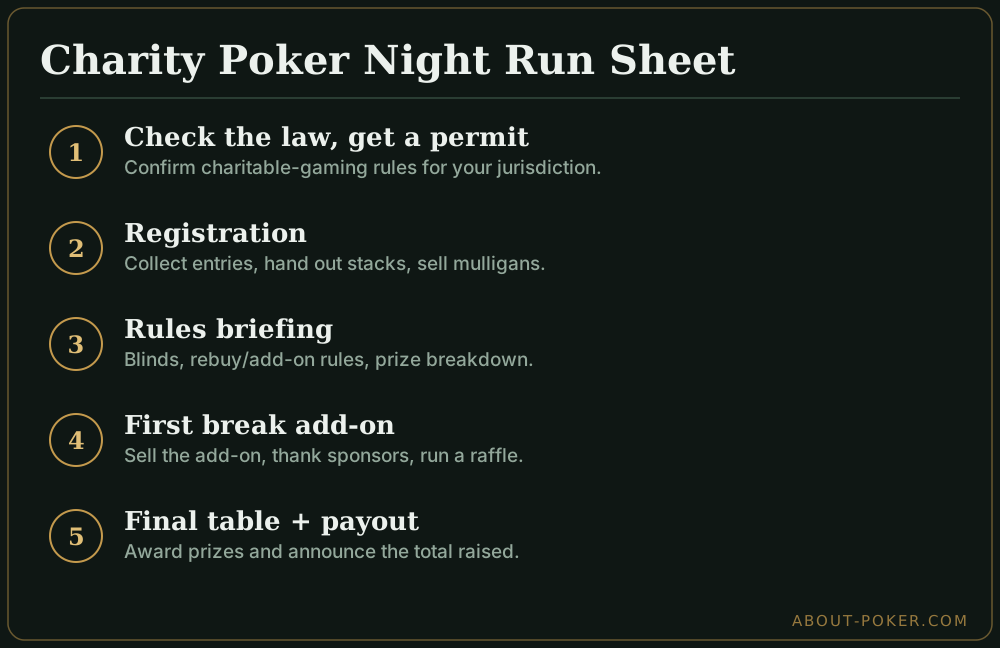
Here is a simple night-of run sheet:
- Doors open / registration — collect entries, hand out starting stacks, sell mulligans.
- Rules briefing — two minutes: blind schedule, rebuy/add-on rules, prize breakdown, and a reminder to be friendly.
- Play begins — start the clock, track levels out loud or with a timer app.
- First break — sell the add-on, thank sponsors, run a side raffle.
- Consolidate tables as players bust.
- Final table and payouts — award prizes, announce the total raised.
A worked example
Say 40 guests each pay a $50 entry, and on average each buys one $20 rebuy and the $20 add-on, plus half the room buys a $10 mulligan.
- Entries: 40 × $50 = $2,000
- Rebuys: 40 × $20 = $800
- Add-ons: 40 × $20 = $800
- Mulligans: 20 × $10 = $200
That is $3,800 in gross proceeds. If you allocate about $400 to donated-plus-cash prizes and keep venue and supply costs near zero (donated space, borrowed tables), you net roughly $3,400 for the cause from a single evening of 40 people. Scale to 80 players across eight tables and you are looking at a five-figure night.
Keep it welcoming
Many guests will be casual players, so run a beginner-friendly room: post a quick rules card, seat newcomers together if they prefer, and coach gently rather than letting sharks run them over. A quick primer on poker etiquette for beginners at each table keeps things smooth. The friendlier the night, the more people rebuy — and the more you raise.
Frequently asked
Is it legal to run a charity poker night?
It depends entirely on your jurisdiction. Many places allow charitable gaming under a permit or license issued to a registered nonprofit, often with caps on buy-ins and prizes. Always check your local and state or provincial gaming regulations, and secure any required permit, before you advertise or collect money.
How should charity poker raise money without just being gambling?
Use a tournament format where players pay an entry fee that goes to the cause, and let the prize pool be a smaller, separate portion or donated gift items. Add optional rebuys, add-ons, and 'mulligans' that players buy for extra chips — these voluntary purchases are usually where most of the money is raised.
How many players and tables do I need?
Nine or ten players per table is standard. Plan one dealer or a self-dealt rotation per table, and have a plan to consolidate tables as players bust out. A single ten-seat table works for a small event; scale up in nine-to-ten player increments and combine tables when seats empty.