Posting Blinds: Rules & Etiquette
Posting blinds in poker: how the small and big blinds work, what posting means when you join a cash game, missed-blind rules, and the etiquette involved.
On this page · 5 sections
Blinds are the engine of every hold’em and Omaha game — the forced bets that put money in the pot and give players a reason to fight for it. But “posting a blind” means more than just the two players left of the button. It also covers the rule that greets you the moment you sit down in a new cash game, and the missed-blind rules that keep players from dodging their fair share. Here’s the whole picture.
What the small and big blinds do
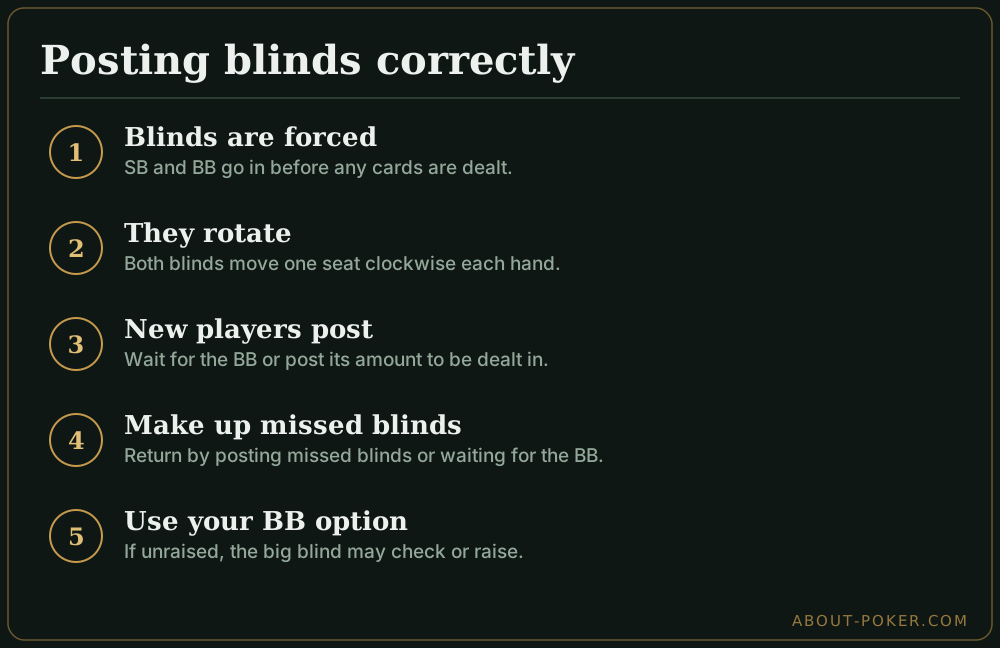
Before any cards are dealt, two players post forced bets. The player directly left of the dealer button posts the small blind, and the next player left posts the big blind. In a 1/2 game the small blind is $1 and the big blind is $2. These bets are “blind” because they go in before anyone sees a card.
The blinds rotate one seat clockwise every hand, so over an orbit everyone pays them equally. The big blind sets the minimum bet size for the round, and its poster gets a special privilege: because they’ve already put in a full bet, they act last before the flop and hold the “option” to check or raise if no one has raised. For the full mechanics of forced bets, see blinds and antes explained.
Posting when you join a cash game
Here’s the part that trips up new players. When you sit down in a cash game, you’re not automatically dealt in for free. The room wants you to pay your fair share of blinds before you start winning pots, so you have two choices:
- Wait for the big blind. Sit out until the big blind rotates to your seat naturally, then start playing. This is free but costs you a few hands of waiting.
- Post to enter. Put out an amount equal to the big blind immediately (this “post” acts as a live big blind) and get dealt in on the next hand.
You’ll usually see a small post button or the dealer will ask, “Do you want to post or wait for the blind?” The one thing you can’t do is take a seat and immediately start playing hands for free — that would let you skip your share of the forced bets. The rhythm of buying in and posting is part of how a cash game works.
Missed blinds and how to make them up
If you step away from the table — bathroom, phone call, food — the button keeps moving without you. When you return, the dealer tracks which blinds you missed. You can’t simply hop back in right before the button to dodge the big blind. Your two options:
- Post the missed blinds. You pay the missed big blind (which is live) plus the missed small blind (which is dead, going straight to the pot), and you’re dealt back in immediately.
- Wait for the big blind. Sit out until the big blind reaches your seat again, and enter for free at that point.
The missed-small-blind portion being “dead” is the key detail — it goes into the pot but doesn’t count as part of your bet, so you can’t win it back as action.
Worked example: joining a 1/2 game mid-orbit
You buy into a 1/2 no-limit game and take an open seat. The button is two seats to your right, which means the big blind is about to pass you and you’d normally wait five hands to be dealt in. You don’t want to wait, so you tell the dealer, “I’ll post.”
You put out $2 (a live big blind). On the next hand you’re dealt cards, and because your $2 post functions like a big blind, if nobody raises you even get the option to check or raise when the action comes back to you. You’ve bought your way into the action one hand instead of five — you simply paid the $2 you would have owed anyway a few hands later.
Etiquette around posting
Posting is mostly mechanical, but a few courtesies keep the game smooth:
- Announce your intention clearly — “post” or “wait for the blind” — so the dealer doesn’t guess.
- Have your blind ready before the deal. Don’t make the table wait while you dig for chips when it’s your turn to post.
- Don’t angle the missed-blind rule. Trying to seat-change or time your return purely to dodge blinds is legal but frowned upon; regulars notice.
- Push your blinds out promptly each hand you’re in them — a slow small blind holds up the whole table.
Get comfortable with posting and the pre-flop rhythm stops feeling like a test and starts feeling like second nature.
Frequently asked
What does posting a blind mean?
Posting a blind means putting a forced bet into the pot before any cards are dealt. The two players to the left of the button post the small blind and big blind every hand, and a new player joining a cash game may also have to post to enter.
Do you have to post the big blind when you sit down?
In most cardrooms, yes. When you take a new seat you either wait for the big blind to reach you naturally or post an amount equal to the big blind immediately to be dealt in. Posting lets you play right away instead of waiting an orbit.
What happens if you miss your blinds?
If you step away and miss your blinds, you must either post the missed blinds to be dealt back in or wait until the big blind reaches your seat again. You cannot skip the big blind and get a free ride by hopping around it.
Can you check your option in the big blind?
Yes. If no one raises before the action reaches the big blind, that player has the 'option' to either check (keep their posted big blind as their full bet) or raise. It's the only forced-bet position that gets to act last before the flop.