Protecting Your Hand: Rules & Etiquette
In poker, an unprotected hand can be ruled dead or mucked by mistake. Learn how to protect your cards, when it matters most, and the etiquette involved.
On this page · 8 sections
In live poker, your cards are only yours as long as you keep control of them. Leave them loose on the felt and a busy dealer can sweep them into the muck, or another player’s discards can slide into them — and once cards touch the muck, your hand is usually dead, even if it was the winner. Protecting your hand means physically guarding your cards so that never happens. It’s one of the simplest habits in poker and one of the most costly to skip.
What “protecting your hand” means
To protect your hand, you place something on top of your two hole cards so they can’t move or be gathered by mistake. The usual tools:
- A chip — the most common protector. One chip on your cards signals “this hand is live and mine.”
- A dedicated card protector — a small weighted disc, coin, or trinket many regulars carry.
- Your hand or fingers — resting a hand lightly on your cards works, though a chip is cleaner and lets the dealer see the hand is protected.
The goal is simple: make it obvious and physically true that your cards are in play and under your control.
Why it matters: the unprotected hand
Here’s the harsh part. In most cardrooms, you are responsible for protecting your own hand at all times. If a dealer accidentally mucks your unprotected cards, or another player’s mucked cards touch yours and kill them, you generally have no recourse — even if you would have won the pot. The floor will rule the hand dead.
This is closely tied to the mucking rules: once cards hit the discard pile and become irretrievable, they’re dead. A chip on top gives the dealer a clear signal to leave your cards alone and gives you a defense if there’s ever a dispute.
A worked example
You’re heads-up on the river with a strong hand. You’ve called a big bet and you’re waiting for your opponent to show. Feeling relaxed, you lift your hands off your cards to reach for a drink, leaving them bare near the middle of the table.
The dealer, reading the folded body language of the player to your left, reaches to gather what looks like a completed pot and — in one quick sweep — collects your cards along with the muck. You protest that you’d called and had the winner. The floor is called. Because your hand was unprotected, the ruling is almost always that your hand is dead. That is a full pot lost to a habit that would have taken one chip to prevent.
Now replay it with a single black chip sitting on your cards. The dealer sees the protector, works around it, and your live hand reaches showdown intact. Same spot, opposite outcome.
Etiquette and good habits
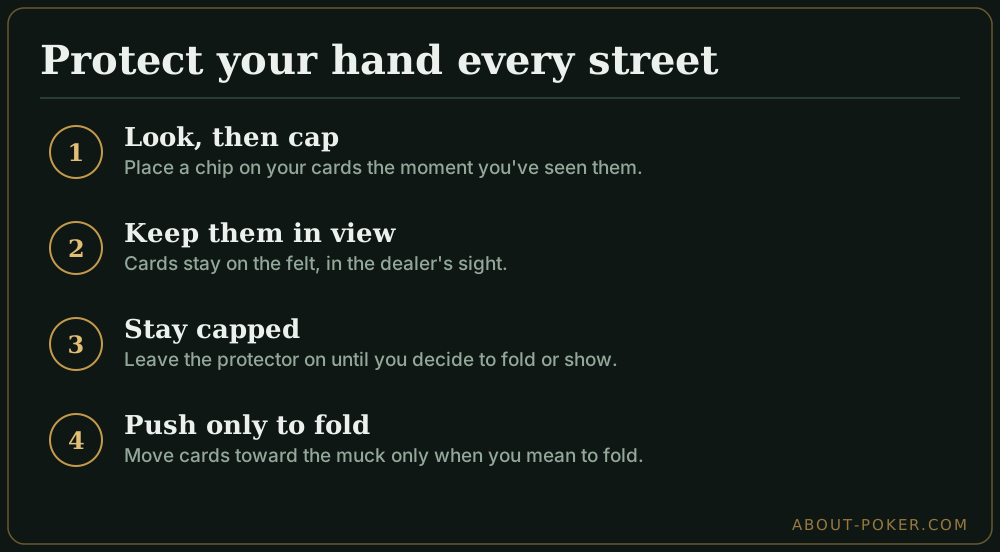
- Protect from the moment you look. Cap your cards as soon as you’ve seen them, and keep them capped until you fold or reach showdown.
- Keep cards on the table. Never lift both cards off the felt or take them out of the dealer’s sight — that itself can lead to a dead-hand ruling under misdeal and irregularity rules.
- Don’t cap with too many chips. One chip or one protector is plenty; a stack on your cards is messy and slows the dealer down.
- Push cards forward only when you mean to muck. Cards moving toward the muck signal a fold. Keep yours pulled in and capped until you’ve decided.
When protection matters most
The habit is cheap insurance every hand, but a few moments carry the highest risk and deserve extra vigilance:
- You’re the winner waiting to show. Heads-up on the river after calling, the danger is highest — the dealer may read a fold and gather the pot, sweeping your bare cards. Keep them capped until the loser’s hand is tabled and the pot is pushed to you.
- Multiway pots with lots of discards. When several players fold in sequence, mucked cards travel across the felt. An uncapped hand near the middle can easily be touched by an incoming discard and killed.
- You reach for chips, a drink, or your phone. The instant your hands leave your cards is exactly when a busy dealer acts. Cap first, reach second.
- A misdeal or dispute is underway. During any irregularity the dealer is moving cards around; a protected hand is your proof it was still live.
What counts as a dead hand
It helps to know the boundaries so you understand what protection is guarding against. Cards typically become dead when they touch the muck and can no longer be clearly identified, when a player folds by verbal declaration or a forward motion toward the discards, or when a hand ends up with fewer than the required cards through the player’s own action. Crucially, the reason for the death rarely matters to the ruling — “the dealer did it, not me” usually fails when your hand was unprotected, because the room’s default is that protecting your cards was your job. This dovetails directly with the mucking rules: the muck is treated as irretrievable by design, so once your cards are in it, no floor decision can bring them back. Contrast that with a protected hand sitting untouched under a chip — clearly identifiable, clearly live, and defensible in any dispute.
Online versus live
Worth stating plainly because new players sometimes carry the wrong instinct between formats: online, hand protection is a non-issue. The software holds your two cards until you act or the hand completes, and nothing can physically muck them by accident. Every habit on this page is a live-poker concern. When you move from an app to a real cardroom, the single biggest mechanical adjustment is learning to cap your cards the moment you see them and keep them capped through showdown — a reflex the online game never taught you.
The bottom line
Protecting your hand isn’t a formal rule you’ll be penalized for breaking — it’s a responsibility that lands entirely on you. Cap your cards with a chip the instant you look at them, keep them in front of you and in view, and you’ll never lose a pot to an accidental muck. It costs nothing and it’s the cheapest insurance in poker.
Frequently asked
What does protecting your hand mean in poker?
Protecting your hand means keeping physical control of your cards so they can't be accidentally folded, mucked, or mixed with the discards. The standard method is placing a chip or a small card protector on top of your cards.
Is protecting your hand actually a rule?
It's your responsibility, not a formal obligation. Most rooms follow the principle that players must protect their own hands at all times. If a dealer accidentally mucks an unprotected hand, you usually have no recourse — even if you were about to win.
Do you need to protect your hand in online poker?
No. Online, your hand can never be physically touched or mucked by mistake, so protection is purely a live-poker concern. The software holds your cards until you act or the hand ends.