Rules for Exposing Cards
The rules for exposing cards in poker — accidental deals, deliberately showing a hand, flashed board cards, and the penalties for exposing during action.
On this page · 7 sections
Cards get exposed in poker all the time — a hole card flips during the deal, a player shows a bluff, a board card flashes off the deck. Whether that is harmless, correctable, or a punishable offense depends entirely on who exposed the card, when, and why. This guide sorts accidental exposures from deliberate ones and lays out the standard rulings for each.
The core distinction: accidental vs. deliberate
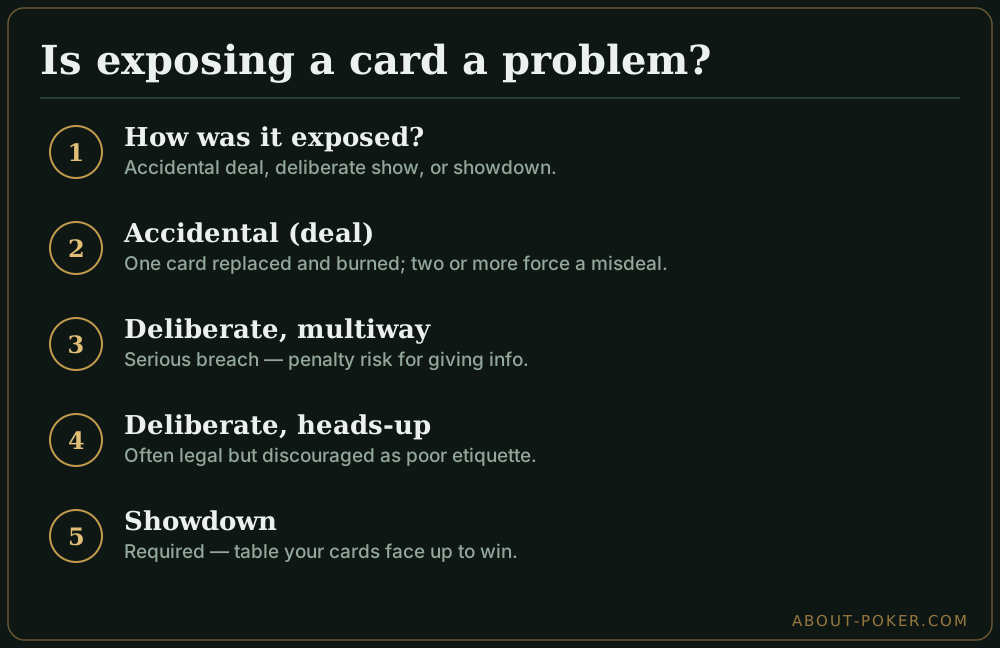
Everything starts with intent and timing:
- Accidental exposure (a card slips during the deal) is an irregularity — corrected by procedure, no penalty.
- Deliberate exposure of a live hand during active betting is a rules breach — it hands information to opponents and can draw a penalty.
- Exposure at showdown is normal and required — you must table your cards to be awarded the pot.
Keep these three buckets straight and almost every situation resolves itself. For where exposed cards sit among other dealing errors, see poker misdeals and irregularities.
Accidentally exposed hole cards
If the dealer flips one of your hole cards while dealing, the standard fix is clean:
- The dealer finishes dealing the round.
- You keep your hand; the exposed card is replaced with a fresh card off the top of the deck.
- The exposed card becomes the first burn card.
A single exposed hole card is never a misdeal. But two or more exposed hole cards during the deal do force a misdeal — cards are collected, the deck is reshuffled, and the hand is re-dealt with no penalty.
Deliberately showing a live hand
This is the exposure rule players get wrong most often. While a hand is still live and betting is possible, showing your cards to anyone gives away information that can influence how active players act. Because of that:
- With two or more players still in the pot, exposing your cards is a serious breach and can bring a penalty, sometimes even a mandatory time-out from the table.
- Heads-up against a single remaining opponent, many rooms permit showing a card, but it is still discouraged as poor etiquette.
The reasoning is fairness. If you flash a monster to scare a caller — or flash a bluff to induce one — you are affecting a decision with information no one else has. Rooms protect the other players at the table, not just your direct opponent.
Worked example: the tempting show
You raise, one player calls, and a third is still to act behind. On the turn you have the nuts and want to “show” one card to look strong and get a fold from the player yet to act. Do not. With more than one opponent live, deliberately exposing a card here is a punishable breach — the player behind is entitled to make their decision without seeing your card, and so is your caller.
Now change the spot: it folds to heads-up, just you and one caller, and you flip a card to needle them. That is legal in many rooms but poor form, and a repeat offender will still hear about it from the floor. The safe habit is simple — your cards stay face down until showdown, every time.
Flashed board and community cards
If the dealer flashes an upcoming community card while dealing the flop, turn, or river, it is handled by set procedure rather than a re-deal. Typically the flashed board card is reshuffled back into the remaining stub and the correct card is re-dealt after a proper burn. As with hole cards, the goal is to preserve the integrity of the deck without throwing out a hand that is already underway.
Showdown: exposure is required
At showdown, exposing your cards is not just allowed — it is how you win. To be awarded the pot you must table your hand face up so it can be read. A hand that is not shown cannot win, even if it was the best. Once betting is complete and the last action is a call, the required order of showing kicks in, and every player who wants to claim the pot must expose their full holding.
Quick checklist
- One exposed hole card (deal): replaced, becomes first burn — no misdeal.
- Two or more exposed hole cards: misdeal, re-deal, no penalty.
- Live multiway hand: never deliberately show — penalty risk.
- Heads-up: showing is often legal but still bad etiquette.
- Flashed board card: reshuffled back, re-dealt after a burn.
- Showdown: you must table your cards to win.
Exposing cards is only a problem when it moves information to someone who should not have it. Deal errors get fixed, showdowns require the show, and the one thing to avoid is flashing a live hand during action. For the surrounding procedures, see misdeals and irregularities, or return to the how-to-play hub.
Frequently asked
What are the rules for exposing cards in poker?
An accidentally exposed hole card during the deal is usually replaced and becomes the first burn. Deliberately showing your cards during a live hand is a serious breach that can draw a penalty, because it gives information to active players. At showdown, exposing your cards is normal and required to win.
What happens if you accidentally expose a hole card?
One exposed hole card during the deal is not a misdeal. The deal finishes, the player keeps their hand, the exposed card is replaced off the top, and the flashed card becomes the first burn. Two or more exposed hole cards force a misdeal.
Can you show your cards during a hand?
You should never expose your live cards while betting is still possible with more than one player in the pot. It gives unfair information and can result in a penalty. You can only safely show cards heads-up when facing a single opponent, and even then it is discouraged.
Is it against the rules to show one card while bluffing?
In most rooms, deliberately flashing a card to influence an opponent during a live multiway hand is not allowed and can be penalized. Heads-up, showing one card is legal in many rooms but still poor etiquette.