What Happens If You Act Out of Turn
What happens if you act out of turn in poker: when an out-of-turn bet, call, or fold is binding, when it's voided, and how dealers rule on premature action.
On this page · 7 sections
Acting out of turn — betting, calling, checking, or folding before it’s actually your turn — is one of the most common irregularities in live poker. It’s rarely malicious; usually it’s a distracted player or a beginner who miscounted the seats. The key thing to understand is that it’s not a misdeal and doesn’t kill the hand. Instead, there’s a clear conditional rule for what happens next.
The core rule
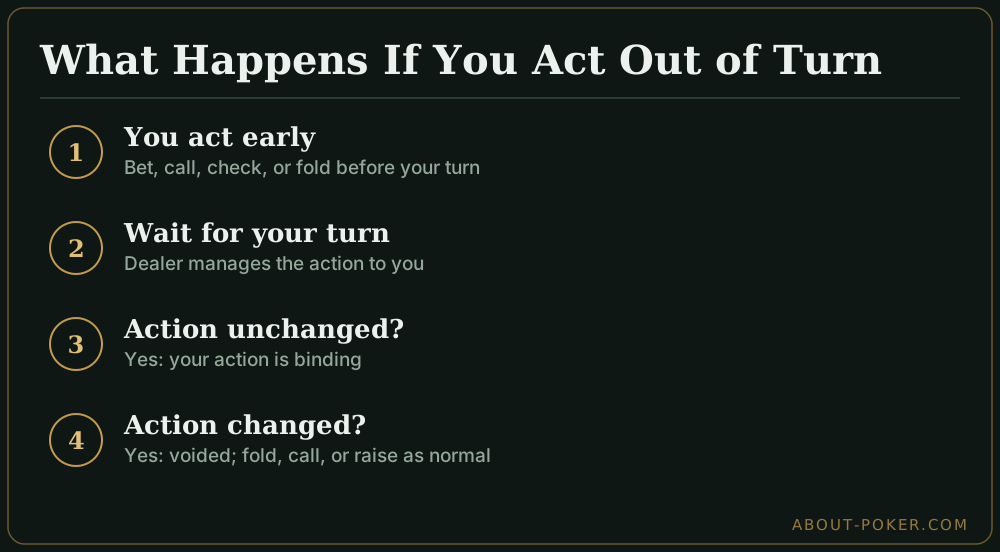
Whether your out-of-turn action stands depends entirely on one question: does the action in front of you change before your real turn arrives?
- If the action does NOT change — nobody between you and your out-of-turn action bets or raises — you are generally held to your action. Your premature check, call, or bet becomes binding when your turn comes.
- If the action DOES change — someone bets, raises, or otherwise alters what you’re facing — your out-of-turn action is voided and returned. When your real turn comes, you have all your normal options back: fold, call, or raise.
This rule exists to balance two things: holding players accountable for what they signal, while protecting them from being unfairly locked in when the situation shifts.
A worked example
You’re in the cutoff. The under-the-gun player is still deciding, but you assume it’s checked to you and you announce “check.” That’s out of turn.
Scenario 1: UTG also checks, and so does everyone between you two. When your real turn arrives, nothing has changed — the action is still checked to you. Your check stands. You’ve committed to checking (and in most rooms can’t now raise).
Scenario 2: UTG bets before it gets to you. Now the action has changed — you’re facing a bet you weren’t facing when you “checked.” Your out-of-turn check is voided. When it’s your turn, you can fold, call the bet, or raise. You lost nothing, but you did give away information.
That information leak is the real cost: opponents now know you were happy to check, which usually means you don’t have a monster. For a fuller treatment of the binding-vs-voided logic, see betting out of turn in poker.
Why out-of-turn action is a problem even when voided
Even when your premature action gets returned to you, you’ve handed opponents free information and potentially denied a player behind you the chance to act naturally. A player who was about to bluff might not, seeing you’re eager to check; a player who intended to check might now bet, knowing you’re weak. This is why dealers actively manage out-of-turn action and why repeated offenses draw penalties — it can be weaponized as an angle-shoot.
Out of turn vs a genuine irregularity
Acting out of turn belongs to the family of irregularities — errors that are corrected without voiding the hand, unlike a misdeal that resets everything. Compare:
- Misdeal: hand is dead, re-deal from scratch (see poker misdeals and irregularities).
- Acting out of turn: hand continues; action is either held or returned based on the change-in-action test.
The distinction matters because players sometimes try to call “misdeal!” over an out-of-turn action to get a re-deal. That’s not how it works — the hand plays on.
Special cases
- Out-of-turn fold: Folding early is usually treated more leniently — a premature fold rarely helps you and mostly just leaks that you’re out. Many rooms let it stand since you’d have folded anyway, but it can be voided if it materially affects players yet to act.
- Out-of-turn raise: Held to the raise if the bet in front is unchanged; voided if the bet changes. If your announced raise amount is now impossible (the bet grew), the raise is returned.
- Announced vs chips-forward: A verbal declaration in turn is binding; the same principles extend to out-of-turn verbal action.
How it varies by format
Live cash and tournaments: Both follow the change-in-action rule. Tournaments enforce more firmly because information leaks affect the whole field’s equity.
Home games: The biggest source of confusion. Agree up front on the standard rule so you’re not arguing about whether a premature call sticks.
Online: Impossible by design — the interface only lets you act on your turn, and pre-selected actions (check/fold buttons) only fire when it’s legitimately your turn, so there’s no out-of-turn leak.
Checklist to avoid acting out of turn
- Watch the action, not just your cards — know who’s still to act before you.
- Wait for the dealer’s cue or the clear pause on your seat.
- Don’t pre-load a decision verbally; think when it’s actually your turn.
- If you slip up, stop immediately and let the dealer manage it — don’t compound it.
- Learn proper turn order in our acting in turn rules and etiquette guide.
The rule is forgiving — the hand never dies over it — but the information you leak is gone for good. The best fix is simply to pay attention and act only when it’s truly your turn.
Frequently asked
What happens if you act out of turn in poker?
Acting out of turn is an irregularity, not a misdeal. The ruling depends on whether the action in front of you changes: if it stays the same when your real turn comes, your out-of-turn action is usually binding; if a player before you bets or raises, your action is voided and you get all your options back.
Is an out-of-turn bet binding?
It can be. If no one between you and your out-of-turn action changes the bet, you're generally held to what you announced. If someone raises before your turn, the out-of-turn bet is returned and you may fold, call, or raise as normal.
What's the penalty for acting out of turn?
Usually just a warning and the action being managed by the dealer. Repeated or deliberate out-of-turn action to influence opponents can draw a formal penalty, since it can be used to angle-shoot.