What Happens If You Show One Card
What happens if you show one card in poker: the rules on flashing a hole card during a live hand, penalties, and why exposing cards can hurt everyone at the table.
On this page · 7 sections
Showing a single hole card in poker sounds harmless, but it can range from a totally legal flourish to a rules violation that gets you a penalty. The difference comes down to when you do it and who can see it. This guide walks through the situations you’ll actually run into at a live table or online.
The short answer
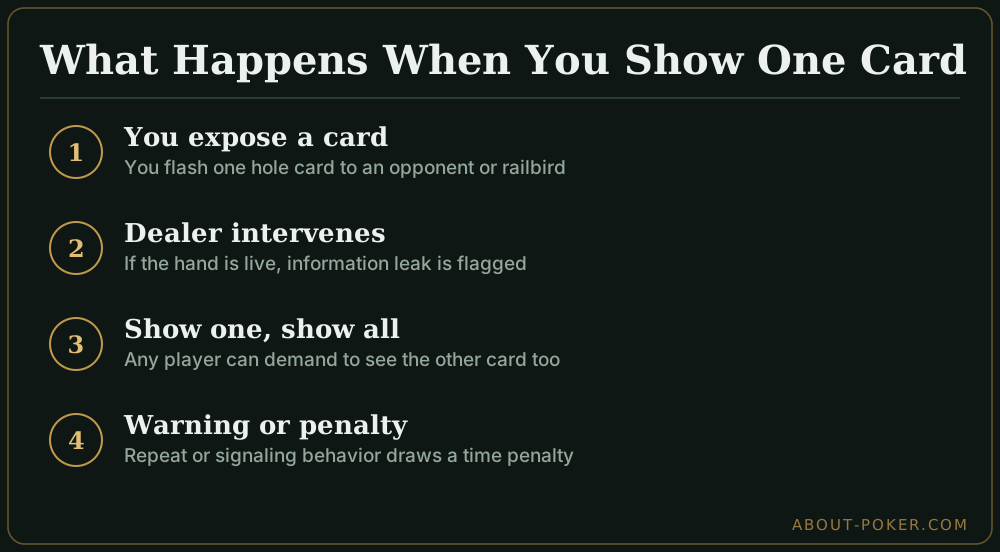
If the hand is still live and you deliberately show one card to an opponent or a railbird, you are exposing information, and most cardrooms will step in. The hand typically continues, but you may be warned, and the dealer will often invoke the “show one, show all” rule so every player gets to see the card. If you do it repeatedly or clearly to signal a friend, the floor can issue a penalty.
If the hand is over — everyone folded to you, or you’re at showdown — showing one card is your choice, subject to the same “show one, show all” principle. Nobody is disadvantaged because there’s no more action to influence.
Why showing a card mid-hand is a problem
Poker is a game of incomplete information. When you flash one card to a still-active player, you hand them data nobody else has. Even showing a card to someone who has already folded can help them: their reaction, their comments, or simply their knowledge can leak to opponents still in the pot. This is why the rule exists — it’s about protecting the integrity of the pot, not about punishing showmanship.
There’s also a subtler issue. Say you flash the ace of spades to the player next to you to prove you had a big hand. If that player is later in a pot against your other opponent, that shared information can shape future decisions in ways that quietly favor one player. Formal poker treats this as a form of soft play, and it’s covered by the same rules that govern collusion.
A worked example
You raise pre-flop with As Ks, the big blind calls, and the flop comes Kd 7h 2c. You bet, the big blind folds, and you win the pot. Feeling good, you turn over the As so the table can see you had top pair top kicker — but you leave the Ks face down.
Because the hand is over and you chose to expose a card, the “show one, show all” rule kicks in. Any player still seated can now ask the dealer to turn up your second card, and the dealer will flip the Ks as well. You showed to needle; you ended up revealing your whole hand. That’s the trade-off, and it’s exactly why experienced players usually just muck. For more on who reveals what and when, see our guide to showdown rules and who shows first.
The “show one, show all” rule in detail
This is the single most important rule tied to exposing cards. It means: if any card is shown to one active player, every player at the table has the right to see that card. The rule is standard in the TDA rules and virtually every casino’s house rules.
- At showdown, if you voluntarily flip one card, opponents can request to see the other.
- Mid-hand, if you flash a card, the dealer can order it shown to the whole table to neutralize the information leak.
- After winning uncontested, the same applies — one shown card can become both shown cards on request.
The purpose is fairness: information should either be private to you or public to everyone, never selectively shared.
Penalties you might face
Showing a card is not usually a “your hand is dead” offense on its own — but it can escalate. Compare it to a genuine misdeal or irregularity, where the hand can be voided outright. For exposure, the typical enforcement ladder is:
- First time, no ill intent: a verbal warning and the card shown to all.
- Repeated or during action: a formal warning logged by the floor.
- Clear signaling or soft play: a time penalty (missed hands or orbits), and in tournaments possible disqualification.
Online, most sites simply don’t let you show cards until the hand is complete, which removes the problem entirely.
How this changes by situation
Cash vs tournament: Both follow “show one, show all,” but tournaments enforce it more strictly because chips have equity implications for every player left in the event. Soft play penalties are more severe in tournaments.
Live vs online: Live tables rely on dealer and floor judgment; online clients hard-code the rule so you physically can’t expose mid-hand.
Heads-up vs multiway: Heads-up, showing one card only affects your single opponent and is often used as a mind game after a hand ends. Multiway, the information leak is far more damaging, so dealers are quicker to intervene.
A quick checklist before you flash a card
- Is the hand over? If not, keep your cards face down. Don’t show, don’t tell.
- Am I about to signal a friend? Even if it feels innocent, this is the behavior that draws penalties.
- Do I want the whole table to see this? Because of “show one, show all,” you effectively do. Assume both cards go face up.
- Is there any upside? Usually not. Good players give away nothing for free. When in doubt, muck and move on — proper table conduct is covered in our poker etiquette guide.
The bottom line: showing one card mid-hand is a rules issue that can cost you a penalty, and showing one card after the hand almost always means showing both. Reveal on purpose only when you’ve decided you’re fine with the whole table seeing everything.
Frequently asked
What happens if you show one card during a live hand?
In most cardrooms, deliberately showing one of your hole cards to an active opponent while the hand is still live is an exposure violation. The hand usually stays live, but you can be warned or given a penalty, and the 'show one, show all' rule may force the card to be shown to everyone.
Is it against the rules to show one card to another player?
Yes, at a formal table. Showing a card to a friend or an opponent while others are still in the pot passes information and is treated as a soft-play or collusion risk. The Tournament Directors Association rules let the floor penalize this, up to and including killing the hand in extreme cases.
Can you show one card after everyone folds?
Once the hand is over and you've won the pot uncontested, you generally can show one card, both, or none. The 'show one, show all' rule then applies: if you voluntarily expose one card at showdown or after winning, any player at the table can ask to see the other.