What Is a Bad Beat Jackpot
What is a bad beat jackpot in poker? How the qualifying hand works, how the prize is split between loser, winner and table, and the rules you must follow to win it.
On this page · 7 sections
A bad beat jackpot is a special prize pool that rewards you for losing a hand — but only if you lose in a spectacularly unlucky way. Cardrooms fund it by taking a small extra amount from qualifying pots, then pay it out when a monster hand gets beaten by an even bigger monster. It turns the worst feeling in poker into a potential payday.
The core idea
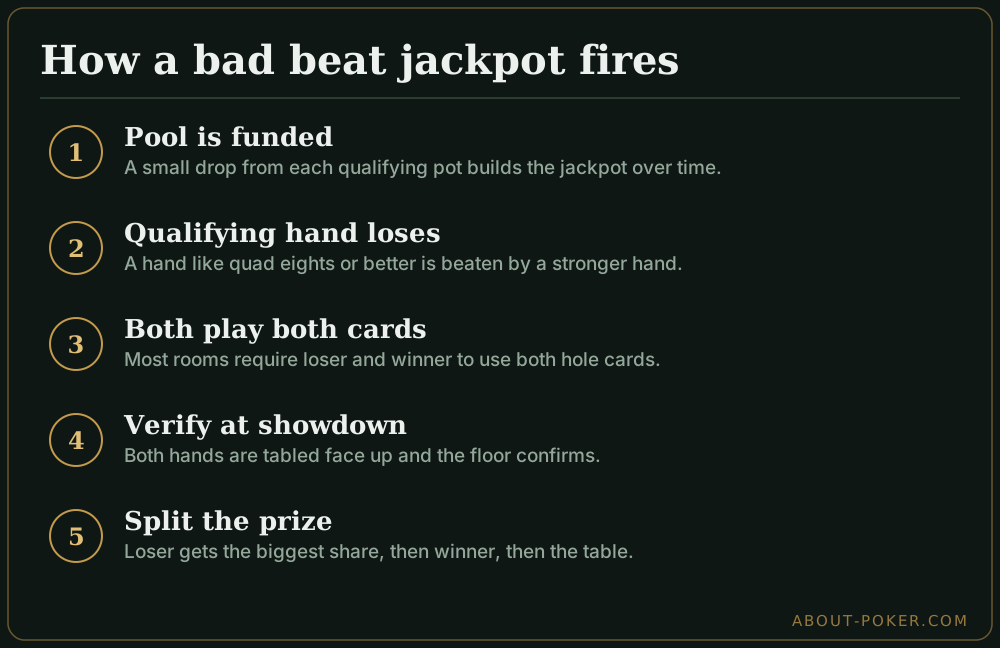
The word “bad beat” describes losing a hand you were a heavy favorite to win. A bad beat jackpot formalizes that: the room sets a minimum “qualifying hand,” and if a hand at least that strong loses to a stronger one, the jackpot fires. The classic example is four of a kind losing to a bigger four of a kind or a straight flush.
The money comes from a jackpot drop — usually one extra dollar pulled from every pot over a set size. Over thousands of hands this pool grows into the tens of thousands, and occasionally much more. When it hits, it’s paid out and the pool resets to a seed amount. For the mechanics room by room, see how bad beat jackpots work.
What counts as a qualifying hand
Every room posts its own threshold. Two of the most common:
- Quad eights beaten. The losing hand must be four eights or better, beaten by any higher hand.
- Aces full of tens beaten. A lower bar that fires more often but pays out smaller pools.
Beyond the rank, most rooms add a card-usage rule: both players must play both of their hole cards to form the qualifying hands. This single rule disqualifies the majority of near-misses, so read the fine print carefully.
A worked example
The board comes 8s 8h 5c 8d 2s. You hold 8c Ah, giving you four eights. Your opponent holds 5s 5h — a full house that improved to five-eights-full… no. Let’s use a cleaner spot.
Board: 8s 8h Ks 8d Kd. You hold 8c 8-? impossible with three eights on board. Take this instead:
Board: 9s 9h 9d Ks 2c. You hold 9c Kh — four nines with a king kicker, and you use both hole cards. Your opponent holds Ks Kc — kings full turned into four… no, only two kings remain. Correct spot: opponent holds 2s 2d? That’s a full house, nines full, which loses. To qualify you need a bigger hand to beat your quads. So opponent must hold a straight flush or higher quads. Suppose the board is 9s 9h 9d 8s 7s and your opponent holds 6s 5s — a straight flush, five-to-nine of spades. You hold 9c 9? impossible. The clean takeaway: quads lose to a straight flush, both players use both hole cards, and the jackpot fires. Your quads made you the loser and, ironically, the biggest winner of the night.
How the money is split
A very common structure is:
- 50% to the losing hand (the “bad beat”).
- 25% to the winning hand.
- 25% shared equally among the other players dealt into the pot.
Some rooms split the table share only among players still seated. Others take a further administrative cut before distribution. Because the loser gets the biggest slice, the person who took the brutal beat walks away happiest — a strange but beloved quirk of the format. Our guide to how poker payouts work covers how these distributions are administered.
Common pitfalls
- Not playing both hole cards. The most frequent disqualifier. Even a huge hand won’t count if it plays the board.
- Wrong minimum. Assuming quad eights when the room requires quad tens, or vice versa. Confirm before you sit.
- Leaving early. If you were dealt in but stood up before the hand completed, you may forfeit your table share.
- Slow play backfiring. You still need to show the qualifying hand at showdown. Mucking a winner or loser can void the payout.
Should you chase it
Strategically, you should never change your play to try to hit a bad beat jackpot. The odds of any given hand qualifying are minuscule, and contorting your decisions to chase it costs far more than the jackpot is worth over time. Treat it as a fun lottery ticket bundled into normal play, not a reason to call with hopeless hands.
Quick checklist
- Confirm the posted qualifying hand and card-usage rule.
- Play both hole cards if that’s required (it usually is).
- Reach showdown and table both hands face up.
- Stay seated until the hand fully resolves.
- Collect your share — biggest slice to the loser, then winner, then table.
A bad beat jackpot won’t change how you should play a single hand, but when it hits, it delivers the rarest experience in poker: a beat so bad it pays.
Frequently asked
What is a bad beat jackpot?
A bad beat jackpot is a cash prize funded by a small rake taken from qualifying pots. It pays out when a very strong hand — commonly quad eights or better — loses to an even stronger hand. Both players and often everyone at the table share the prize.
What is the minimum qualifying hand for a bad beat jackpot?
It varies by room, but a common threshold is quad eights beaten by a higher four of a kind or a straight flush. Some rooms use aces full of tens or better. Always read the posted house rules, because both hands and card usage requirements differ.
How is a bad beat jackpot split?
A typical split gives the largest share to the losing hand, a smaller share to the winning hand, and the remainder divided among the other players dealt into the pot. A common structure is 50 percent to the loser, 25 percent to the winner, and 25 percent shared by the table.
Do I have to use both hole cards to qualify?
In most rooms, yes. Both the losing and winning hands must typically play both hole cards. Playing the board or using only one hole card usually disqualifies the pot even if the ranks are high enough. Check the specific house rules first.