What Is the River in Poker
The river is the fifth and final community card in Hold'em. Here's what it means, how the last betting round works, and how to play the river well.
On this page · 6 sections
The river is the fifth and final community card in Texas Hold’em and Omaha, dealt face-up after the turn. Once it lands, the board is complete: five shared cards that, combined with your two hole cards, give you the full seven from which you build your best five-card hand. Nothing more is coming. Because it’s the fifth card exposed, it’s also called fifth street. The name “river” is old poker slang most often tied to riverboat games, but what matters is its role — it’s the card that settles everything.
Where the river fits in a hand
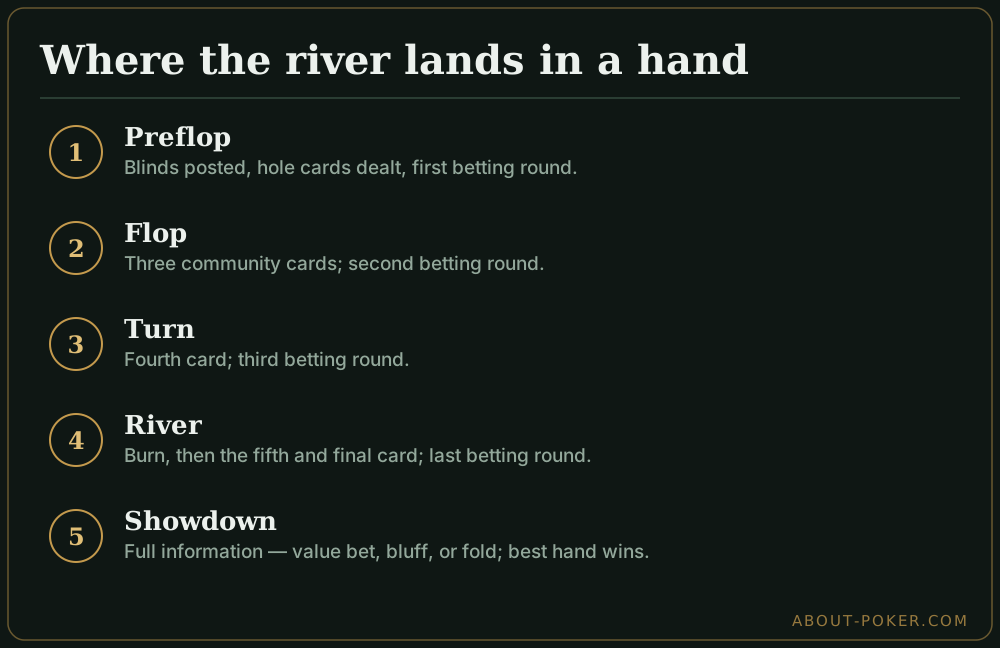
The river is the last stage before showdown. A Hold’em hand runs preflop, then the flop, then the turn, then the river, then everyone left turns their cards over. The order of who shows first is covered in showdown rules.
Like every other street, the river card is dealt after a burn: the dealer sets one card aside face-down, then flips the next into the middle. Action then opens on the first remaining player to the dealer’s left.
The river betting round
The river carries the final betting round of the hand. Players still in have the usual options in clockwise order — check, bet, call, raise, or fold. There are no more cards to come, so this round has a special character: every decision is made with complete information about the board. You know your exact hand and every possible hand your opponent could hold. Nobody is drawing anymore; a hand is either the best or it isn’t.
In no-limit, river bets are often the largest of the hand because the pot has grown across three previous streets. In fixed-limit, the river uses the same big bet as the turn.
Why the river is different from every other street
On the flop and turn, part of your bet’s value comes from making opponents fold their draws — hands that could still improve. On the river there are no draws left. This flips the strategy in two ways.
First, value betting becomes purer: you bet a strong hand to get called by worse. If you can name a specific worse hand that will pay you, you should usually bet. Second, bluffing becomes the only way a losing hand can win chips, because you can no longer just wait to hit. A river bluff either takes the pot or costs you money — there’s no third outcome where you “draw out” later.
A worked example
You hold Ks Kd. The board runs 9h 6c 2s on the flop, 4d on the turn, and the river brings the Kh. Your hand is now Ks Kd Kh — three of a kind, a very strong holding on this dry board.
Your opponent has been calling your bets the whole way. On the river you should bet, and bet a meaningful amount, because worse hands will call: a pair of nines, a pair of sixes, an ace-high that talks itself into a “hero call.” That’s a value bet — you want action from second-best hands.
Now flip it. Suppose the river had instead paired the board with a card that completed an obvious flush, and your opponent suddenly leads out big into you holding just one pair. With the whole board visible, you have to ask: what worse hand is betting here? If the honest answer is “almost none,” folding your one pair is often correct, even though it felt strong two streets ago.
Common river mistakes
- Bluffing with no story. A river bluff needs a believable hand behind it. Firing when the board’s draws all missed and you’ve represented nothing rarely folds anyone out.
- Missing thin value. Checking a decent-but-not-great hand for fear of a raise leaves money on the table when worse hands would have called a modest bet.
- Making crying calls on autopilot. With full information, a big river bet from a passive player usually means a big hand. Paying it off “just to see” is how bankrolls leak.
- Betting into hands that only beat you. If the only hands that call your river bet are better than yours, you’re not value betting — you’re paying to lose.
Quick checklist for the river
Before you act on fifth street, ask:
- Do I have the best hand, a bluff, or a hand too weak to bet?
- If betting for value, can I name a worse hand that will call?
- If bluffing, does my line tell a believable story?
- If facing a bet, what worse hands would bet like this — and are there any?
- Given the whole visible board, who is actually winning?
The river rewards clear thinking more than any other street, because guesswork ends here. You either extract value from worse, fold to better, or find the rare spot where a bluff represents a hand you don’t have. Get those three decisions right and you win the pots that matter.
Frequently asked
What is the river card in poker?
The river is the fifth and final community card dealt face-up in the center of the table. It comes after the turn and completes the board, giving each player seven total cards from which to make their best five-card hand.
Why is it called the river?
The name is poker slang with disputed origins, often traced to riverboat games. In stud terms it is also 'fifth street,' the fifth card exposed. Both names refer to the last card that decides the hand.
Is there betting after the river?
Yes. The river brings a final betting round with the same options as earlier streets. Once betting is settled, any remaining players go to showdown and turn their cards over to determine the winner.