Ante Stealing in Tournaments
Once antes hit, there's more dead money to win and stealing becomes far more profitable. Here's how ante stealing works, ideal ranges, and a worked example.
On this page · 8 sections
At a certain point in every tournament, antes kick in — a small forced bet from every player (or a single big-blind ante) that seeds the pot before any cards are dealt. That extra dead money quietly transforms the game, and the players who adjust fastest print chips through ante stealing. If you’re still opening the same tight range you used in the early levels, you’re leaving free money on the table every orbit.
Antes change the math of a steal
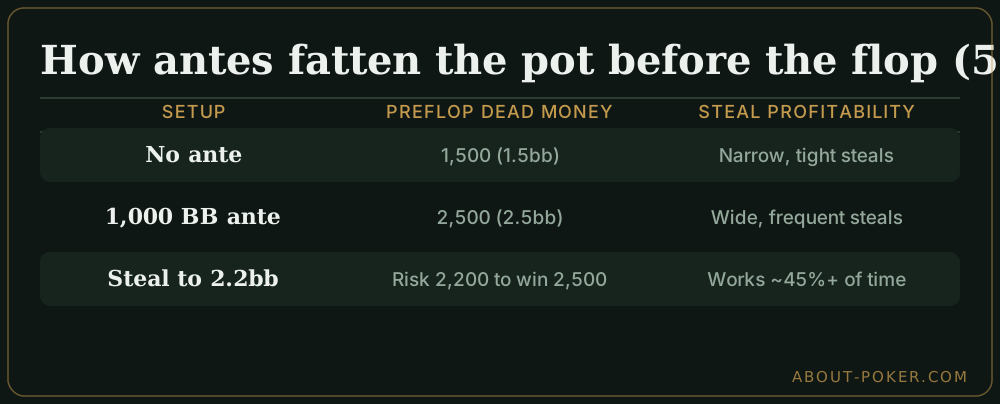
A steal is profitable when the times opponents fold win you enough to cover the times you get played back at. Antes tip that equation heavily in the raiser’s favor by fattening the pot before the action starts.
Consider a 500/1,000 level with no ante: the pot preflop is 1,500 (small blind plus big blind). Now add a 1,000 big-blind ante: the pot is 2,500 before a card is dealt. Your open to 2,200 is now risking chips to win a much bigger pile of dead money. Because the reward is larger, your steal needs to succeed less often to break even — which means you can steal far wider than you could in the ante-free early levels. This is the core idea behind ante-stage tournament strategy.
Widen from late position
The extra dead money rewards position more than anything. From the button and cutoff, where only one or two players can wake up with a hand behind you, ante steal ranges get very wide:
- Button: often 35–50% of hands — any two suited, most aces, most kings, most connectors, and a big chunk of offsuit broadways.
- Cutoff: a bit tighter, but still well over a third of hands.
- Early position: tighten up. Antes don’t magically make UTG opens loose; there are too many players left to act.
The tighter and more passive the blinds, the wider you steal. Against blinds who defend and three-bet aggressively, rein it back — you can’t steal profitably from someone who won’t let you.
Size down, not up
A frequent mistake is raising bigger once antes appear. The opposite is correct. Since antes already inflate the pot, a smaller raise — 2 to 2.2bb — risks fewer chips to claim the same dead money, which improves the risk-reward on every attempt. A 3bb open just costs you more when you’re three-bet or called and have to give up. Keep your steals small and your frequency high.
Worked example: a button steal with antes
Blinds 1,000/2,000 with a 2,000 big-blind ante. It folds to you on the button and you hold 8h-6h. The pot already contains 5,000 in dead money (small blind 1,000, big blind 2,000, ante 2,000).
You raise to 4,400 (2.2bb). To break even, your steal needs to work only a bit over 45% of the time: you’re risking 4,400 to win 5,000, so if both blinds fold often enough, you profit before you ever see a flop. Against two tight blinds who each defend maybe 30% of hands, they’ll both fold well over half the time — comfortably clearing that threshold.
And when you do get called, 86 suited flops well: it makes straights, flushes, and pairs, so you have plenty of playable equity. The combination of high fold equity and a hand that plays fine postflop makes this a clearly profitable steal that would have been marginal at best without antes in the pot.
Defense adjusts too
Remember that the extra dead money cuts both ways. Because there’s more in the middle, the big blind also gets a better price to defend, so good players call and re-raise steals more often once antes are in. That’s why reading your specific opponents matters, and why steal and re-steal dynamics heat up in the late stages. Steal wide against the folders; slow down against the fighters.
Stack depth decides raise or shove
How you steal with antes depends heavily on your effective stack, and getting this wrong is a common way to spew.
- Above ~25bb: min-raise or open to 2–2.2bb. You have room to fold to a 3-bet without crippling yourself, so a small raise keeps your risk low while claiming the fat dead-money pot.
- ~12–20bb: this is the danger zone for raise-folding. If you open to 2.2bb and get shoved on, you’re often priced in to call with a hand you didn’t want to stack off. Tighten your raising range here, or convert marginal hands to a direct open-shove that removes the awkward decision entirely.
- Under ~12bb: open-jam. With antes fattening the pot, a shove picks up a meaningful pile immediately, and your fold equity is at its peak because callers need a real hand to flip against a short stack. Any two suited, most aces, and most pairs are fine jams from the button.
The bigger the antes relative to your stack, the more urgent stealing becomes — those forced bets erode you every orbit, so winning even the dead money keeps you afloat.
What to do when you get called
A steal that only wins uncalled is a losing steal in the long run, so pick hands that can play a flop. Suited connectors, suited aces, and suited gappers all flop draws and pairs that let you barrel credibly or check-realize equity. Trashy offsuit hands like J4o steal on pure fold equity alone — fine occasionally against nits, but they leave you helpless when called and are easy to overuse.
When you’re called and the flop misses, a continuation bet of roughly half pot picks up a large share of pots heads-up, because your opponent also missed most of the time. When the flop connects with your steal — you paired, picked up a flush draw, or flopped a gutshot with overs — you can barrel with a real fallback. The reason wide ante-stealing works is that the fold equity preflop and the fold equity on the flop compound: many pots are won without ever reaching a showdown.
Quick ante-steal checklist
- Antes in, folded to you late? Widen sharply — button 35–50%, cutoff a bit tighter.
- Blinds tight and passive? Steal wider still.
- Blinds who fight back? Rein in; you can’t steal from someone who won’t fold.
- Stack above 25bb? Small raise. 12–20bb? Tighten or shove. Under 12bb? Open-jam.
- Pick hands that flop well so a called steal isn’t dead.
- C-bet around half pot on the flop when heads-up; you both miss most boards.
Frequently asked
Why does stealing become better once antes kick in?
Antes add dead money to every pot before the cards are dealt. A pot that was worth 1.5 big blinds preflop might be worth 2.5 with antes, so a successful steal wins more, which means your raise needs to work less often to show a profit.
What is a good ante-stealing range?
From the button and cutoff with antes in play, you can open a wide range — often 35 to 50% of hands from the button. Any two suited cards, most aces, most kings, connectors, and broadways all become profitable steals against tight blinds.
How big should I raise when stealing with antes?
Smaller. Because antes already inflate the pot, a raise of 2 to 2.2 big blinds risks less to win the same dead money, improving the risk-reward of each steal. Oversized steals just burn chips when you get called or three-bet.