What Is a Poker Tournament Series
A poker tournament series is a scheduled festival of many events run back-to-back under one banner. Learn how series work, key formats, and how to plan one.
On this page · 7 sections
A poker tournament series is a festival — a scheduled block of many separate tournaments run under one banner over a stretch of days or weeks. Instead of a single event, a series offers a full calendar: dozens of tournaments at different buy-ins and in different formats, usually building toward one prestigious flagship “Main Event.” The World Series of Poker (WSOP), World Poker Tour (WPT), European Poker Tour (EPT), and countless online series all follow this model. This page explains what a series is, how it is put together, and how to plan your play around one.
The festival concept
Think of a series the way you would think of a music festival with many stages. Under one brand, an organizer schedules a long list of individual events — each with its own start time, buy-in, structure, and prize pool. You do not enter “the series” as a whole; you register for the specific tournaments you want to play. A single WSOP summer, for example, contains dozens of bracelet events spread across roughly six weeks.
Every event in the series is a standalone tournament with its own winner. That is the key distinction from one big tournament: a series is a container for many results, not a single result.
Why organizers run series
Series exist because they concentrate demand. When hundreds or thousands of players travel to one venue (or log in during one online window), an organizer can offer a rich menu of events and keep tables full. That density benefits players too: you can travel once and play for two weeks, mixing high-value flagship events with cheaper daily tournaments and satellites that feed into the bigger ones.
Common event types within a series
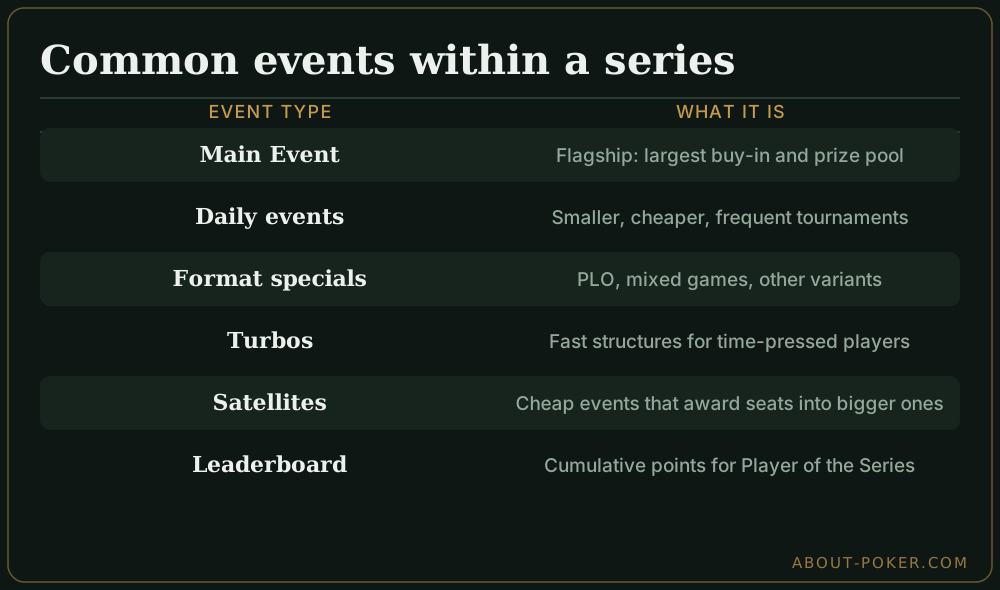
A well-built series deliberately varies its menu so it appeals to every kind of player. The table below lays out the typical categories you will see on a series schedule.
Most series anchor themselves with a Main Event — the largest buy-in and prize pool, and the title everyone wants. Around it sit smaller daily events, format specialties like PLO and mixed games, turbos for players short on time, and satellites that turn a small buy-in into a seat in a bigger event.
Leaderboards and Player of the Series
Many series add a meta-competition: a leaderboard that awards points based on how deep you run and how large the field is across all events. Cumulative points crown a “Player of the Series,” which comes with a trophy and sometimes a cash bonus. Chasing a leaderboard rewards volume, so it fits grinders who plan to play many events rather than one or two.
A worked example of planning a series
Suppose a two-week series lists thirty events and you have a $6,000 tournament bankroll for the trip. A disciplined plan might be: three $400 daily events, one $1,000 mid-tier event, and a run at the $2,000 Main Event via a $200 satellite rather than paying the full price. That budget respects sound bankroll and variance principles — no single buy-in exceeds a small fraction of your roll — while still giving you multiple shots at a big score. The mistake many players make is firing every event impulsively and busting their trip budget in the first three days.
How series play differs
Series play is a marathon, not a sprint, and that shapes strategy. Fatigue is real across ten straight days, so managing rest matters as much as managing chips. Fields are often larger and softer than in regular daily tournaments because recreational players travel in for the festival, which rewards a patient, value-heavy live tournament approach. And because you may be playing several events at once — busting one and hopping into a late-registration seat in another — you need a clear plan for which events matter most.
Bottom line
A poker tournament series is a scheduled festival of many tournaments under one brand, offering a varied menu of buy-ins and formats that builds toward a flagship Main Event. You pick the events that fit your bankroll and schedule, optionally chase a leaderboard, and treat the whole run as a marathon. Understanding the series structure lets you plan your buy-ins, use satellites wisely, and get the most value out of a poker trip.
Frequently asked
What is a poker tournament series?
A poker tournament series is a scheduled festival of many separate tournaments run back-to-back over a period of days or weeks under a single brand, such as the WSOP, WPT, or EPT. Players can enter one event or many, and the series usually builds toward a flagship Main Event.
What is the difference between a series and a single tournament?
A single tournament is one event with one prize pool. A series is a whole calendar of tournaments — dozens of them — with different buy-ins, formats, and start times. You choose which events to play, and each has its own separate prize pool and result.
Do I have to play every event in a series?
No. You register only for the specific events you want. Most players pick a handful that fit their bankroll and schedule. Some chase a series leaderboard or Player of the Series title, which rewards cumulative results across many events, but that is optional.