Rebuilding After Going Broke
A calm, step-by-step plan to rebuild after going broke at poker: fixing the leak first, dropping to the right stake, and a realistic recovery timeline.
On this page · 6 sections
Going broke is one of the most common experiences in poker and one of the least talked about. The good news: it is almost always recoverable, and the rebuild teaches you the discipline that keeps it from happening again. The trap is rushing — redepositing on emotion and firing straight back into the game that busted you. A calm, ordered rebuild beats a frantic one every time.
Step one: fix the leak before you refund
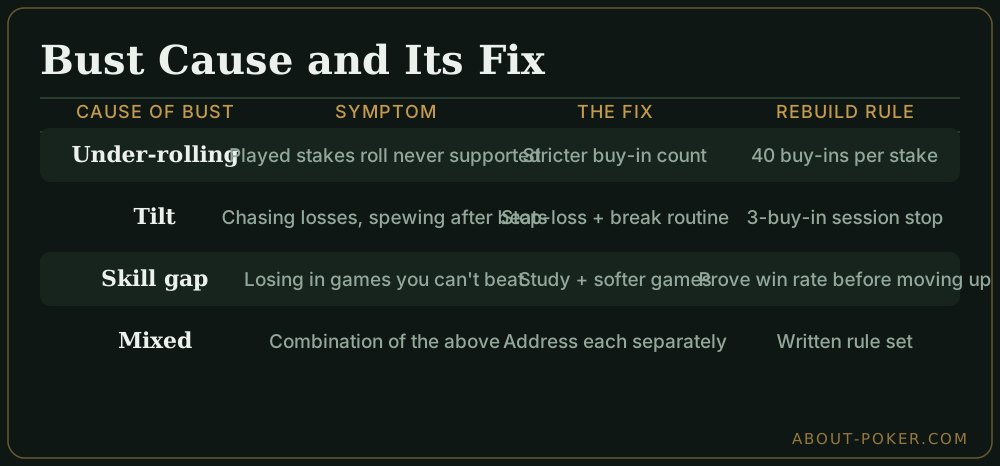
The single biggest mistake after going broke is redepositing before you understand why you went broke. If you refund without fixing the cause, you are just buying a ticket to bust again. So before any money moves, answer honestly: why did the roll die?
Almost every bust traces to one of three causes. Under-rolling — you played stakes your bankroll never supported, so normal variance was fatal. Tilt — you had the roll, but emotional play (chasing losses, spewing after bad beats, forcing action) bled it out. Playing above your skill — you sat in games you could not beat and paid tuition until it was gone. Sometimes it is a mix. Name yours specifically, because the fix is different for each. Under-rolling needs stricter buy-in rules; tilt needs a stop-loss and a break routine; a skill gap needs study and softer games. This diagnosis is the foundation of any real recovery from a busted bankroll.
Step two: take a real break
You do not have to quit forever, but you do need distance from the bust. A few days to a couple of weeks resets the emotional charge and lets you look at what happened without the sting. Redepositing the same night you go broke is a decision made by the exact mindset that caused the problem. Step away, breathe, and come back as an analyst, not a gambler seeking revenge.
Use the break to actually build the rule set you were missing: your buy-in count per stake, your stop-loss per session, your move-down trigger. Write them down. A rebuild without written rules is just hoping you have changed.
Step three: rebuild from a properly rolled low stake
When you do redeposit, deposit an amount you can afford to lose, and start at the lowest stake where that deposit gives you a full, conservative bankroll — usually the micros. Yes, it feels painfully slow after playing higher. But the math is unforgiving: rebuilding from a stake you are properly rolled for is far faster than busting a second time from a stake you are not. Treat this like building a bankroll from scratch, because that is exactly what it is.
Then move up only by the rules — full roll for the next stake, proven win rate, and a firm move-down trigger that sends you back the instant your roll dips too low. The move-down rule is what turns a one-way trip to broke into a controlled climb.
Worked example: a realistic rebuild timeline
Say you busted a $3,000 roll by playing NL100 while only 15 buy-ins deep — a classic under-roll. You take a two-week break, write your rules (40 buy-ins per stake, 3-buy-in session stop-loss), and redeposit $200 at NL2 (2¢/5¢, $2 buy-in), where $200 is a full 100 buy-ins.
Suppose you beat NL2 for 5bb/100 over 40 hours a month at 6 tables — roughly 100,000 hands, or about $250 in profit that month. Slow, but real. As your roll clears the threshold for NL5, you move up; then NL10, then NL25, each time only when you hold the full buy-in count and have a proven win rate. A disciplined grinder can climb from NL2 back to NL100 in a matter of months this way — and arrive with a rule set that makes the next downswing survivable instead of fatal. Compare that to the alternative: redepositing $500 straight into NL100 and having a coin flip on busting again inside a week.
Common mistakes when rebuilding
- Redepositing on tilt. The same emotion that busted you should never control the refund. Wait.
- Skipping the diagnosis. If you cannot name why you went broke, you will repeat it.
- Starting too high to “rebuild faster.” This is the exact under-rolling that caused the bust. It never works.
- Depositing money you need. A rebuild funded with rent money adds pressure that guarantees bad play. Only risk what you can lose.
- No move-down rule. Without it, the rebuild becomes just another one-way trip to zero.
A quick rebuild checklist
- Have I named the specific reason I went broke — under-roll, tilt, or skill gap?
- Have I taken a real break and written down my new rules?
- Am I redepositing only money I can genuinely afford to lose?
- Does my deposit give me a full roll at the stake I’m starting from?
- Do I have a move-down trigger that will protect me next time?
Going broke is a chapter, not the end of the story. Fix the leak, start low, climb by the rules — and the rebuild makes you the disciplined player you needed to be all along.
Frequently asked
How do I rebuild a poker bankroll after going broke?
First find and fix the reason you went broke — usually being under-rolled, playing too high, or tilt. Then start from a fresh, small deposit at the lowest stake your roll comfortably supports and rebuild with strict bankroll rules. The order matters: fix the leak before you refund.
Should I redeposit right away after going broke?
No. Redepositing immediately, before you understand why you busted, usually just funds the same mistake again. Take a short break, diagnose the cause honestly, and only redeposit once you have a rule set that would have prevented the bust.
What stake should I rebuild at?
The lowest stake at which your fresh deposit gives you a full, conservative bankroll — often the micros. It feels slow, but rebuilding from a properly rolled low stake is far faster than busting again from too high.
How long does it take to rebuild a bankroll?
It depends on your win rate, volume, and starting deposit, but expect months, not days. The players who rebuild fastest are the ones who move up slowly and never risk the whole roll trying to shortcut the process.