Understanding Makeup in Staking
Makeup is the running debt a backed player clears from future wins before splitting profit again. Here's exactly how it accrues, resets, and gets paid off.
On this page · 6 sections
Makeup is the single most misunderstood term in poker staking — and the one that quietly ends more backing relationships than any bad beat ever will. In plain language, makeup is the running total of your losses under a stake that must be earned back out of future profit before you and your backer split money again. It is a debt, but a special kind: you never pay it in cash, only in poker results.
If you’re new to backing deals, start with poker staking explained for the big picture, then come back here for the part that actually trips people up.
What makeup is, precisely
When a backer stakes you, they front the buy-ins. Every dollar you lose is a dollar of their real money gone. Makeup is simply the accounting that makes them whole before you get paid.
Say you lose $600 across a batch of sessions. That $600 becomes your makeup balance. The next time you win, the first $600 of profit goes entirely to erasing that balance — none of it splits to you. Only after makeup hits zero does the normal profit split kick in again. So makeup is the mechanism that ensures the backer recovers their losses before you share in the wins.
Crucially, makeup is not money you owe out of pocket. If you walk away from a standard stake still $600 in the hole, you typically owe nothing in cash. The backer ate that loss. What you lost was the time you spent playing while in the red — which is exactly why deep makeup feels like working for free.
A worked example of makeup in action
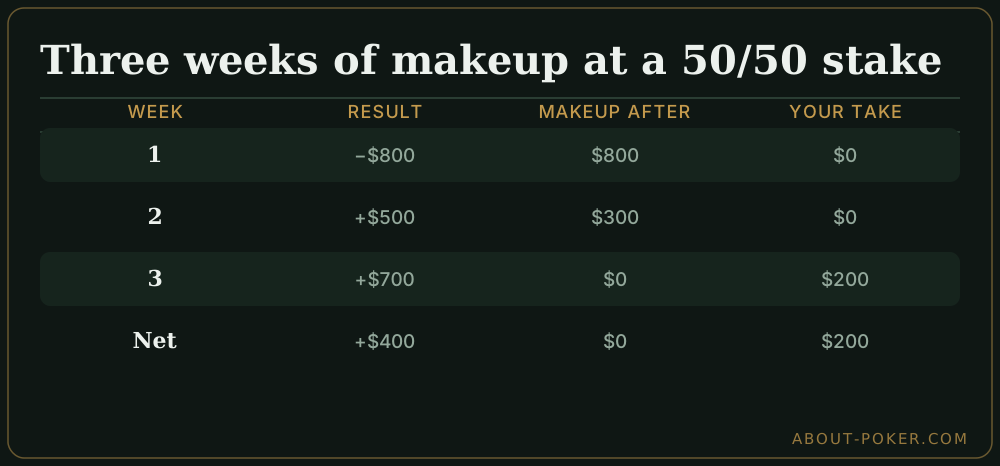
Numbers make this concrete. You’re staked 50/50 with a fresh slate — zero makeup.
- Week 1: you lose $800. Makeup balance is now $800.
- Week 2: you win $500. All $500 pays down makeup. Balance drops to $300. Your take: $0.
- Week 3: you win $700. The first $300 clears the remaining makeup. That leaves $400 of true profit, split 50/50. Your take: $200.
Notice what happened. Over three weeks you generated net $400 in profit for the partnership ($−800 + $500 + $700), and you took home $200 — exactly your half. The makeup system didn’t cost you anything you were owed; it just delayed your pay until the backer was even. That delay, though, is the psychological trap: for two full weeks of winning poker you saw nothing.
Why makeup wrecks the mental game
Grinding through makeup is one of the toughest tests in poker because your incentives feel scrambled. You can play a technically great week, book a solid win, and take home zero. That disconnect erodes motivation and can push players into spots they shouldn’t take — chasing a bigger score to “escape” the hole faster.
This is really a downswing problem wearing a staking costume. The math is fair, but the experience is grueling, and it overlaps heavily with the tilt and pressure covered in understanding poker downswings. The players who survive deep makeup are the ones who treat their earn as a long-run average and ignore the week-to-week take-home figure entirely.
The rules that vary — and must be nailed down
Makeup itself is standard, but the terms around it differ from deal to deal. Pin these down in writing:
- Does makeup reset if you leave? Most deals forgive an unpaid balance when you part ways. Some — usually with the same backer over multiple deals — expect you to clear it first. Know which you signed.
- Is makeup pooled or per-batch? In a package of several tournaments, losses in one usually offset wins in another within the batch. Confirm the scope.
- What counts toward makeup? Buy-ins, obviously — but what about fees, staking-site rake, or side action? Ambiguity here breeds disputes.
- Can you renegotiate the split while in makeup? Rarely, but worth knowing before you’re staring at a $2,000 hole.
How to actually dig out of makeup
There’s no trick — you clear makeup by playing your normal, winning game and letting volume do the work. But a few habits help:
- Keep your stakes steady. The urge to jump up to escape makeup faster usually just deepens it, because you add variance right when you least want it.
- Track a rolling win rate, not your take-home. Your job is to generate profit; the split handles itself. If your ROI and win rate are healthy, makeup clears on schedule.
- Communicate with your backer. A backer who understands you’re running below EV — not playing badly — will stay patient. Silence during a hole is what breeds distrust.
A makeup checklist before you sign
Before accepting any staking deal, get clear answers to these:
- How exactly does makeup accrue — every session, every batch, or over the whole deal?
- Does the balance reset or carry if either side walks away?
- What items count toward makeup beyond raw buy-ins?
- Is there a cap or a point at which the deal is reviewed?
- How and how often will the balance be reported to you?
Makeup is not a punishment — it’s just the fair price of having someone else absorb your variance. Understand it going in, track it honestly, and it becomes a manageable feature of being backed rather than the thing that blows the deal up. For the wider mechanics of backing relationships, see poker staking and backing.
Frequently asked
What is makeup in poker staking?
Makeup is the accumulated net loss a backed player owes back to their backer before profit-splitting resumes. It is not cash you pay out of pocket — it is a debt cleared only from future winnings, so while you are in makeup you keep none of your profit until it is zeroed out.
Do you ever pay makeup in cash?
In a standard stake, no. Makeup is settled entirely from future poker profit. If you leave a deal deep in makeup, most agreements simply forgive the balance, though some ask that you clear it before taking a fresh stake from the same backer.
Does makeup carry between different backers?
No. Makeup is specific to one backing relationship. A debt with Backer A has nothing to do with a deal you sign with Backer B, which is why players sometimes end a deep-makeup deal and start fresh elsewhere.
How long does it take to clear makeup?
It depends entirely on your win rate and the size of the hole. A player earning a solid ROI can clear a moderate makeup balance in weeks; a deep downswing can leave you grinding profitably for a month or more before you take home a cent.