Bluff-Catching Spots
A bluff-catcher beats only bluffs. Learn which spots to call, how pot odds set your required frequency, and which blockers make the call profitable.
On this page · 7 sections
A bluff-catcher is a hand that beats your opponent’s bluffs but loses to their value bets. You’re not calling because your hand is strong — you’re calling because you think they’re bluffing often enough that a call shows a profit. Recognizing bluff-catching spots, and knowing the frequency you need, separates disciplined players from those who either fold too much or hero-call into the nuts. This guide walks through the math, the reads, and the blockers that decide the call.
What a bluff-catcher actually is
By definition, a bluff-catcher can only beat a bluff. If your opponent is value-betting, you lose; if they’re bluffing, you win. So the decision has almost nothing to do with the “strength” of your hand in a vacuum and everything to do with how often your opponent is bluffing versus value-betting. For the concept in full, see what is bluff-catching.
That reframing matters. A hand like second pair might feel too weak to call a big river bet, but if it beats every bluff and your opponent over-bluffs, it’s a mandatory call. Conversely, top pair can be a fold if the opponent only ever bets that big for value.
The pot odds that set your threshold
Your required win rate comes straight from the price you’re being laid:
- Facing a pot-sized bet: you call a bet equal to the pot, risking 1 to win 2. You need to be good about 33% of the time.
- Facing a half-pot bet: you risk 0.5 to win 1.5, needing to be good only 25%.
- Facing a two-thirds bet: you need roughly 29%.
Formula: required equity = bet ÷ (pot + bet + your call). If your opponent bluffs more often than this threshold, calling profits. A balanced GTO opponent bluffs exactly at the threshold, making you indifferent — so all your edge comes from finding opponents who bluff too much or too little. Our how to call a bluff guide drills the reads that reveal over-bluffers.
A worked example
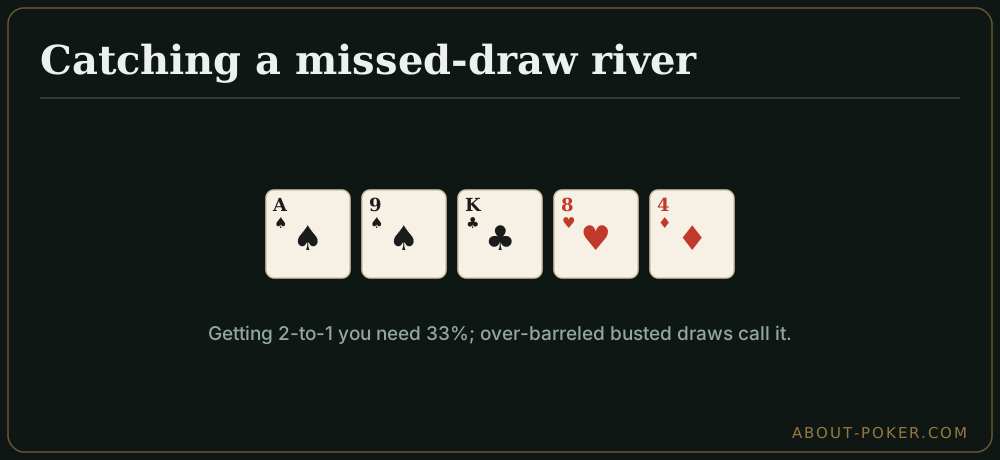
The pot is 100 on the river. Your opponent — a loose, aggressive player who barrels relentlessly — shoves 100. You hold As 9s on a Kc 8h 4d 2s 7c board: ace-high, which beats every missed draw but loses to any pair.
You’re getting 2-to-1, so you need to win 33% of the time. This opponent triple-barrels missed flush and straight draws far more than a third of the time here — their range is stuffed with busted Qs Js, Ts 9s, and the like, while few of their value hands would’ve played this way. Your ace also blocks some of their AK and A-high bluffs, but the sheer volume of missed draws makes this a clear call. Against a tight player who never bluffs, the identical hand is an easy fold.
Blockers: the tiebreaker
When a spot is close, blockers decide it. You want to hold cards that:
- Block their value combos. Holding an ace on an ace-high board removes some of their two-pair and top-pair value, so they’re relatively more bluff-heavy.
- Unblock their bluffs. Your hand should not contain the cards that make up their missed draws. If you hold a heart on a busted-flush river, you remove one of their bluffs — which is bad; you’d rather they still have all their bluffs to bluff with.
The best bluff-catchers block value and unblock bluffs. This is the mirror image of river blocker bluffs, where the bettor wants to block your calling range.
Where good bluff-catching spots come from
- Missed-draw rivers. When obvious draws brick, opponents who barreled them must either give up or bluff. Aggressive players bluff — call more.
- Polarized big bets from wide ranges. A huge river bet from a loose player is often polar; if their range is wide, it holds many bluffs.
- Overbet spots against players who overuse them. Some players only overbet as a bluff. Their sizing tells you the range is bluff-heavy.
Common mistakes
- Calling with the wrong bluff-catcher. When you have to defend some hands but not all, pick the ones that block value and unblock bluffs — not just your highest pair.
- Ignoring the opponent. The same hand is a call versus a maniac and a fold versus a rock. Frequencies are opponent-specific.
- Paying off obvious value. If the line and sizing scream value — small blocker-style bet, tight player, board that hit their range — fold your bluff-catcher and move on.
- Hero-calling too wide. Beating “some” bluffs isn’t enough; you must beat enough of them to clear the pot-odds threshold.
Quick checklist
In a bluff-catching spot, ask: What price am I getting, and what win rate does it require? Does this opponent bluff more or less than that? Do my cards block their value and unblock their bluffs? Does the board favor their bluffs (missed draws) or their value? When the frequency and the blockers both point toward a profitable call, click call — and when they don’t, fold without regret.
Frequently asked
What is a bluff-catching spot?
A bluff-catching spot is one where your hand beats your opponent's bluffs but loses to their value bets. You aren't calling because you're strong — you're calling because you think they're bluffing often enough to make the call profitable given the pot odds.
How often does a bluff-catcher need to win to call?
It depends on pot odds. Facing a pot-sized bet, you're getting 2-to-1, so you need to win about 33% of the time. Against a half-pot bet you need only 25%. If your opponent bluffs more often than that threshold, calling is profitable.
Which cards make good bluff-catchers?
Hands that block your opponent's value combos while unblocking their bluffs. Holding a card that removes their nut hands, or that doesn't overlap with their likely missed draws, tips a marginal call toward profit.