Poker Bluffing: Strategy, Tells & When to Bluff
Bluffing is betting a weak hand to make a better one fold. Learn the fundamentals, semi-bluffs, when to fire, how to catch bluffs, and the mistakes to avoid.
On this page · 11 sections
Bluffing in poker means betting or raising with a hand that probably isn’t the best, so a stronger hand folds. You win the pot without the best cards — by representing strength your opponent can’t call. Done well, it’s not reckless gambling; it’s a calculated tool that makes the rest of your game more profitable.
This is the hub for everything bluffing on The Felt. Below you’ll find the fundamentals, then deeper guides on the semi-bluff, board and opponent selection, bluff-catching, and the mistakes that cost players the most.
Why bluffing exists
Poker would be a simple game if you only ever bet your strong hands. Opponents would just fold whenever you put chips in, and you’d never get paid on your good cards. Bluffing solves that problem.
When you sometimes bet weak hands the same way you bet strong ones, your opponent can’t fold every time. They have to call with medium hands — which means your value bets finally get paid. So bluffing and value betting work together: each one props up the other. A player who never bluffs is as easy to beat as a player who bluffs constantly.
This is the deeper answer to “do I need to bluff?” You can survive at micro stakes by playing straightforward, but you cap your winrate. The moment opponents notice you only bet with the goods, your edge evaporates.
The two ingredients of every bluff
Every profitable bluff combines two things:
- Fold equity — a realistic chance your opponent folds a better hand. This depends on the board, your opponent, your position, and the story your betting tells.
- A believable story — your bets must represent a hand you could actually have. If the board and your line don’t match any strong holding, observant players won’t fold.
A bluff with no fold equity is just lighting chips on fire. A bluff with no story might generate folds against weak players but fails against anyone paying attention. Nail these two ingredients before anything else.
How to bluff, step by step
A good bluff is a decision, not an impulse. Run through these five checks before you fire:
- Confirm fold equity. Can your opponent actually fold a better hand? Against a calling station, stop here — there’s no bluff to make.
- Check the board. Does the texture let you credibly represent a strong hand? Dry, static boards you could plausibly have smashed are ideal.
- Make sure the story is consistent. Your bets across all streets should add up to a hand you could really hold, not a line no value hand would take.
- Prefer hands with a backup. When you can, bluff with a draw (a semi-bluff) so you still win the pot if you get called and improve.
- Size for the fold. Bet enough to make calling a mistake, but no more than you need — the goal is the fold, not maximum risk.
A worked example
You raise pre-flop with A♠ K♠ and get one caller in position on you. The flop comes Q♥ 7♦ 2♣ — a dry, disconnected board. You’ve missed, but you hold the two overcards and, crucially, you could easily have Q-x here after a pre-flop raise, so the story is believable.
You bet about two-thirds of the pot as a continuation bet. Your opponent’s likely holdings — small pairs, missed draws, weak Q’s they’re unsure of — face a tough call on a board that hits your raising range hard. Many of them fold, and you take the pot with ace-high.
Notice why this works: real fold equity (they hold plenty of hands that can fold), a consistent story (you represent the top pair your raise implies), and a backup (even called, your A♠ K♠ can still make top pair or better). That combination is the whole recipe.
How much to bet when bluffing
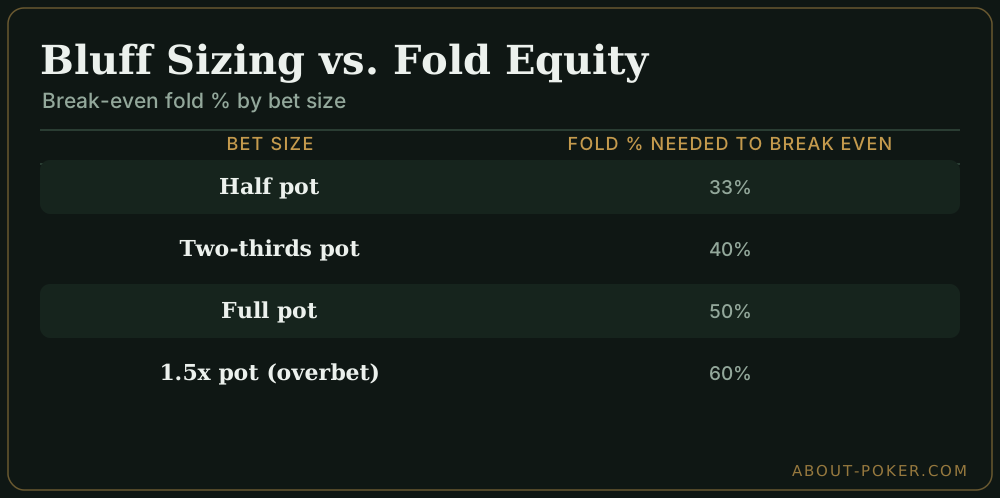
Your bluff sizing controls the price your opponent pays to call — and therefore how often they need to fold for the bluff to break even. Because a bluff wins the current pot when it works and loses your bet when it doesn’t, the break-even fold percentage is simply bet ÷ (bet + pot):
| Bet size | Fold % needed to break even |
|---|---|
| Half pot | 33% |
| Two-thirds pot | 40% |
| Full pot | 50% |
| 1.5× pot (overbet) | 60% |
So a half-pot bluff only needs your opponent to fold one time in three, while a pot-sized bet needs a fold every other time. As a default, most bluffs live in the half-pot to two-thirds range — big enough to fold out marginal hands, small enough that you don’t need a huge fold rate to profit. Reserve pot-sized and overbet bluffs for spots where the story is very strong and your opponent’s range is capped. This is the same pot odds math you use as a caller, just applied from the bettor’s side.
Pure bluffs vs. semi-bluffs
Not all bluffs are equal. The single most important distinction:
| Type | Hand strength | How you can win |
|---|---|---|
| Pure bluff | Almost no showdown value | Only if opponent folds |
| Semi-bluff | A draw that can improve | Opponent folds now, or you hit later |
The semi-bluff is the safest and most profitable bluff in poker because it has a second way to win. If you bet a flush draw and get called, you can still make your flush on the next card. Learn this one cold — start with what a semi-bluff is and why it wins.
Pure bluffs still have a place, especially on the river when all draws have missed, but they require the most discipline and the best reads.
Common types of bluffs
Once you understand the fundamentals, most bluffs you’ll make fall into a handful of recognizable patterns. Knowing the names helps you plan a hand across streets:
- Continuation bet (c-bet). You raised pre-flop, missed the flop, and bet anyway to represent the strong hand your raise implied. The worked example above is a textbook c-bet bluff — cheap, frequent, and the first bluff most players learn.
- Double and triple barrel. Firing a second bet on the turn is a “double barrel”; firing again on the river is a “triple barrel.” Each barrel needs a fresh reason to fire — a scare card that helps your story, or a range that’s still folding. Don’t barrel just because you bet the previous street.
- Check-raise bluff. Instead of betting, you check, let your opponent bet, then raise to represent a monster you slow-played. It’s powerful because a raise tells a stronger story than a bet, but it commits more chips, so save it for boards where your check-raising range is credible.
- Blocker bluff. You bluff partly because you hold a card that makes your opponent’s strong hands less likely. Holding the A♠ on a three-spade board, for example, means your opponent can’t have the nut flush — so the cards that would call you are exactly the ones you block, making a fold more likely.
When to bluff — and when not to
A great bluff in one spot is a disaster in another. The decision hinges on three filters:
- The board. Dry, static boards where you can credibly hold the nuts favor bluffing. Wet, draw-heavy boards where opponents have many strong hands do not.
- The opponent. Bluff players who can fold. Never bluff a “calling station” who refuses to lay down a pair — there’s no fold equity to attack.
- Your position. Acting last gives you more information and more ways to apply pressure. Position is your best friend when bluffing.
These filters deserve their own treatment — see the full guide on choosing the right spots to bluff. Position underpins all of it, so it’s worth understanding why acting last is so powerful before you start firing.
The other side: catching bluffs
Bluffing is only half the battle. The flip side is bluff-catching — calling with a medium-strength hand because you suspect your opponent is bluffing. You’re not calling to beat their value hands; you’re calling to beat their air.
Good bluff-catchers think about ranges: how many bluffs vs. value hands can the opponent have here? If the math says they bluff often enough, you call. The dedicated guide on how to catch bluffs profitably walks through the ranges and a worked river decision.
Bluffing frequency and balance
Strong players don’t bluff randomly — they aim for a ratio of bluffs to value bets that makes opponents indifferent to calling. As a working rule on the river, when you bet about the size of the pot, target roughly one bluff for every two value bets. Bet smaller and you can bluff more; bet bigger and you can bluff less, because your opponent is getting a worse price to call.
You don’t need to nail these ratios perfectly. The goal is simply to bluff enough that you can’t be exploited, and not so much that you bleed chips. The relationship between bet size and required calling frequency is pure pot odds viewed from the bettor’s side.
Common mistakes that sink bluffs
Most losing bluffs share a handful of causes, and each is fixable once you can name it:
- Bluffing a calling station. If your opponent never folds, there is no fold equity to attack — save your bluffs for players who can lay a hand down.
- Bluffing into too many opponents. Every extra player is another chance someone woke up with a real hand. Bluffs work best heads-up.
- Telling a story the board contradicts. If your line doesn’t represent a hand you could actually hold, thinking players won’t believe it.
- Sizing the bet wrong. Too small and you give a cheap call; too big and you risk more than the fold is worth.
Where to start
If you’re new to bluffing, read in this order:
Bluffing rewards study more than almost any skill in poker, because it’s where instinct most often leads beginners astray. Pair these guides with a solid grasp of Texas Hold’em and the odds and math behind every bet, and you’ll bluff with a plan instead of a prayer.
Frequently asked
What is a bluff in poker?
A bluff is a bet or raise made with a hand that is unlikely to be best, hoping a stronger hand folds. You win the pot not by showing down the best cards but by making your opponent give up.
Is bluffing necessary to win at poker?
You can win at low stakes with almost no bluffing, but you'll leave money on the table. Bluffing protects your value bets — if you never bluff, opponents fold every time you bet big. A balanced range needs both.
How often should you bluff in poker?
It depends on bet size, but a common river guideline is roughly one bluff for every two value bets when you bet about pot. Smaller bets allow more bluffs; larger bets allow fewer.
What is the difference between a bluff and a semi-bluff?
A pure bluff has almost no chance to win at showdown. A semi-bluff is a bet with a drawing hand that can improve to the best hand — so you can win by making opponents fold now or by hitting your draw later.