Bluffing Scare Cards
Scare cards let you represent hands your opponent fears. Learn which turns and rivers to bluff, why range advantage matters, and how to size.
On this page · 7 sections
A scare card is a turn or river that makes big hands more likely — an ace, a third flush card, a card that completes a straight. When one of these lands, it “scares” a player holding a one-pair hand because it threatens that they’re now beat. Bluffing scare cards means firing a bet to represent exactly the hand your opponent is afraid of. Done well, it’s one of the highest-return bluffs in poker. This guide shows which cards to attack, why range advantage decides everything, and how to size.
What makes a card scary
A scare card threatens your opponent’s most likely holding. The most common ones:
- Overcards, especially the ace. If a bare ace turns and you’ve been the aggressor, you credibly hold AK, AQ, or AA. Their king-high or middle-pair hands sweat.
- Flush-completing cards. A third card of a suit brings a made flush into your range instantly.
- Straight-completing cards. A card that fills an obvious straight draw (like an 8 on a 9-7-x board becoming 9-8-7) does the same.
- Board-pairing cards that give you credible trips or a full house.
The card must be believable coming from your line. If you raised preflop and bet the flop, an ace on the turn fits your story; a random deuce does not.
Why range advantage matters most
The single biggest factor is whether the scare card helps your range more than your opponent’s. When you’re the preflop raiser on an ace-high or broadway-heavy board, you hold far more strong aces and top pairs than a caller does. When the ace turns, you can represent it — they usually can’t.
Flip the situation: if you called a raise from the big blind and a scare card comes, you often can’t credibly represent it, because the raiser’s range is stronger. The lesson is to bluff scare cards from the range that “owns” that card. This is the foundation of effective double barrel bluffs.
A worked example
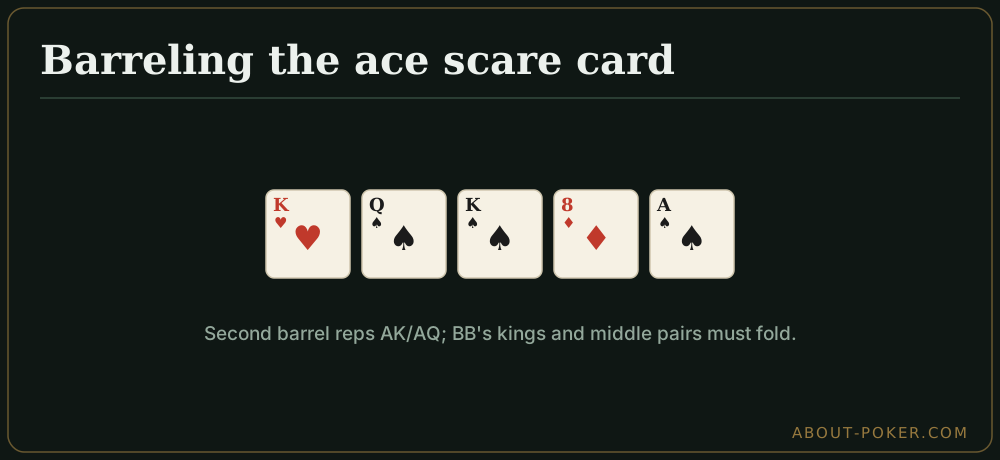
You raise Kh Qs on the button, the big blind calls. Flop Ks 8d 4c — you flop top pair and bet, they call. Turn is the As.
Even though you have top pair, this ace is a perfect card to keep barreling as a bluff-or-value hybrid. You represent AK and AQ, which are all in your button-raising range. The big blind’s flop-calling range is full of weaker kings, 8x, and draws — hands that hate seeing the ace. A second barrel of around two-thirds pot folds out most of their kings and middle pairs. The card credibly improved your range, not theirs. Layer in river blocker bluffs when you also hold cards that block their calls.
Sizing scare-card bluffs
Because the story is strong, you can size up:
- Turn scare card: two-thirds to three-quarters pot. Big enough to pressure one-pair hands, consistent with your value bets.
- River scare card: here you can polarize — bet large or overbet with the nutted hands you’re representing, so your bluffs carry the same threat. A pot-or-larger bet on a completed flush maximizes fold equity.
Always size your bluffs the same as your value bets on that card. If you only bet big when bluffing, observant opponents will pick you off. Our bluffing the river coverage expands on polarized sizing.
When not to bluff a scare card
- The card helps their range. If they’re the one who called with suited connectors and the flush comes in, the scare card is scary for you, not them.
- They don’t fold. Calling stations don’t respect scare cards. Save the bluff.
- You have no blockers and a weak story. Firing a third barrel on a flush card while holding two off-suit cards, against a strong range, is often just spewing.
- You’re capped too. If your own line looks weak, the scare card doesn’t rescue a story you never told.
Blockers make scare-card bluffs better
The best scare-card bluffs also block your opponent’s strong hands. On a flush-completing river, holding the ace of the flush suit means you hold a card they need for the nut flush — so fewer of their hands can call. Combining a scare card with a blocker is the ideal bluff: the card lets you represent value, and the blocker reduces the combos that can call you.
Quick checklist
Before bluffing a scare card, confirm: Does this card credibly complete a hand in my range? Do I have range advantage on it? Do I hold a blocker to their calls? Will this opponent fold one-pair hands? Is my sizing consistent with my value bets? When those line up, firing the scare card turns a lost pot into a won one — and it’s the backbone of relentless, credible triple barrel bluffs.
Frequently asked
What is a scare card in poker?
A scare card is a turn or river card that completes obvious draws or makes strong hands more likely — like an ace, a flush-completing card, or a card that finishes a straight. It scares opponents because it credibly improves your range while threatening their one-pair hands.
How do you bluff a scare card?
Fire a bet representing the strong hand the card completes. The bluff works best when the scare card is in your range but not your opponent's, when you hold blockers to their strong hands, and when they've shown a capped, one-pair range on earlier streets.
Do scare card bluffs always work?
No. They fail against opponents who don't fold, when the card actually helps their range, or when you keep firing without blockers or a believable story. Pick spots where the card credibly represents value from your line.