Double Barrel Bluffs
A double barrel bluff fires the turn after a flop c-bet. Which turn cards to barrel, which hands to pick, and how to read your opponent's flop call.
On this page · 8 sections
A double barrel bluff is the second shot: you continuation-bet the flop, got called, and now you fire again on the turn without a made hand. It’s one of the most profitable aggressive lines in poker because the flop call range is wide and full of hands that hate a second bet — floats, weak pairs, and draws that just missed. The double barrel squeezes those hands out and keeps the pressure on the caps in your opponent’s range.
Why the second barrel prints
When someone calls your flop continuation bet, their range is not strong — it’s a mix of top-pair-good-kicker and better, plus a huge tail of second pairs, draws, and floats. On the turn, that weak tail can’t call another bet. A well-chosen barrel folds out all of it, and you scoop a pot that’s now considerably larger. The key is that you’re not bluffing a strong range; you’re attacking a range that already showed weakness by merely calling instead of raising the flop.
Barrel the right turn cards
Turn card selection is everything. Good barreling cards do one of two things: they improve your range, or they scare your opponent’s.
- Overcards that hit your preflop raising range (an ace or king peeling off).
- Cards that complete draws you’d credibly hold, letting you represent the made hand.
- Flush-completing or straight-completing cards that threaten his one-pair holdings.
Weak barreling cards are blanks that change nothing and pairing cards that don’t help your story. If the turn bricks and improves neither range, your fold equity barely moved, and a barrel becomes a coin-flip you don’t need to take.
The math, with equity attached
Required fold percent = bet ÷ (bet + pot).
- Two-thirds pot barrel: 0.67 ÷ 1.67 ≈ 40 percent.
- Pot-sized barrel: 1 ÷ 2 = 50 percent.
Unlike a river bluff, a turn barrel usually carries real equity. If you’re barreling a flush draw with nine outs, you’ll complete about 19 percent of the time by the river. That backup equity means the fold frequency you actually need is lower than the pure formula suggests — the times villain calls, you still win a chunk.
A worked example
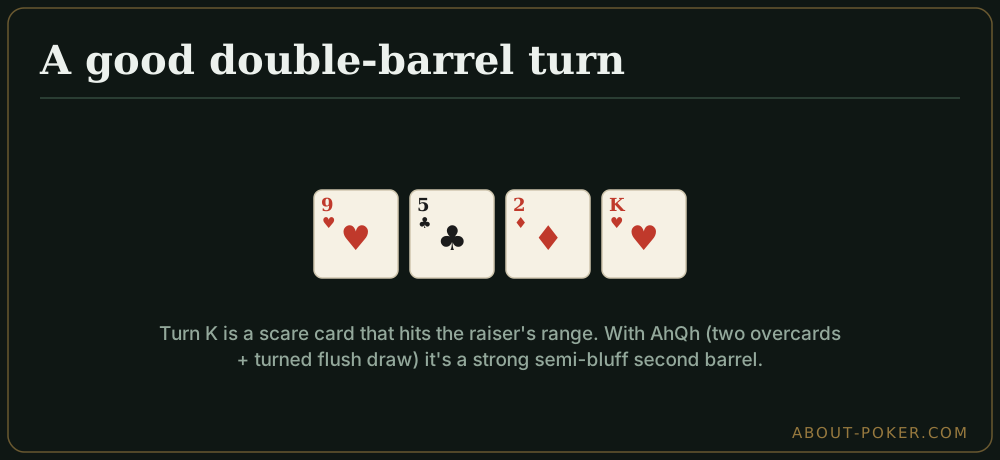
You open KQ suited in hearts from the button; the big blind calls. Flop is Jh 8h 3c. You c-bet, he calls. You have two overcards and the nut flush draw — huge equity but no made hand. The turn is the Ah. This card is perfect: it’s an overcard that hits your range, it puts a third heart out threatening a flush, and you now hold the nut flush yourself. You fire a two-thirds-pot barrel. His middling jacks and eights, plus any missed draws, fold to the double threat of the ace and the flush. And when he does call, you have the nut flush plus a king or queen out. This is the ideal double barrel: scary card, monster equity, credible story.
Pick hands, not just cards
Even on a great barreling card, choose hands that carry equity and blockers. Flush draws, open-enders, and gutshots-with-overcards can barrel and still win at showdown; they’re semi-bluffs, not pure bluffs. Pure air with no draw is the weakest double barrel — bet it only when the turn card genuinely swings the range in your favor and your opponent is capable of folding. Save the truly hopeless holdings for a check-give-up.
Setting up the third barrel
A double barrel is often step two of a three-street plan. Before you fire the turn, ask whether you’ll have a good river to keep going. If the answer is yes on many rivers — because your draws complete or scare cards keep coming — the double barrel gains value as the setup for a triple barrel. If most rivers force you to give up, you’re firing a one-and-done turn bet and should weight toward hands that can still improve. Planning the river before you bet the turn separates disciplined barreling from spew, a theme that runs through good river bluffing too.
Sizing the second barrel
Turn barrels usually want a slightly larger size than the flop c-bet, because the pot has grown and you’re now attacking a range that’s already narrowed to hands with some strength. Two-thirds pot to three-quarters pot is a standard turn barrel; it charges draws a real price and pressures one-pair hands without over-committing you. On the scariest barreling cards — an ace or a flush-completing card that torches the caller’s range — you can size up toward pot or beyond, because those cards make your nutted story credible. As always, keep your bluff barrels the same size as your value barrels on the same card, so your sizing never gives the hand away.
When to slow down instead
Not every flop call deserves a second barrel. Check back the turn when the card is a pure blank that improves neither range, when your hand has enough showdown value to win by checking, or when the caller’s turn range is now stronger than your representable range. Firing a barrel out of momentum into a board that got worse for you is one of the most common losing lines in no-limit. If the turn didn’t add fold equity and your hand can’t beat a bluff-catcher at showdown, checking is the disciplined, higher-EV play.
Frequently asked
What is a double barrel bluff?
It's firing a second bet on the turn as a bluff after you've already continuation-bet the flop. The goal is to fold out the medium-strength hands that called your flop bet but can't withstand more pressure, especially on turn cards that improve your perceived range.
What turn cards are best for a double barrel?
Barrel turns that improve your range and scare your opponent's: overcards to the board, cards that complete draws you'd credibly have, and cards that put a flush or straight threat on the board. Blank turns that change nothing are weaker barreling cards because they don't add fold equity.
Which hands should you double barrel as a bluff?
Prefer hands with equity and good blockers: flush draws, open-enders, gutshots with overcards, and hands that block your opponent's strong continues. Pure air with no draw is the last hand you should barrel, since it can only win by folding villain out.
How often does a double barrel need to work?
Required fold percent equals bet divided by (bet plus pot). A two-thirds pot turn barrel needs to work about 40 percent of the time; a pot-sized barrel needs 50 percent. Turn barrels also carry the equity of your draws, which lowers the fold frequency you actually need.