Semi-Bluffing Draws
Semi-bluffing draws lets you win two ways — a fold now or a hit later. Learn which draws to bet, how much, and when to check instead.
On this page · 7 sections
Semi-bluffing draws is the engine of aggressive, winning poker. Instead of passively calling with a flush or straight draw and hoping to hit, you bet or raise. That single decision gives you two ways to win the pot: your opponent folds right now, or they call and you complete your draw on a later street. This article covers which draws to bet, how much, and the spots where checking is the smarter play.
Why semi-bluffing a draw beats calling
A draw has raw equity — a flush draw hits roughly 35% of the time by the river, an open-ended straight draw about 32%. When you only call, you capture just that equity. When you bet, you add fold equity on top: the times your opponent folds a better hand, you win the whole pot without needing to improve at all.
That combination is powerful. Say you bet a flush draw and your opponent folds 40% of the time. You immediately bank the pot on those folds. On the 60% they call, you still hit your flush around a third of the time. You’ve stacked two profit sources into one bet. For the full definition and theory, see what is a semi-bluff.
The best draws to semi-bluff
Not all draws are equal. Rank them by outs and by how disguised and strong the finished hand is:
- Combo draws (flush draw + straight draw, or a draw + two overcards) — 12 to 15 outs. These are the strongest semi-bluffs in poker.
- Flush draws — 9 outs, roughly 35% to complete by the river. Nut flush draws are best because you never make a second-best hand.
- Open-ended straight draws — 8 outs, about 32%. Watch for flush possibilities that dominate you.
- Gutshots — only 4 outs (~17%). Bet these mainly as pure bluffs with a little backup, not as premium semi-bluffs.
A worked example
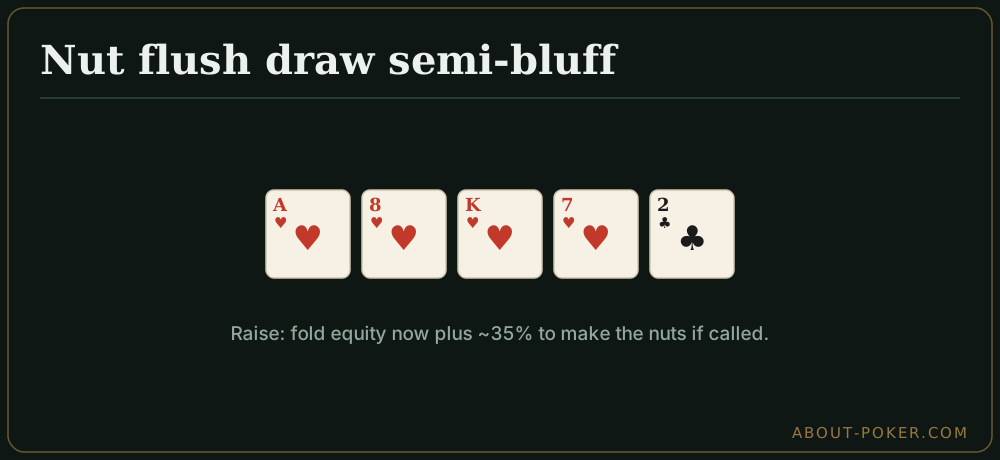
You hold Ah 8h on the button. The flop comes Kh 7h 2c. You have the nut flush draw: 9 clean outs to the best possible hand. The preflop raiser bets 5 into a pot of 8.
Raise. You have huge equity — around 35% to make the nut flush, plus your ace can sometimes win unimproved. When you raise to, say, 16, worse hands like second pair or a weaker king may fold, and if called you’re never in bad shape. If your flush comes, you’ll likely stack a top-pair hand that can’t fold. This is the textbook combination of fold equity plus a monster draw. Compare this to floating as a bluff, where you call with the intent to steal later instead of raising now.
Sizing your semi-bluffs
Because you have equity, you can size larger than a pure bluff and still risk less overall. A common, sound approach:
- Flop, single raised pot: two-thirds to full pot with big draws. Larger sizing charges opponents to draw against you and builds the pot you want when you hit.
- Turn barrels: you can go bigger — pot or slight overbet — with the nut draw, since folds are worth more and your hit is well disguised.
- Facing a bet: raise sizing should be around 3x their bet, enough to generate real fold equity.
Match your sizing to your goal. If you mostly want folds, size up. If you mostly want to hit cheaply against a caller, size down or just call. Our bluff sizing guide breaks the numbers down further.
When to check your draw instead
Betting is not automatic. Check when:
- Your opponent never folds. Against a calling station, there’s no fold equity — just call and realize your equity cheaply, then bet when you hit.
- You’re out of position on a dynamic board. Betting into a raise you can’t handle costs you your equity. Checking keeps the pot small.
- Your draw is weak or dominated. A low flush draw or a straight draw on a two-flush board can make you a second-best hand. Proceed carefully.
- The board is very wet and multiway. Fold equity drops with more players; lean toward the strongest draws only.
Common mistakes
- Semi-bluffing every draw regardless of fold equity. Firing into a station just spews chips. No folds means no semi-bluff — it’s just a bet with a draw.
- Sizing too small. A tiny bet gives opponents a cheap price to draw and generates almost no folds. Use a size that pressures them.
- Giving up when called. The turn is often the best barrel card. If you bet the flop with a draw and brick, a second barrel on a scare card keeps both ways to win alive.
- Ignoring your own outs quality. Nut draws let you barrel fearlessly; non-nut draws need caution to avoid stacking off second-best.
Quick checklist
Before you fire a draw, ask: Do I have fold equity? How many clean outs? Is my draw to the nuts? Am I in position? Can I comfortably continue if raised? If most answers are yes, bet or raise. If they’re no, check and take the free card. Get all these right and semi-bluffing draws becomes one of the most reliable sources of profit in your game.
Frequently asked
What is a semi-bluff draw?
A semi-bluff draw is betting or raising with a hand that isn't best yet but can improve — like a flush or open-ended straight draw. You win if your opponent folds now, or if you complete the draw later. That second way to win is what separates a semi-bluff from a pure bluff.
Which draws are best to semi-bluff with?
The strongest are flush draws (9 outs), open-ended straight draws (8 outs), and combo draws that mix both plus overcards. These give you enough equity that even a called bet stays profitable across the two ways you can win the pot.
Should you always bet your draws?
No. Betting is best when you have fold equity, position, or a big draw. Against a station who never folds, or on a wet board where you'll face a raise you can't continue against, checking to realize equity cheaply is often better.