The Biggest Bluff in Poker History
The biggest bluff in poker history is Chris Moneymaker's 2003 WSOP hero-bet vs Sam Farha. What made it work, and the strategy lessons behind famous bluffs.
On this page · 7 sections
The biggest bluff in poker history, by influence if not by pot size, is Chris Moneymaker’s all-in move against Sam Farha at the 2003 World Series of Poker Main Event final table. An online-qualified amateur bluffed a hardened cash-game pro off the better hand on live television — then went on to win the whole tournament. That single hand helped launch the global poker boom.
The hand that changed poker
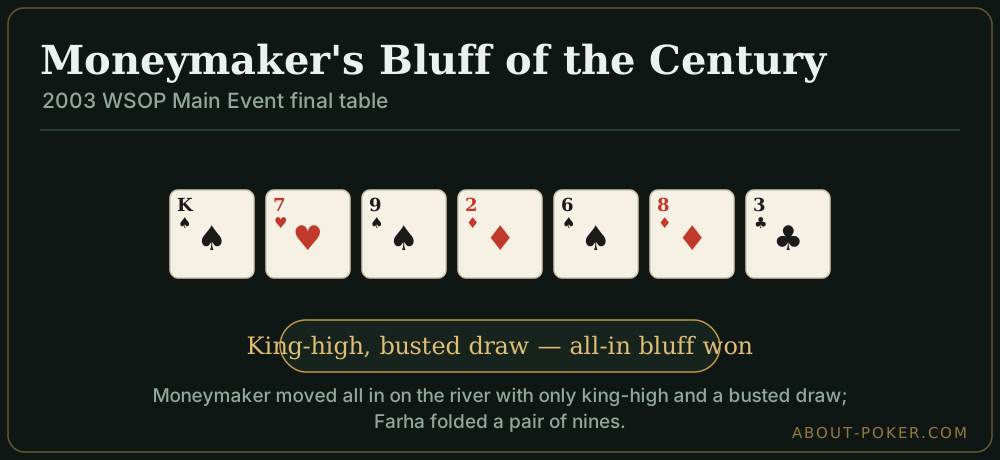
Heads-up-style pressure at the 2003 final table put Moneymaker against Farha, one of the era’s most respected players. Moneymaker held K♠ 7♥ — king-high with a busted flush-and-straight draw after the board ran out 9♠ 2♦ 6♠ 8♦ 3, essentially no hand that could win at showdown — and moved all in on the river for a huge overbet. Farha, sitting on a pair of nines (top pair with a queen kicker), read that Moneymaker had likely missed, went into the tank, and eventually folded the winning hand. ESPN’s Norman Chad dubbed it “the bluff of the century.”
What makes it the definitive answer to “biggest bluff in poker history” isn’t the size of the pot. It’s the consequence: a regular guy with a qualifier seat out-played a pro on the sport’s biggest stage, then won the Main Event and a life-changing prize. Millions watching concluded that they could do it too, and online poker exploded over the following years. Few single hands have ever moved an entire industry.
Other iconic bluffs worth knowing
Moneymaker’s is the most influential, but “best bluffs in poker history” is really a shortlist of televised hands that fans still replay. Here are five of the most famous, with the cards and the outcome:
| Bluff | Cards & spot | What happened |
|---|---|---|
| Moneymaker vs. Farha — 2003 WSOP Main Event | K♠ 7♥ (king-high, busted draw) vs. a pair of nines | River all-in on 9-2-6-8-3; Farha folded top pair. Moneymaker won the $2.5M title. |
| Brad Booth vs. Phil Ivey — High Stakes Poker (2007) | 4♣ 2♣ (gutshot + backdoor draw) vs. Ivey’s K♠ K♦ | Booth pushed ~$300K in cash on a 3-7-6 flop; Ivey folded pocket kings. |
| Tom Dwan vs. Greenstein & Eastgate — High Stakes Poker | Q♣ 10♣ (draw) vs. Greenstein’s A-A overpair and Eastgate’s pair | Dwan barreled ~$104K into a $133K pot and folded out two better hands. |
| Phil Ivey vs. Paul Jackson — 2005 Monte Carlo Millions | Q♥ 8♥ vs. 6♠ 5♦ — bluff against a bluff | On 7-J-J both had nothing; a four-bet raising war ended with Ivey shoving and Jackson folding. |
| Tom Dwan’s 7-2 — High Stakes Poker | 7♦ 2♦ (the worst starting hand) vs. two pair | Dwan overbet all-in with the game’s weakest holding and got a made hand to lay it down. |
Notice the pattern: none of these bluffers had a hand, but each represented one convincingly and picked an opponent who could actually fold.
Why it worked (and why most copies fail)
Stripped of the drama, Moneymaker’s bluff followed textbook logic:
- A believable story. His betting line was consistent with a strong made hand or a completed draw, so Farha couldn’t be sure he was ahead.
- Fold equity against the right opponent. Farha was a thinking player capable of laying down a hand — the essential precondition for any bluff.
- A bet size that made folding rational. An all-in put Farha’s tournament life at risk, magnifying the pressure far beyond the chips in the pot.
Beginners watch the clip and copy the aggression while ignoring the setup. Firing an all-in with air against a calling station who never folds isn’t a hero move — it’s a donation. The lesson is the reasoning, not the boldness.
What famous bluffs have in common
Across eras and players, the great televised bluffs rhyme. Here’s the common thread and what to steal from each:
| Ingredient | What it looks like | What to copy |
|---|---|---|
| Credible story | The line matches a real strong hand | Bet hands and boards that let you rep value |
| Fold equity | Opponent is capable of folding | Bluff thinking players, not stations |
| Board pressure | Scare cards that hit the bluffer’s range | Barrel cards that help your story |
| Sizing | A bet big enough to make folding correct | Size up when you need real folds |
| Table image | A tight image makes bluffs believed | Bluff more after showing down strong hands |
Notice what’s absent: raw courage. Every column is a decision you can plan for in advance, which is exactly why disciplined players can bluff profitably without a poker celebrity’s nerve.
Live reads made these moments possible
Many legendary bluffs came together live, where players could study breathing, chip handling, and timing. A bluffer who senses hesitation across the table gains the confidence to fire; a caller who spots a false tell finds a hero call. The information edge of the live arena is a big part of why these hands became iconic on camera. If that side of the game interests you, the live tells and reads hub breaks down what actually signals strength versus weakness at the table.
The real takeaway for your game
Studying famous bluffs is useful only if you extract the framework and leave the theatrics. Before you fire, ask the same questions Moneymaker’s situation answered: does my line tell a believable story, can this specific opponent fold, and is my bet big enough to make folding the right choice? That is the entire craft of knowing when to bluff, and it’s far more repeatable than a single dramatic all-in.
Takeaways
- The most influential bluff in history is Moneymaker’s 2003 WSOP all-in vs. Farha.
- Its legend comes from its impact — it helped launch the online poker boom.
- Every great bluff shares a credible story, fold equity, and the right size.
- Copy the reasoning behind famous bluffs, not the raw aggression.
- Highlight reels show survivors; don’t set your bluff frequency from them.
Famous hands are a fun way in, but the fundamentals are what pay. Build them up through how to bluff in poker and the wider bluffing hub so your own big bluff is a calculated move, not a gamble.
Frequently asked
What is the biggest bluff in poker history?
The most famous and influential is Chris Moneymaker's all-in bluff against Sam Farha at the 2003 WSOP Main Event final table. Moneymaker had nothing but a busted draw, moved all in, and Farha folded the better hand. Moneymaker went on to win, sparking the global poker boom.
Why is Moneymaker's bluff so famous?
Because of what it triggered. An amateur who qualified online out-bluffed a seasoned pro on the sport's biggest stage, then won the Main Event. Millions of viewers concluded that anyone could do it, and online poker exploded. The bluff itself was bold, but its cultural impact made it legendary.
What made these famous bluffs actually work?
The same fundamentals as any good bluff: a believable story, fold equity against an opponent capable of folding, and often a board or bet size that made a big hand credible. Great bluffs aren't reckless — they represent a hand the opponent genuinely fears.
Can I learn from famous bluffs as a beginner?
Yes, but copy the reasoning, not the aggression. Study why the bluff was credible and why the opponent could fold. Firing huge bluffs without those conditions just donates chips. Start with sound spot selection before attempting hero moves.