Building a Study Routine
A poker study routine turns random effort into steady improvement. A repeatable weekly structure for hand review, theory, and drills that actually sticks.
On this page · 6 sections
Most players study poker the way they diet: intensely for a week after a bad run, then not at all. Improvement does not come from bursts; it comes from a small routine you repeat until it is automatic. The point of building a study routine is to remove the daily decision of whether to study, so all your energy goes into the study itself. Here is a structure that has survived contact with real, busy schedules.
Why a routine beats motivation
Motivation is a terrible foundation because it disappears exactly when you need it — during a downswing, after a long day, when the game feels hard. A routine survives all of that because it does not ask how you feel. A player who studies 45 minutes twice a week, every week, will lap a more talented player who studies six hours in a burst and then goes dark for a month. Consistency compounds; intensity does not. This is the same logic behind sound poker goals and study habits — you are engineering behavior, not relying on willpower.
The three ingredients
Every good study session mixes three things, though not all in equal measure:
- Review — your own hands, especially spots you found uncomfortable. This keeps study anchored to your actual leaks instead of theory you will never use.
- Theory — a concept, a video, a chapter, a solver output. This expands your toolkit beyond what you already do.
- Drills — repetition of a narrow skill: pot odds, ranges, board texture reads. Drills turn understanding into speed, so the right move fires automatically at the table.
Skip review and you study problems you do not have. Skip drills and your knowledge stays theoretical and never shows up when the clock is ticking.
A concrete weekly template
Here is a routine built around roughly two hours per week, split into two sessions — realistic for someone with a job:
Session A (45 min, mid-week): Spend 20 minutes reviewing 3–5 flagged hands from your last playing session. Spend 15 minutes on one theory topic (say, how to size flop c-bets on dry boards). Finish with 10 minutes of drills — for instance, a pot odds trainer run until the math is instant.
Session B (45 min, weekend): Do a deeper single-hand analysis in a free solver or equity tool, comparing your line to the recommended one. Then watch 20 minutes of content actively — pausing before each decision to predict the action.
Micro-habit (5 min, every playing day): Flag two hands during play and write one sentence each on why they were interesting. That five-minute habit feeds Session A and is the engine of the whole system. Our guide on poker journaling and session review shows how to keep that log lightweight.
A worked example of a review block
Say you flagged a hand where you c-bet the turn with king-high on a wet board and got check-raised off it. In your 20-minute review you do not just decide “I should have checked.” You ask three questions: What was villain’s range by the turn? What did my bet accomplish — could worse fold or better call? What is my plan for the river if called? You discover your turn barrel had no fold equity against a range that had connected and no equity when called. The lesson generalizes: on wet turns against a capped-but-connected range, prefer checking marginal holdings. One reviewed hand just fixed a recurring leak — that is the whole game.
Make it impossible to skip
Attach the routine to something you already do. Study before your regular playing session, not after, when you are tired and want to log off. Keep sessions short enough that starting is never daunting — 45 minutes, not three hours. And track it, even with a simple tally. Seeing a streak of completed sessions is itself motivating, and it turns study from a virtue you aspire to into a habit you simply have. The tools and software hub lists trainers and trackers that make the drilling and review parts frictionless.
The routine checklist
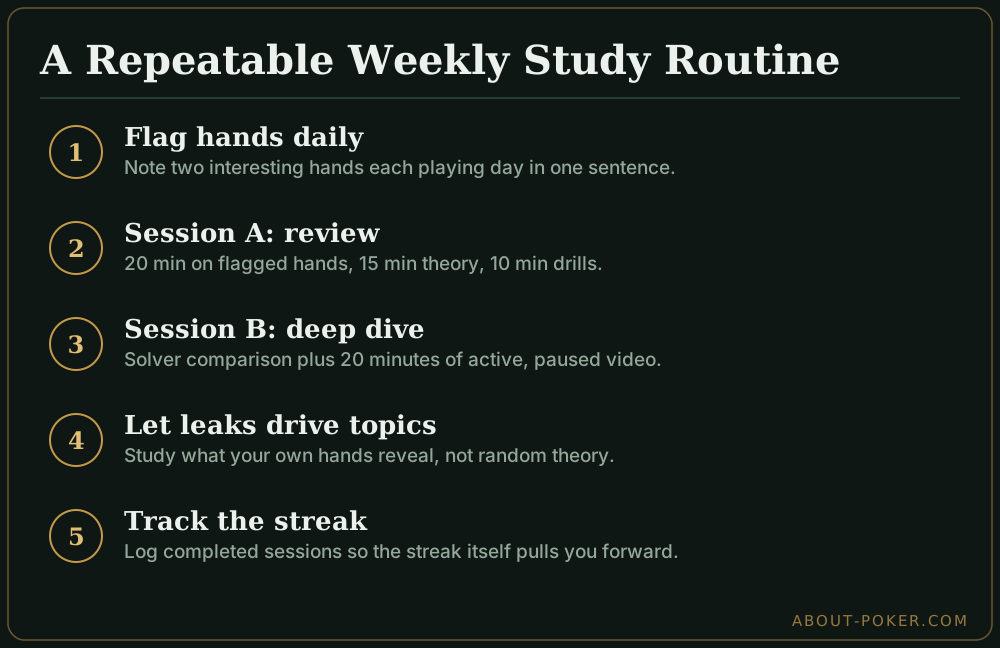
- Two fixed 45-minute blocks per week, scheduled before play, not after.
- Every session mixes review, theory, and drills — never just one.
- Anchor a 5-minute daily micro-habit of flagging and annotating two hands.
- Track completion so the streak itself pulls you forward.
- Let your own hands drive the topics so you fix leaks you actually have.
Study does not have to be heavy to be effective. It has to be repeated. Build the smallest routine you will actually keep, and let it compound.
Frequently asked
How much should I study poker?
A common healthy ratio is about one hour of study for every three to four hours of play. What matters more than the exact number is consistency: two focused 45-minute sessions every week beat one heroic six-hour binge each month.
What should a poker study routine include?
Three ingredients: reviewing your own hands, learning theory or watching content, and drilling a specific skill. The review keeps study grounded in your real leaks, the theory expands your toolkit, and the drills build speed and recall so knowledge shows up at the table.
How do I make a study routine stick?
Attach study to an existing habit, keep sessions short enough that you never dread them, and track it. Scheduling a 45-minute block right before your regular session, and logging one takeaway each time, turns study from a chore into an automatic part of playing.
Is watching poker videos studying?
It can be, but passive watching is the weakest form of study. Videos count when you pause, predict the next action, and note what you would have done differently. Otherwise you are entertaining yourself, not learning.