Mental Game & Variance
Beat tilt, survive downswings, and understand variance. The mental game separates winners from break-even players — here's how to master it.
On this page · 7 sections
Two players can know the exact same strategy and get wildly different results — because poker is won and lost in your head. The mental game is how you handle tilt, downswings, and the raw variance that makes even great play look bad for stretches. Master it and you finally get to play the poker you already know how to play.
Why the mental game decides who wins
Most losing players don’t lose because they don’t know what to do. They lose because they can’t do it consistently — they know they should fold, but they’re steaming from the last hand and they call. They know a downswing is normal, but they panic and start gambling to “get even.”
Strategy gets you to break-even. The mental game gets you into profit. Everything in this section is built on three linked ideas:
| Concept | The problem it causes | Where we cover it |
|---|---|---|
| Tilt | Emotion overriding good decisions | How to stop tilting |
| Variance | Short-term luck hiding your true skill | Variance explained |
| Downswings | Extended losing runs testing your nerve | Dealing with downswings |
| Mindset | Confidence, focus, and identity | A winning mindset |
| Running bad | Feeling cursed and forcing action | Running bad |
Tilt: emotional decisions cost real money
Tilt is playing worse than you know how to, because of emotion. The classic trigger is a bad beat — you get your money in ahead, lose, and the next ten hands you’re calling too wide, bluffing too much, and trying to punish the table. It doesn’t feel like a strategy error in the moment, which is exactly why it’s so expensive.
The common types of tilt
Tilt isn’t one thing. Naming your flavor is the first step to catching it:
- Revenge tilt — fixating on the one player who beat you and playing every pot against them to “get it back.”
- Entitlement tilt — feeling the deck owes you after you’ve played well, so you overplay marginal hands waiting to be paid off.
- Running-bad tilt — a slow bleed of frustration after days or weeks of losing, where you stop trusting good decisions.
- Desperation tilt — chasing a specific loss back before you quit, usually by jumping stakes or gambling big to break even for the session.
Four fixes you can use mid-session
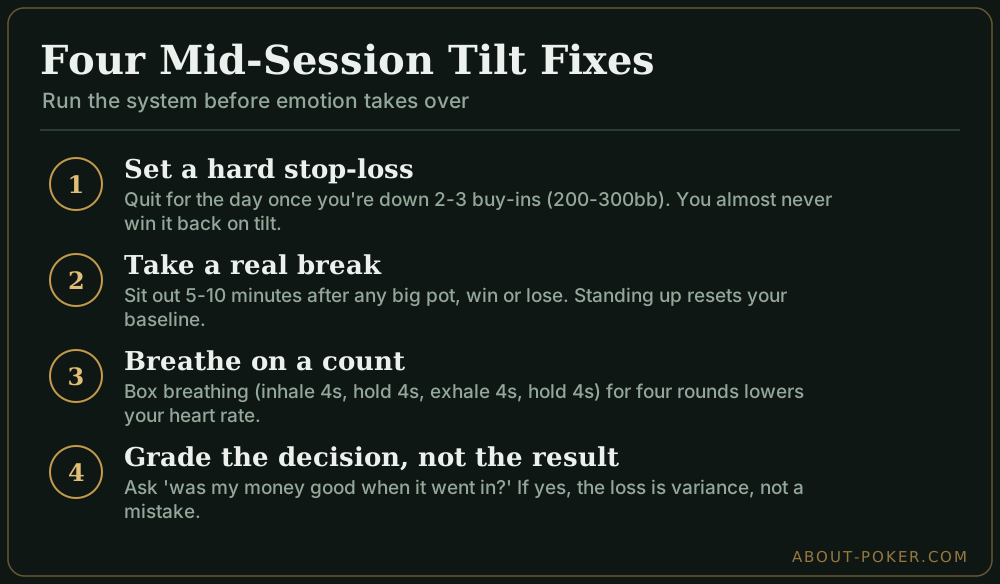
The fix isn’t “just calm down.” It’s a system you run before emotion takes the wheel:
- Set a hard stop-loss. Cash-game rule of thumb: quit for the day once you’re down 2–3 buy-ins (e.g. 200–300bb). You almost never win it back on tilt.
- Take a real break. Sit out for 5–10 minutes after any big pot — win or lose. Standing up and walking away resets your baseline better than “one more hand.”
- Breathe on a count. Box breathing (inhale 4s, hold 4s, exhale 4s, hold 4s) for four rounds physically lowers your heart rate before the next decision.
- Grade the decision, not the result. After a bad beat, ask “was my money good when it went in?” If yes, you did your job — the loss is variance, not a mistake to avenge.
For the full playbook, including how to spot your personal triggers, see how to stop tilting.
Variance: why short-term results lie
Poker rewards good decisions over the long run — but “the long run” is far longer than most players think. In the short term, a coin that’s weighted in your favor still lands wrong plenty of times. That gap between your true skill and your recent results is variance.
Understanding it does two jobs. It stops you from abandoning a winning strategy after a bad week, and it stops you from thinking you’re a genius after a hot run. If you’ve ever stared at a jagged results graph and wondered whether you’re actually any good, start with variance explained.
Downswings and running bad
A downswing is variance you can feel — an extended stretch where you’re losing despite playing well. They’re normal, they’re survivable, and they’re where most bankrolls (and confidence) get destroyed by people who don’t understand them.
Two questions dominate here: how long can this last? and am I doing something wrong or just unlucky? We answer both, with realistic numbers and a decision checklist, in dealing with downswings and running bad in poker.
The winning mindset
Beyond damage control, the strongest players build a positive frame: they focus on decisions instead of dollars, keep learning, and separate their self-worth from a single session. That mindset is what lets someone treat a brutal night as data instead of a disaster. Explore it in building a winning poker mindset.
Bankroll is the foundation of mental stability
Here’s the piece people skip: most tilt and panic comes from playing with money that matters too much. A proper bankroll — enough buy-ins to absorb a normal downswing — turns terrifying swings into routine noise.
If you take one action from this hub, make it this: size your bankroll so variance can’t hurt you. See how much bankroll you need and the broader bankroll management guides — they’re the practical backbone of everything the mental game tries to protect.
Where to start
If you’re on tilt right now, read how to stop tilting. If you’re on a losing run and questioning everything, start with running bad in poker. And if you just want the framework that makes the swings feel small, variance explained is the foundation everything else builds on.
Frequently asked
What is the mental game in poker?
The mental game is everything happening between your ears while you play: emotional control, focus, confidence, and how you handle short-term luck. It decides whether you actually play the strategy you know.
What is tilt in poker?
Tilt is emotional, worse-than-usual decision-making — usually triggered by a bad beat, a losing session, or frustration. It's the single biggest leak for players who already know solid strategy.
Why does variance matter so much in poker?
Because short-term results are mostly luck. Even a strong winning player can lose for weeks or months. Understanding variance keeps you from quitting a good strategy or over-trusting a lucky run.
How do I stop poker from wrecking my emotions?
Play within a bankroll you can afford to lose, set stop-loss rules, take breaks, and judge yourself on decisions rather than results. The emotional swings shrink once money pressure and ego are removed.