Emotional Control in Poker
Emotional control isn't suppressing feelings — it's stopping feelings from spending your chips. Build the triggers, routines, and rules that protect A-game.
On this page · 7 sections
Emotional control in poker is not about feeling nothing — it’s about stopping what you feel from reaching your decisions. Everyone gets a jolt after a brutal river card. Winning players just don’t let that jolt pick up the mouse. Emotional control is a set of habits and rules that keep your worst moments from costing your best sessions.
The emotions that actually cost you
Anger after a bad beat gets all the attention, but it’s only one of several emotional leaks. Each one distorts strategy in its own direction:
- Anger / frustration: the classic tilt — calling too wide, bluffing into calling stations, chasing losses.
- Greed / euphoria: after a big win you get loose and sloppy, giving back profit because you feel invincible.
- Fear: scared money folds too much and passes up value, terrified of losing what’s on the table.
- Boredom: long card-dead stretches tempt you to manufacture action and play hands you should fold.
Naming which one is rising is half the battle. You can’t manage an emotion you haven’t noticed. The specifics of the anger variant are covered in depth in how to stop tilting; this page is the wider framework.
Control the behavior, not the feeling
Here’s the reframe that makes emotional control achievable: you will never stop feeling the sting of a cooler, and trying to is exhausting and pointless. What you can control is the behavior that follows the feeling. The emotion is allowed to happen; it just isn’t allowed to touch a bet-sizing decision.
That distinction matters because willpower in the moment is weak. Telling yourself “stay calm” while your heart rate spikes almost never works. What works is a rule you made earlier, when you were calm — a rule that fires automatically so tilted-you never has to make the call.
Rules you set before you sit down
Pre-committed rules are the backbone of emotional control. Decide them cold, then obey them hot:
- Stop-loss: quit after losing a set number of buy-ins — no “one more orbit.”
- Emotion stop: the instant you notice a trigger, sit out, regardless of score.
- Session length cap: end after a fixed time; fatigue erodes control faster than anything.
- No stakes jump on tilt: never move up to “win it back.”
These live inside a broader pre-session routine — the rules are only as good as the habit of actually setting them before every session, not just intending to.
The in-the-moment reset
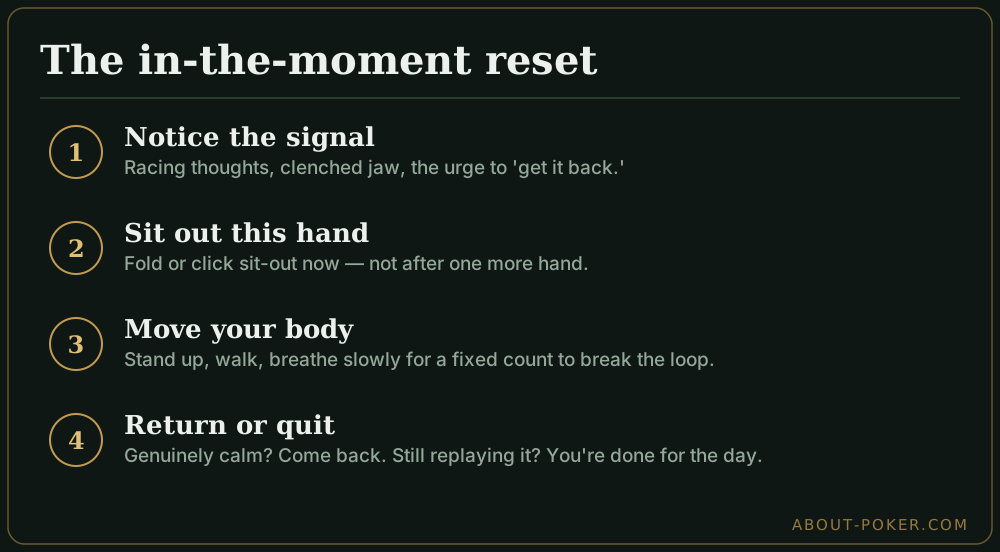
When a spike hits mid-session, run a physical reset rather than an argument with yourself:
- Notice the signal. Racing thoughts, a clenched jaw, the urge to “get it back.”
- Sit out this hand. Not next hand — this one.
- Move your body. Stand up, walk, breathe slowly for a fixed count.
- Return or quit. Genuinely calm? Come back. Still replaying it? You’re done.
Motion breaks the emotional loop faster than any self-talk. You cannot reason yourself out of a spike as quickly as you can walk away from it.
A worked example
You’re four hours into an online session, up two buy-ins, feeling great — euphoria, not anger. You start opening wider, flatting 3-bets out of position, and “having fun.” Two big pots later the profit is gone and you’re near even.
The emotional leak here wasn’t tilt; it was overconfidence. Your emotion-stop should trigger on any strong feeling, not just bad ones. The disciplined line: notice the loosening, recognize that the good feeling is degrading your ranges, and either tighten back to your default or book the win and quit. The win was real; the giveback was the emotion spending chips.
Kill the trigger at the source
A lot of emotional volatility disappears when you understand what you’re reacting to. Short-term results are dominated by luck. A bad beat is variance, not a personal insult, and a hot run isn’t proof you’ve leveled up. When you truly internalize that swings are noise, the emotional charge behind both tilt and euphoria drops on its own — there’s simply less to react to.
An emotional-control checklist
Before each session: set your stop-loss and time cap. During: name the emotion the moment it rises, and let the pre-set rule fire. After: review whether any decision was made by feeling rather than logic, and log it. Over time, that log shows your personal triggers so you can see the storm coming. For the complete system, start at the mental game hub.
Frequently asked
How do I control my emotions in poker?
You don't suppress the emotion — you stop it from reaching your decisions. Build awareness of your triggers, set rules like a stop-loss in advance, and use a physical reset routine when you feel a spike. The goal is controlling behavior, not erasing feelings.
Why do I lose emotional control after a bad beat?
A bad beat triggers a stress response before your rational brain catches up, so you feel the urge to 'get it back' immediately. Recognizing that the beat was variance, not a mistake, drains the emotional charge and buys time for your judgment to return.
Can you play poker well while feeling emotional?
Briefly, if you have strong habits, but sustained emotion degrades decision quality fast. The reliable move is to notice the emotion early and leave before it costs you, rather than trying to out-discipline a rising tilt spike.
What's the difference between emotional control and tilt control?
Tilt control is a subset of emotional control focused on anger and frustration after losses. Emotional control also covers greed after a win, fear when scared money is on the line, and boredom on a card-dead stretch — all of which distort play.