Burnout and Poker
Burnout quietly wrecks your win rate before it wrecks your motivation. Spot the early signs, understand the causes, and build a schedule that keeps you fresh.
On this page · 7 sections
Burnout is the slow erosion of your energy, focus, and motivation from grinding too much without enough recovery — and in poker it hits your win rate long before it hits your desire to play. Burnout and poker go hand in hand precisely because the game rewards volume, so the natural instinct is to keep pushing right up to the point where every extra hour is losing you money. Recognizing and preventing burnout is a core mental-game skill, not a soft afterthought.
Burnout is not tilt
It’s worth separating the two, because they need opposite responses. Tilt is acute — a sharp emotional spike after a specific bad beat, gone in an hour if you handle it. Burnout is chronic — a slow accumulation of fatigue and disillusionment over weeks or months. Tilt is a storm you wait out; burnout is erosion you have to actively repair.
The danger is that burnout disguises itself. You don’t wake up one day “burned out.” Instead your C-game hours quietly multiply, your study drops off, your sessions get sloppier, and you tell yourself you’re just running bad. By the time you consciously recognize it, it’s already been draining your results for a while.
The early warning signs
Catching burnout early is far easier than recovering from it. Watch for these:
- Dread before sessions you used to look forward to.
- Chronic tiredness that a single night’s sleep doesn’t fix.
- Irritability at the table — needlers and bad beats bother you more than usual.
- Autopilot play — you stop reading opponents and just click buttons.
- Skipping study and review because you “can’t be bothered.”
- Numbness to results — wins don’t feel good, losses don’t sting, it all just feels like a job.
Any two or three of these appearing together is a signal to change your schedule now, before it deepens.
What causes it
Burnout is volume without recovery. The specific drivers stack up:
- Too many hours, too many days in a row, with no real time off.
- Poor physical foundation — bad sleep, no movement, junk fuel. Your brain can’t sustain focus on an unmaintained body; sleep, health and fitness is the base layer here.
- No life outside poker, so there’s no psychological recovery between sessions.
- Prolonged variance, where a long downswing drains motivation faster than the losses drain the bankroll.
- No goals or structure, so the grind feels endless and pointless.
Notice how many of these are about inputs, not the game itself. Burnout is usually a lifestyle problem wearing a poker mask.
A worked example
You’re a full-time online player putting in six-day weeks, five hours a day, six tables. For months it’s fine. Then a three-week downswing hits, and instead of dialing back you add hours to “fix it.” Now you’re playing seven days a week, dreading the desk, snapping at the table, and skipping every review session.
Your results get worse — not because variance got worse, but because you’re now playing your C-game most of the day. This is burnout compounding a downswing. The instinct to grind more is exactly backwards.
The fix is counterintuitive: take three days completely off. No poker, no study — sleep, exercise, see people. Come back at four days a week, four tables, with a short daily study block and a concrete goal. Fewer hands, but nearly all of them sharp. Within two weeks the win rate recovers, not because the cards changed but because you recovered. Pushing through would have deepened the hole; stepping back climbed out of it.
Prevention beats recovery
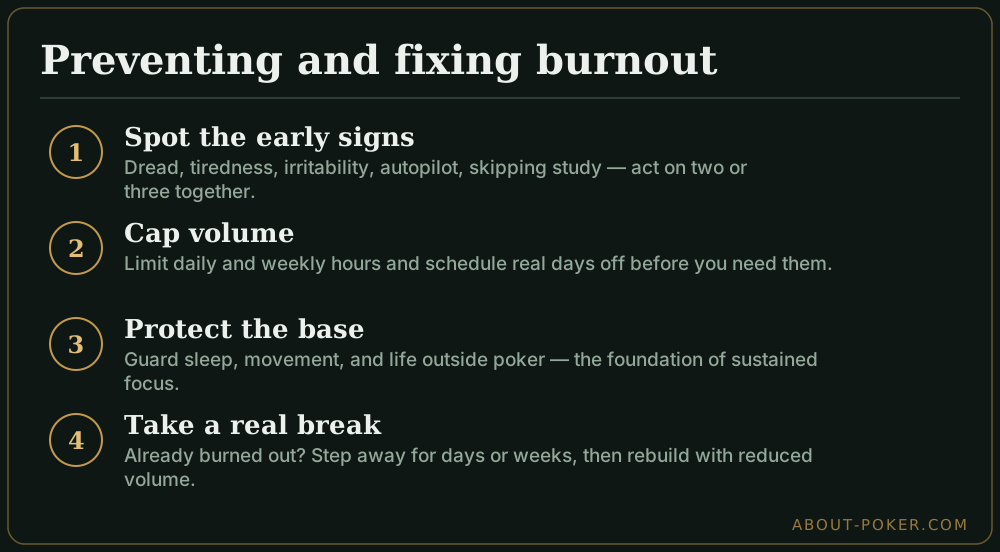
The best burnout treatment is a schedule that never lets it build. Treat poker like sustainable work: cap your session length, cap your weekly hours, and schedule real days off before you feel you need them. Protect sleep and movement as non-negotiables. Keep interests and relationships outside the game so there’s somewhere to recover to.
Structure also protects motivation. Clear goals and study habits give the grind a direction, which is a surprisingly strong buffer against the “endless treadmill” feeling that fuels burnout. And when you notice you’re tired or emotional, honor it as data — that’s your body flagging the recovery debt before it becomes full burnout.
If you’re already burned out
Don’t try to power through. Take a genuine break — days or weeks, sized to how deep it goes, not a single short session. Restore the basics first: sleep, movement, life outside poker. Then return with reduced volume and clear goals, and rebuild up slowly. The lost EV from a two-week break is trivial next to the months of degraded play burnout causes if you ignore it.
A burnout checklist
Cap your daily and weekly hours before fatigue forces the cap on you. Schedule real days off. Guard sleep, movement, and life outside poker. Keep goals concrete so the grind has direction. And treat dread, numbness, and autopilot as early alarms, not weakness. Handle burnout as prevention and it rarely reaches you. For the complete mental-game system, head back to the hub.
Frequently asked
What are the signs of poker burnout?
Common signs include dreading sessions you used to enjoy, chronic tiredness, irritability at the table, sloppy autopilot play, skipping study and review, and results feeling like they don't matter. Burnout usually degrades your play before you consciously notice you're burned out.
How do I avoid poker burnout?
Treat poker like sustainable work: cap your session length and weekly hours, take real days off, protect sleep and exercise, and keep interests outside poker. Burnout comes from volume without recovery, so scheduling recovery is the prevention.
Is burnout the same as being on tilt?
No. Tilt is an acute emotional spike, usually after a specific bad beat or loss. Burnout is chronic — a slow accumulation of fatigue and lost motivation over weeks or months. Tilt is a storm; burnout is erosion.
What should I do if I'm already burned out?
Take a genuine break — days or weeks, not one session — and restore the basics of sleep, movement, and life outside poker. Come back with reduced volume and clear goals. Pushing through burnout usually deepens it and bleeds money in the meantime.