Confidence and Poker
Confidence is a poker edge — but only the kind built on process, not results. How to build durable self-belief, avoid overconfidence, and play your A-game.
On this page · 6 sections
Confidence in poker is a strange thing: too little and you fold winning hands and skip profitable bluffs; too much and you spew stacks convinced you cannot lose. The sweet spot — quiet, durable self-belief grounded in your actual skill — is a genuine edge. This guide on confidence and poker is about building the right kind and defending against the wrong kind.
Confidence is permission to execute
You can know the correct play cold and still lose money if you lack the nerve to make it. The player who understands that a light three-bet is profitable but talks themselves out of it, who sees the river bluff and checks instead, who holds a bluff-catcher and folds to a bet the villain over-bluffs — that player is leaking money not from ignorance but from hesitation. Confidence is what turns knowledge into action at the table. It is the permission to execute the play your study told you was right. Without it, all the theory in the world stays theory. This is closely tied to your table image and confidence — how you feel affects how you are perceived, and vice versa.
Build it on process, not results
Here is the trap almost everyone falls into: they let their confidence ride on results. Win big and they feel invincible; lose and they feel worthless. This is fragile by design, because results are noisy — you can play perfectly and lose for weeks. Confidence built on a winning streak will collapse on the first downswing, exactly when you need it most. The durable alternative is confidence built on process: on the quality of your decisions, your study habits, and your discipline, none of which a bad river can take away. Track the good decisions you make regardless of whether the hand won, and your confidence stops swinging with the graph. It becomes a floor rather than a weather vane.
A worked example
You hold ace-king and face a three-bet from a tight player. You have the stats and the study to know a four-bet is profitable against this opponent’s range, but your stack has been shrinking all night and your hand hesitates over the raise. A results-based confidence says, “I’m running bad, better play safe” — and you flat, playing a big pot out of position without initiative. A process-based confidence says, “The decision is correct; the recent results are irrelevant to this hand’s math” — and you make the four-bet you know is right. Over a thousand such spots, the process player earns far more, not because they got braver, but because they detached their nerve from their recent luck. Notice the enemy here is the same fear behind scared money: playing to avoid loss instead of to make the right play.
The overconfidence trap
If too little confidence makes you play scared, too much makes you play reckless — and it is just as expensive. Overconfidence usually strikes after a big win: you feel unbeatable, so you jump stakes, gamble in marginal spots, and stop listening to feedback. The tell is that overconfidence is loud and results-based (“I’m crushing, I can’t lose”), while healthy confidence is quiet and process-based (“my decisions are sound, so I’ll keep making them”). The specific failure mode after a hot run has its own name — see winner’s tilt. The antidote is the same as for underconfidence: anchor to process, not to the last result, in either direction.
Play within your roll
Confidence and bankroll are linked more tightly than most players admit. When a single buy-in represents money you cannot comfortably lose, your brain treats every big pot as a threat, and fear leaks into your play no matter how much you study mindset. The cleanest confidence booster is often the most practical one: drop to a stake where the money genuinely does not matter emotionally. At those stakes your decisions loosen up, you make the plays you know are right, and — because you are now playing well — the results follow, feeding real, earned confidence. It is a virtuous loop, and it starts with being properly rolled.
The confidence checklist
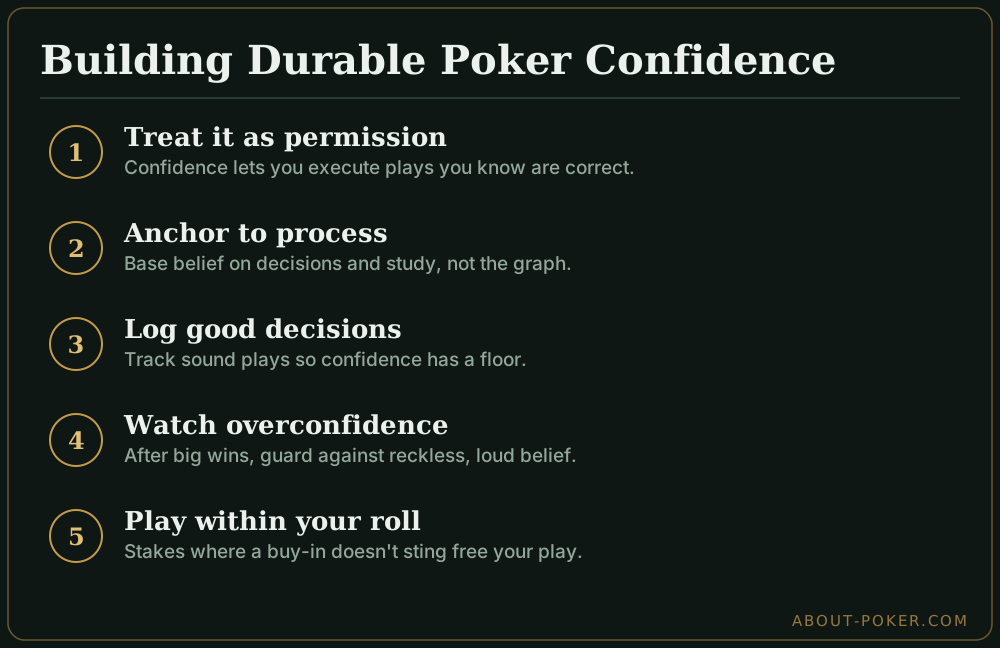
- Treat confidence as permission to execute the plays your study proved correct.
- Anchor it to process — decisions, study, discipline — not to the graph.
- Log good decisions regardless of results so your belief has a floor.
- Watch for overconfidence after big wins; it is loud, reckless, and expensive.
- Play within your bankroll so no single pot feels like a threat.
The goal is not to feel great — it is to feel steady enough to make the right play whether you are up three buy-ins or down five. That steadiness, built on process, is the confidence that actually earns.
Frequently asked
Why is confidence important in poker?
Confidence lets you execute the plays you know are right — three-betting light, firing a river bluff, calling down with a bluff-catcher — without hesitating. A player who knows the correct move but is too scared to make it leaves money on the table every session.
How do I build confidence in poker?
Build it on process, not results. Track the good decisions you make regardless of outcome, study until your plays are grounded in understanding, and play stakes you are properly rolled for. Confidence built on a hot streak collapses on the first downswing; confidence built on sound play endures.
How do I stop playing scared?
Scared money usually comes from playing above your bankroll or fearing a loss you can't afford. Move down to stakes where a buy-in doesn't matter emotionally, and refocus on decisions instead of the dollar amounts. When the money stops feeling scary, your play opens back up.
Can you be too confident in poker?
Yes. Overconfidence — often after a big win — leads to playing too high, gambling in marginal spots, and ignoring feedback. Healthy confidence is quiet and process-based; overconfidence is loud and results-based, and it is a fast route to giving your winnings back.