Badugi Drawing Strategy
Badugi rewards patience and clean draws. Learn how to snow, when to break a made hand, and how many cards to draw for a winning four-card badugi.
On this page · 6 sections
Badugi is a triple-draw lowball game where the goal is the lowest four-card hand made of four different ranks and four different suits. It rewards a very specific kind of patience: you are drawing toward clean, distinct cards while your opponents do the same, and the player who reads draws, breaks hands correctly, and bluffs at the right moments takes the money. Good drawing strategy in Badugi is less about gambling and more about disciplined card selection and position.
The goal: a clean four-card badugi
A badugi is any hand with four cards of different ranks and different suits. The lowest one wins, and aces are low, so the best possible hand is 4-3-2-A of four suits, the number-one badugi. If two or more cards share a rank or a suit, only the distinct ones count, so a hand might be a three-card badugi (three usable cards) or worse. Crucially, any four-card badugi beats any three-card hand no matter how low the three cards are.
That ranking structure is what shapes drawing strategy. You are usually racing to turn three good cards into a complete four-card badugi, and the quality of your fourth card matters enormously. This lowball logic overlaps with Omaha hi-lo strategy: in both games you are hunting low, distinct cards and folding hands that duplicate what you already hold.
How many cards to draw
Your draw count is the loudest piece of information at the table, so manage it carefully. Standing pat means you are claiming a made badugi. Drawing one means you have three clean cards and need a fourth. Drawing two or three means you are far from complete and usually holding a speculative hand.
Draw the cards that hurt you: pairs and suit duplicates. If you hold Ah 2c 5s 5d, the two fives are a pair, so you keep Ah 2c 5s and draw one, discarding the duplicate five. If you hold Ah 2h 5c 9d, the two hearts duplicate a suit, so you break one heart and draw toward a cleaner low. Early in a session or with a big field, drawing two is acceptable, but understand that every extra card you draw broadcasts weakness. Learning to read your own draw honestly is part of the same discipline you build in how to learn PLO: count what helps you and discard what does not.
A worked example
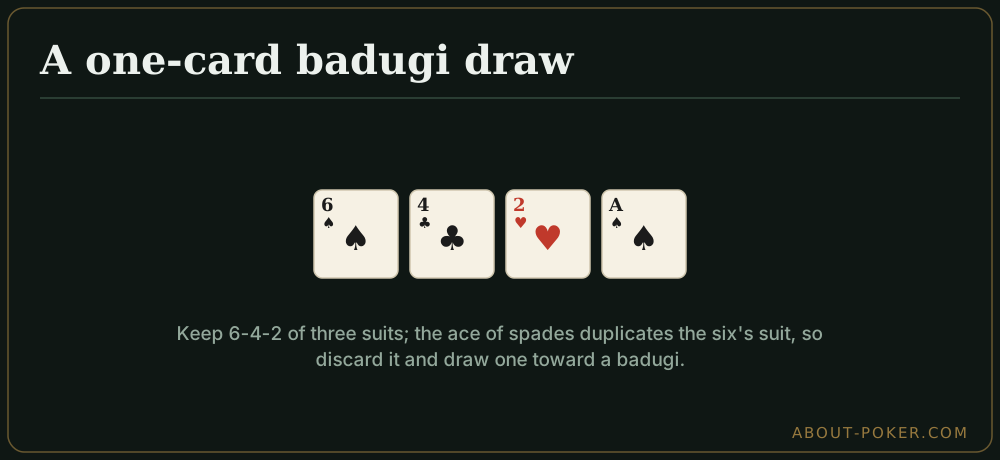
You are heads-up on the second draw holding 6s 4c 2h and one duplicate you just discarded. You draw one card hoping to complete a badugi with any card that is a different rank than 6, 4, 2 and a different suit than spade, club, heart, so any diamond ranked ace, three, five, or seven and below, plus off-suit low cards.
Count your live outs. You need a low card (ace through, say, eight to stay strong) that is a diamond, or any suit that is not already used but of a distinct rank. Roughly speaking you have a healthy number of cards that complete a good four-card badugi, but many completions land you a mediocre eight-or-worse badugi rather than the near-nuts. If your opponent stands pat before you draw, they are representing a made hand; completing to a rough badugi may still lose. If they also draw one, you are in a race and the pot odds usually favor taking your card and betting a completed low. Reading whether the opponent is genuinely pat or snowing is the whole game on the last two streets.
Snowing and breaking hands
Snowing is standing pat with a weak or busted hand to represent a made badugi. It works best heads-up, in position, and against an opponent who has been drawing and is likely to miss. If they draw one on the final draw and you have stood pat throughout, a bet often takes it because they cannot call profitably with an incomplete hand. Snow sparingly; the move loses all value against players who call down or who are themselves pat.
Breaking a hand is the opposite decision: giving up a made but weak badugi to draw for a better one. If you hold a rough king-high badugi that is likely beaten, and you are up against aggression that screams a lower badugi, you may break the king and draw one, trading a losing made hand for a shot at a winning one. Break only when your made hand is a clear underdog and the draw meaningfully improves your chances, because breaking a hand that is actually ahead is a classic leak. Badugi rounds out a strong mixed-game repertoire alongside the many Omaha poker variations you will meet in dealer’s choice.
Position and betting patterns
Position is enormous in Badugi because you act after seeing how many cards your opponents drew. Acting last lets you value bet completed hands, bluff busted opponents, and control the pot with marginal made hands. In early position, favor stronger starting cards and be more cautious about standing pat on a weak badugi.
Watch draw counts across all three draws. An opponent who drew two, then one, then stood pat has a credible made hand. One who drew one on every street and then bets is often representing more than they have. The story their draws tell, combined with position, should drive your calls and folds far more than the raw strength of your own cards.
Drawing strategy checklist
Before each draw, ask four questions. Which of my cards are duplicated in rank or suit, and must be discarded? How many cards am I drawing, and what does that tell my opponents? Given the draw counts I can see, does my opponent likely have a made badugi, a draw, or a snow? And is my current made hand strong enough to stand pat, or rough enough that breaking it is correct? Answer those every street and you will out-draw and out-read the players who simply toss cards and hope.
Frequently asked
What is a badugi hand?
A badugi is a four-card hand where all four cards are different ranks and different suits, with the lowest such hand winning. The best possible badugi is 4-3-2-A of four different suits, called a number-one badugi. Any four-card badugi beats any three-card hand.
How many cards should I draw in Badugi?
Draw the cards that pair your ranks or duplicate your suits. If you hold three clean, low, distinct-suited cards, draw one to try to complete a four-card badugi. Drawing two or three cards is fine early but signals a weak hand, so position and betting patterns matter as much as the raw draw count.
What does snowing mean in Badugi?
Snowing is bluffing by standing pat (drawing zero cards) with a hand that is not actually strong, representing a made badugi to fold out opponents. It works best heads-up, in position, against players who draw and miss, and when your standing pat is credible from the earlier action.