Omaha Hi-Lo Starting Hands Chart & Point System
The best Omaha Hi-Lo starting hands scoop both ways. A tiered chart plus a simple point system for ranking your four cards in Omaha 8-or-better.
On this page · 5 sections
Which four cards should you actually play in Omaha Hi-Lo? Ask it a better way — which four cards can win both halves of the pot — and the whole chart falls into place. The premium holding is A-A-2-3 double-suited; just behind it sit A-2-3-4 and high pairs anchored to a low draw like A-A-K-K. Every strong Hi-Lo hand is an A-2 low draw wrapped around something that also plays for high. A bare A-2 with two dead high cards looks great and plays terribly, because a lone nut low gets shared and quartered over and over.
The reason an ace sits at the center of nearly every good hand is that it does double duty: highest card for the high, lowest card for the low. Ideally you have two of them.
The starting-hand tiers
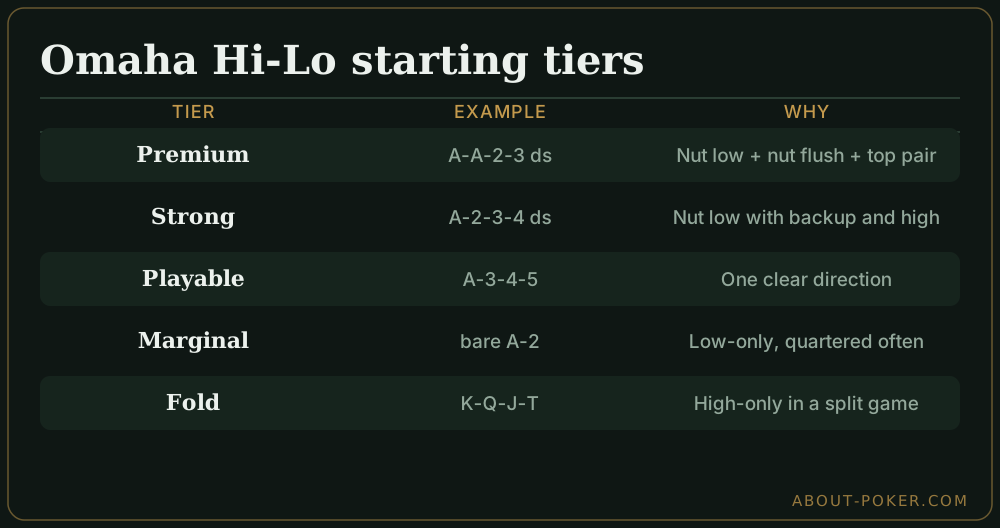
Rank your four cards by how many halves of the pot they can realistically win. “ds” marks double-suited — two separate suited pairs.
| Tier | Example hands | Why it lands here |
|---|---|---|
| Premium | A-A-2-3 ds, A-A-2-4 ds, A-A-3-4 ds | Nut-low draw plus nut-flush plus top pair → scoops |
| Strong | A-2-3-4 ds, A-2-K-K ds, A-2-3-K | Nut low with backup and genuine high potential |
| Playable | A-2-x-x suited ace, A-3-4-5, 2-3-4-5 ds | One clear direction, some scoop upside |
| Marginal | bare A-2 rainbow, A-3 with no backup | Low-only, quartered often; play cautiously |
| Fold | 9-8-7-6, K-Q-J-T in a low-heavy pot, danglers | High-only or no nut potential in a split game |
Sit with the bottom two rows. A hand like K-Q-J-T double-suited is a monster in regular PLO, yet in Hi-Lo it barely clears marginal — it can never win the low, so it only pays when the board runs high and no low is possible. Direction matters more than raw strength here.
A simple point system
If you’d rather have a number to lean on, score your four cards and play the ones that clear a threshold. This is a practical shortcut, not a solver output:
A-2present: +6 (the nut-low engine)A-3, no 2: +3- Second low backup card (a 3 or 4 alongside
A-2): +2 (counterfeit protection) - Suited ace: +3 (nut-flush potential)
- Pair of aces: +4 (high power on top of the low)
- Other high pair (
K-K,Q-Q): +2 - A dangler that connects to nothing: −3
- All four cards 9 or higher in a low-heavy game: −2
Play hands scoring roughly 8 or more from early position and 5 or more in late position. A-A-2-3 ds runs +6 (A-2) +2 (backup 3) +3 (suited ace) +4 (aces) = 15, clearly premium. A bare A-2-9-J rainbow runs +6 −3 (dangler) = 3 — a fold, or a cautious late call at best.
Why the bare A-2 disappoints
A-2 makes the nut low, which sounds unbeatable until you count how many opponents also hold A-2. When two players share it, they split the low half — a quarter of the pot each. If you put in a third of the pot chasing only that low, a quarter back is a net loss on a hand you technically won.
The repair is to hold A-2 plus a way to win high or protect the low:
A-2-3-4— if a low card counterfeits your 2, the 3 or 4 backs you up.A-2with a suited ace — you can also make the nut flush for the high half.A-A-2-x— the aces play high whileA-2plays low.
Loosening by position
The same four cards are worth more the later you act, exactly as in high-only Omaha, because position lets you see how many opponents commit before you decide whether your low will be shared and which way the board is leaning.
- Early position: premium and strong hands only. A marginal low-only hand is a magnet for getting quartered by the players behind you.
- Middle position: add suited aces and connected low rundowns like
A-2-3-4. - Late position: open the marginal tier and some speculative low rundowns — you act last after the flop and can fold cheaply when the board runs wrong.
- Blinds: defend selectively; a guaranteed out-of-position seat magnifies the quartering trap.
Selection is only half of it
Picking the right four cards wins nothing on its own — you also have to read which way the board points. Before committing, confirm a low is even possible: three low cards must appear on the board, since you supply exactly two hole cards and need three from the community. The Omaha Hi-Lo rules guide covers that mechanic in full.
- Three low cards on board → your low draws are live;
A-2hands shine. - High or paired boards → high scoops; your
A-A-K-Ktypes take over. - Multiway pots → favor nut draws both ways; second-nut lows bleed money.
To turn these hands into a full game plan, work through the Omaha Hi-Lo strategy guide, and for the probabilities behind quartering and low frequencies, dig into the odds and math hub.