Online Poker Time Management
Online poker time management for real results: balancing volume and study, avoiding burnout, scheduling around your best hours, and a weekly plan that compounds.
On this page · 6 sections
Time is the raw material of a poker edge. You can have a beautiful strategy, but it only turns into money when you put hands through it — and it only stays beautiful when you invest hours in study to keep it sharp. Time management is how you allocate that finite resource between playing, learning, and resting so that all three compound instead of competing. Done badly, you either grind yourself into a burned-out break-even player or study endlessly without ever booking volume.
Volume and study are not enemies
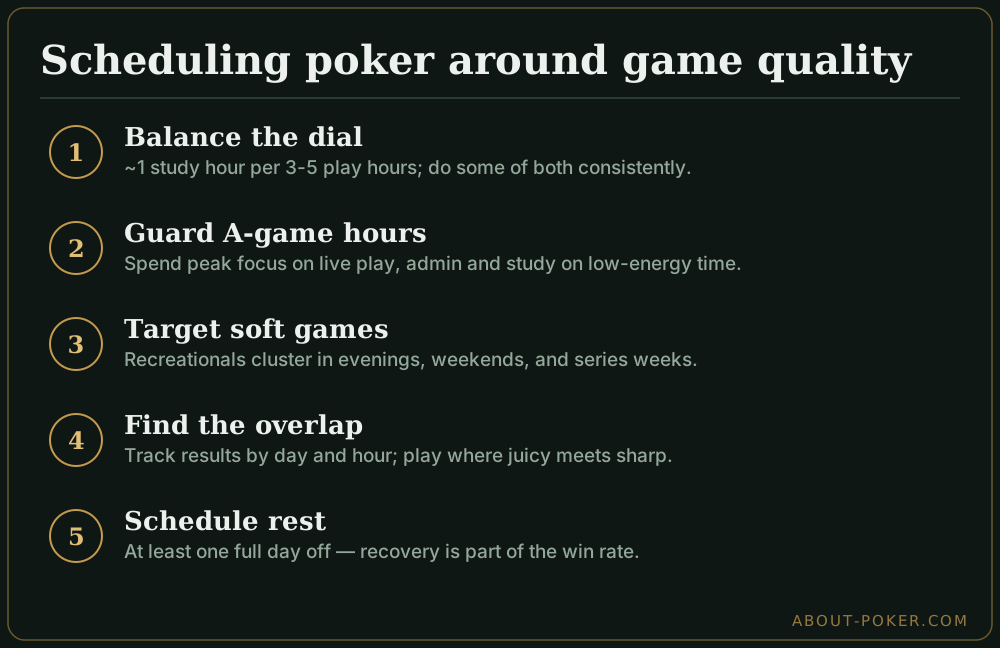
The first mental shift is to stop treating play and study as a tug-of-war. They feed each other. Volume without study means you repeat the same mistakes thousands of times; study without volume means your insights never get tested or turned into profit. A useful starting ratio for an improving player is one hour of focused study for every three to five hours of play.
That ratio is a dial, not a law. If your goal this month is to move up a stake, turn the dial toward study — review more, drill more, play a little less. If you are comfortably beating your current stake and just want to earn, turn it toward volume. The mistake is doing only one, forever. Our multi-tabling online poker guide covers how to safely raise the volume side once your game is ready.
Protect your A-game hours
Not all playing hours are equal. Your first two hours of the day, when you are fresh, are worth more per hand than the fifth hour when you are foggy. Time management means spending your best concentration on playing and your lower-energy time on the tasks that tolerate it — filing hands to review, updating notes, watching training content passively.
A practical rule: reserve your peak-focus block for live play at a real table count, and push administrative or study tasks to the edges of your day. Trying to grind serious volume when you are already drained is negative time management — you are converting your worst hours into losses while calling it “putting in work.” Staying sharp during the hours you do play is its own skill; see staying focused online poker.
A worked example: two players, same 20 hours
Two players each have 20 hours a week for poker. Player A plays all 20, mostly in long night-time marathons after work, never studies, and tells himself volume is king. Player B plays 15 focused hours in her sharpest windows and spends 5 hours reviewing hands and drilling spots.
Over a year that is roughly 780 study-free hours for A versus 780 hours for B split as 585 play + 195 study. Player A logs more raw hands, but his win rate stagnates and his tired late-night sessions drag it down. Player B plays fewer hands at a higher win rate that keeps climbing as her study pays off, and she avoids the burnout that eventually makes A cut back or quit. Same 20 hours, very different outcomes — because B managed the time and A merely spent it.
Schedule around game quality, not just your calendar
The other half of timing is when the games are good. Recreational players cluster in evenings and weekends and around big tournament series; that is when soft games are easiest to find. A pro-level habit is to track your results by day and hour, then bias your schedule toward the windows that combine soft games with your own peak alertness.
The ideal slot is the overlap of “games are juicy” and “I am sharp.” If those two rarely coincide for you — say the best games run at 2 a.m. when you are exhausted — that is a real constraint to plan around, perhaps by choosing a stake or format with softer daytime traffic rather than forcing bad hours.
Prevent burnout before it starts
Burnout is a time-management failure that shows up weeks later. It comes from too much play, too little rest, and no variety, until poker feels like a grind you resent. The prevention is structural: build genuine days off into the week, take short breaks within sessions, and keep at least a little study in the mix so the game stays interesting rather than becoming pure repetition.
Treat rest as part of the schedule, not the absence of one. A well-rested player at three tables outperforms an exhausted one at six, so the time you spend recovering is time invested in your win rate.
A weekly time-management plan
- Pick your play windows where soft games and your peak focus overlap, and block them in advance.
- Set a study slot — even 3 to 5 hours a week keeps your game improving.
- Cap daily play at the hours you can hold your A-game, and split them with breaks.
- Schedule at least one full day off to prevent burnout and reset focus.
- Review your time-by-results monthly and shift hours toward whatever windows actually made money.
Manage your hours this way and time stops being something you burn through. It becomes the compounding asset it should be — every focused block of play adds volume, every study slot raises the win rate you apply to it, and every rest day keeps the whole engine running.
Frequently asked
How much time should I spend playing versus studying poker?
A common guideline for improving players is roughly one hour of focused study for every three to five hours of play. If you are actively trying to move up, weight it toward study; if you are grinding a beaten stake for profit, weight it toward volume. The exact ratio matters less than doing some of both consistently.
How many hours of online poker per day is reasonable?
Play only the hours you can sustain your A-game, which for most people is two to four focused hours, ideally split into blocks with breaks. Marathon sessions past your concentration limit lose money and cause burnout, so more hours is not automatically more profit.
When are the best times to play online poker?
Play when the games are softest and you are sharpest — often evenings and weekends when recreational players are online. The best hour is the overlap between good game quality and your own peak focus, which you can find by tracking your results by time of day.