Online Poker
Online poker is the same game as live poker, played on a site or app. Learn how it works, whether it's legal and safe, how it differs from live
On this page · 8 sections
Online poker is the same game as live poker — same hand rankings, same betting rounds — dealt by software on a website or app instead of by a human at a table. You play against other real people, for play money or real money, and you can sit down in seconds from anywhere you’re allowed to. This hub is your map to the whole topic.
What “online poker” actually means
When people say online poker they usually mean multiplayer poker dealt by a poker site or app, most often Texas Hold’em, where you compete against other humans for a shared pot. The software shuffles, deals, tracks the betting, and pays out the winner — everything a live dealer would do, just instantly.
That’s different from video poker, which is a solo machine game you play against fixed odds, not other people. Real online poker is a game of skill against opponents, exactly like the cash game or tournament you’d find in a cardroom.
How it works
You download a client or open a site in your browser, create an account, and take a seat at a table. Two formats dominate:
- Cash games — chips equal real value, you can join or leave any hand, and blinds stay fixed.
- Tournaments — everyone pays one buy-in, blinds rise over time, and you play until one player has all the chips.
If you’re brand new to the mechanics, start with the complete walkthrough of playing online poker, then come back here to branch into strategy, safety, and the live-vs-online comparison.
What you can play
Texas Hold’em is the default and by far the most trafficked game online, but it’s not the only one. The next most popular is Pot-Limit Omaha (PLO) — four hole cards instead of two, which makes for bigger draws and swingier pots; see Omaha & PLO for the rules and strategy. Beyond that, most major rooms also spread other variants like Seven-Card Stud, Razz, and mixed-game rotations such as HORSE, though traffic thins out fast below Hold’em and PLO.
Every serious room also runs a mobile app for iOS and Android. The apps deal the same games and share the same player pool as desktop, so your account, balance, and tables carry over. The trade-off is screen space: a phone comfortably handles one to two tables, while heavy multi-tabling still belongs on a desktop client.
Is it legal? Is it safe?
These are the two questions every new player asks, and the honest answer to both starts with “it depends.”
Legality depends entirely on where you are. Some countries and US states license and regulate online poker; others restrict or ban real-money play. We cover the general framework — not region-specific legal advice — in whether online poker is legal.
Safety is mostly about where you play. Licensed operators run audited shuffling software and keep player money separate from company funds. The “is it rigged?” worry is addressed directly in whether online poker is safe.
Online vs live
The game is identical, but the experience isn’t. Online is faster, you see far more hands per hour, and you can multi-table — but you lose physical tells and gain timing and bet-sizing reads instead. The full breakdown is in online poker vs live poker, including why the average online player tends to be tougher.
Getting better
Winning online poker is a learnable skill, not luck over the long run. The fundamentals — tight-aggressive starting hands, position, and bankroll discipline — carry directly over from live play. Our online poker tips page distills the habits that separate break-even players from winners.
A few cross-cutting fundamentals worth bookmarking now:
- Hand strength — memorize the poker hand rankings cold; you can’t make decisions fast online without them.
- The core game — Texas Hold’em is what almost everyone plays online.
- Money management — protect your roll with sensible bankroll rules.
Choosing where to play
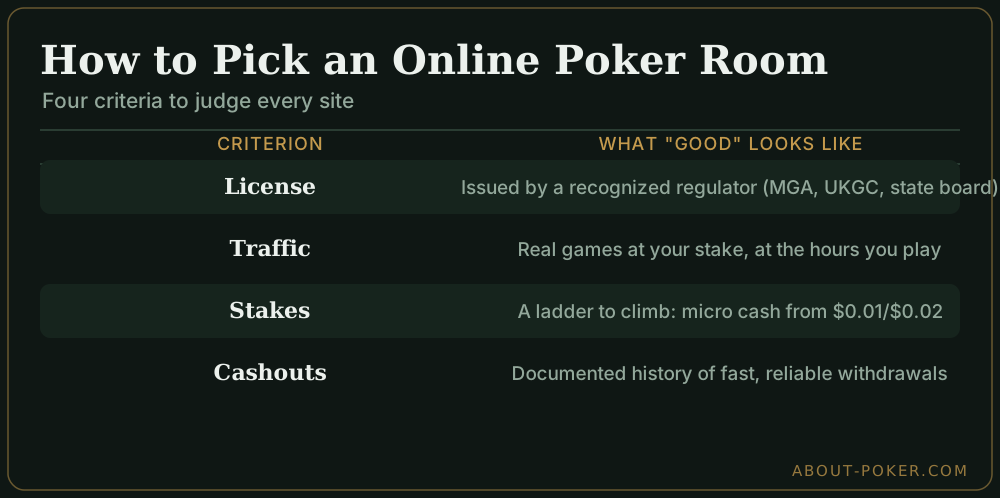
We don’t push a single “best” room, because the right site depends on your region, the games you want, and the stakes you play. Instead, judge every room against the same four things — the criteria we use in our poker room reviews:
| Criterion | What “good” looks like | Why it matters |
|---|---|---|
| License | Issued by a recognized regulator (e.g. MGA, UKGC, or a state gaming board) | Legal recourse and audited, fair shuffling |
| Traffic | Real games running at your stake, at the hours you play | An empty lobby is useless no matter how good the software is |
| Stakes | A ladder you can climb — micro cash from $0.01/$0.02, tournaments from ~$1 | You want room to move up, and cheap tables to learn on |
| Cashouts | Documented history of fast, reliable withdrawals | Getting paid is the one thing you never compromise on |
Browse operators we’ve vetted against these in the room reviews — start with our PokerStars review — and check current sign-up offers in the poker bonuses hub before you deposit. Treat a bonus as a tie-breaker between two good rooms, never as a reason to pick a weak one.
Getting started, step by step
Once you’ve picked a licensed room, the path from download to first hand is short:
- Sign up — create an account and verify your identity (a valid ID and proof of address; regulated rooms require this before you can cash out).
- Deposit — most rooms take cards, e-wallets, and bank transfer, with minimums around $10–$20. Claim the welcome bonus here if there is one.
- Pick a game — start at the lowest stakes. A $2–$5 cash table at $0.01/$0.02 blinds, or a $1–$5 tournament, is plenty to learn on without real risk.
- Sit and play — the software posts your blinds and enforces the rules; you just choose fold, call, or raise. Play a short session, then review what happened.
Where to go next
Start with how to play online poker if you’re new, or jump to tips and strategy if you already know the rules. And whatever you do, treat the money as entertainment spending — never stake what you can’t afford to lose.
Frequently asked
What is online poker?
Online poker is the same game you'd play at a casino, dealt by software on a website or app instead of a human dealer. You play against other real people for play money or real money, with the same hand rankings and betting rules.
Is online poker the same as live poker?
The rules and hand rankings are identical. The differences are practical: online play is faster, you can play several tables at once, and you read betting patterns and timing instead of physical tells.
Can you play online poker for real money?
Yes, on licensed sites where it's permitted. Whether real-money play is legal depends entirely on your jurisdiction, so check your local rules before depositing. Free play-money games are widely available everywhere.
Is online poker safe?
Reputable, licensed sites use audited random number generators and segregate player funds. Risk comes mainly from playing on unlicensed sites, so stick to established, regulated operators.