Online Poker Warm-Up Routine
A 15-minute online poker warm-up routine that sharpens your reads and mindset before you sit: what to review, what to check, and how to start on your A-game.
On this page · 7 sections
The first ten minutes of a session are, for most online players, the worst poker they play all day. You sit down cold — distracted, running on autopilot, half your attention still on whatever you were doing five minutes ago — and you make cold-start mistakes before your brain catches up. A warm-up fixes that. It’s not superstition; it’s the difference between arriving at your A-game three buy-ins in and starting there.
Why cold starts leak money
Poker is pattern recognition, and pattern recognition needs to be primed. Sit down cold and you’ll miss the read you’d catch an hour later, mis-size a bet on reflex, or play a marginal hand you’d normally fold — all because the sharp, deliberate part of your brain isn’t online yet. A warm-up is simply loading the relevant patterns before real money is at risk, so the first hand gets the same quality of thought as the fiftieth. It’s the front end of staying focused for the whole session.
The 15-minute routine
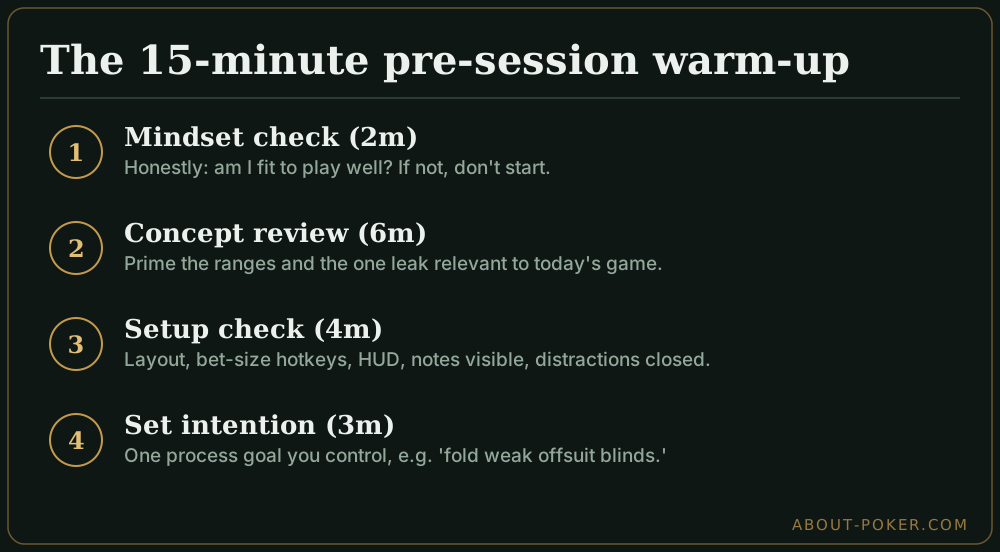
Keep it short and consistent. Fifteen minutes, four parts:
- Mindset check (2 min). Sit quietly and ask honestly: am I in shape to play well? Tired, angry, distracted, or playing to chase losses are all reasons to not start. Better to skip a session than to start it already fragile.
- Concept review (6 min). Review what’s relevant to today’s game — a few key spots, your opening ranges by position, one leak you’ve been working on. Priming these makes you recognize them faster live.
- Setup check (4 min). Table layout, bet-size hotkeys, HUD loaded, notes visible, no distractions open. Everything mechanical handled before the first hand.
- Intention (3 min). Set one process goal for the session — not “win money,” but something you control, like “fold my weak offsuit blinds” or “take the between-hands reset when I feel heat.”
A worked example
Suppose you’ve been leaking money by over-calling in the big blind. Your concept-review block that day is spent looking at exactly that: which hands are actually profitable big-blind defends versus a button raise, and which you’ve been calling out of habit. Ten minutes later you’re in a hand — big blind, button raises, you look down at Kh 6c. Cold, you’d have called reflexively. But you just reviewed this: king-six offsuit is a fold here against most raise sizes. You fold. That single hand — a fold you’d have gotten wrong on a cold start — is the warm-up paying for itself. Multiply it across every marginal early spot, across hundreds of sessions, and the routine earns real money for fifteen minutes of work.
Table selection is part of warming up
Don’t just fire up any open table. Part of a good warm-up is choosing where to sit — spotting the softer games and avoiding the tables stacked with tough regulars. Doing this deliberately, while you’re calm and thinking, beats grabbing the first seat that opens. See table selection for how to read a lobby quickly; even a two-minute scan meaningfully raises your win rate before a single hand is dealt.
Mindset over mechanics
If you cut the routine short, keep the mindset check. The mechanical parts (layout, hotkeys) matter, but they’re recoverable — you can fix a bad layout mid-session. Starting emotionally compromised is the expensive one, because it primes you for tilt before you’ve lost a chip. The two-minute honesty check — am I actually fit to play well right now? — prevents more losses than any concept review.
Common mistakes
- Skipping it because you’re eager. The eagerness is exactly the cold-start energy the warm-up is meant to channel.
- Turning it into a study marathon. Fifteen minutes, then play. A warm-up that becomes an hour of theory is procrastination.
- Same routine for every format. Review what you’re about to play — cash ranges before cash, push-fold spots before turbos.
- Warming up but ignoring your own state. A perfect setup can’t save a tilted mind.
A quick checklist
- Mindset check — am I fit to play?
- Review concepts relevant to today’s format.
- Verify layout, hotkeys, HUD, notes, no distractions.
- Set one process goal you control.
- Select your tables deliberately.
- Then, and only then, sit down.
Do this before every session and you’ll notice the difference immediately: fewer early-orbit blunders, a calmer start, and a session that begins on your best game instead of stumbling toward it.
Frequently asked
Why warm up before an online poker session?
Because your first hands are usually your worst — you start cold, distracted, and running on habit rather than focus. A short warm-up gets your reads, hand-reading, and mindset online before real money is at stake, so you start on your A-game instead of arriving at it three buy-ins later.
How long should a poker warm-up take?
Ten to fifteen minutes is plenty. It's enough to review a few concepts, check your mental state, and set up your tables, without turning into procrastination. The goal is a sharp start, not a study session.
What should I review in a warm-up?
Focus on the format you're about to play: a few key spots, your opening ranges, and any leak you've been working on. Reviewing what's immediately relevant primes your brain to recognize those situations at the table.
Does a warm-up really improve results?
It won't change your long-run edge, but it reliably improves your early hands, which are where cold-start mistakes cluster. Over hundreds of sessions, cutting those early errors adds up — and it makes tilt less likely by starting you calm and deliberate.