Reviewing Hands After a Session
How to review your poker hands after a session so study actually improves your game: which hands to pick, the questions to ask, and a repeatable review process.
On this page · 7 sections
Most players think they study, but what they actually do is scroll through their session, feel bad about the bad beats, and close the tracker. That isn’t reviewing — it’s rumination, and it teaches nothing. A real hand review is a deliberate, narrow, question-driven process aimed at finding why a decision was wrong, not just that it lost. Done right, it’s the single fastest way to get better at online poker.
Why review at all
At the table you don’t have time to think deeply — especially multi-tabling. Review is where you do the thinking you couldn’t do live. It’s how a spot that stumped you today becomes an automatic decision tomorrow. The whole point is to convert confusion into pattern: you puzzle out a hard spot once, slowly, off the table, and next time it appears you already know the answer. That’s why a small number of hands studied deeply beats a huge number skimmed.
Pick the right hands
Don’t review everything. Filter for the hands worth your time:
- Spots where you were genuinely unsure at the time — the ones you’re still wondering about.
- Big pots, win or lose, because that’s where mistakes cost the most.
- Recurring situations — a spot type you keep facing, so fixing it pays off repeatedly.
- Hands that felt “off” even if they won. Winning with a bad line is a hidden leak.
Crucially, don’t just review losses. A pot you won with a spewy bluff that happened to get through teaches you more than a cooler you lost perfectly. Filtering by result is the most common review mistake; filter by decision uncertainty instead. Software makes this easy — analysis tools let you tag hands live and pull the flagged ones later.
The questions that matter
For each hand, work through a fixed set of questions:
- What range did my opponent have on each street, given their actions and their stats?
- Did my action beat that range? Was my value bet actually ahead? Was my bluff targeting hands that fold?
- What would a strong player do here, and why? Not the play — the reasoning.
- Was my sizing right? Right bet, wrong size is still a leak.
- Where exactly did I go wrong? Name the reasoning error, not the result.
If you can’t answer the range question, that’s your study topic — you can’t play well against a range you can’t estimate.
A worked example
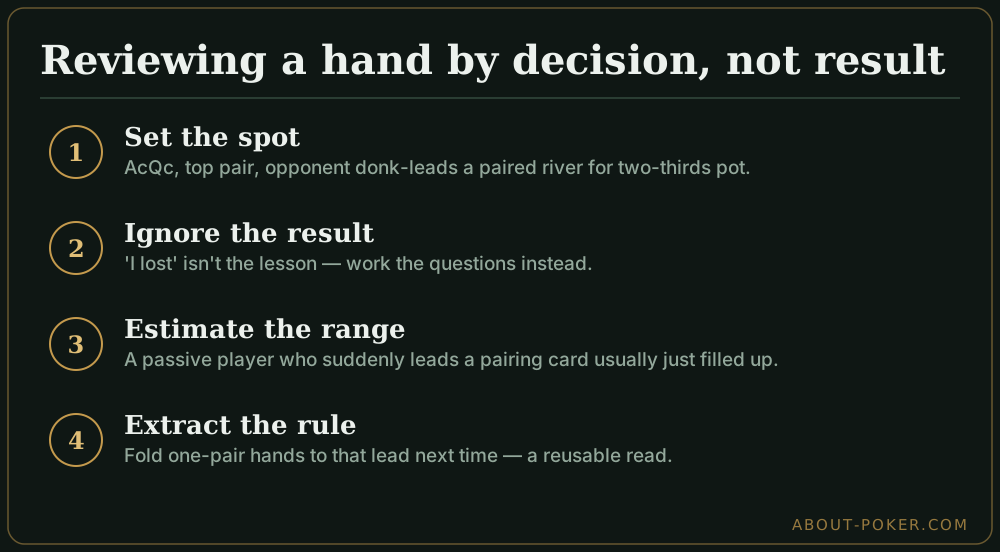
You have Ac Qc on a button raise, big blind calls. Flop Qh 7d 2s — top pair, top kicker. You c-bet, he calls. Turn 5c (you pick up the nut flush draw), you bet again, he calls. River 5h (board pairs), he leads into you for two-thirds pot. You call and lose to 7-5, two pair.
Reviewing: the result says “I lost,” but that’s not the lesson. Work the questions. What range leads the river here? A passive player who called flop and turn and then donk-leads the river on a pairing card is very often exactly this — a hand that just improved, like a small pair filling up or trips. Your top pair beats a lot of his range but not the part that suddenly wants to bet into you. The error wasn’t the call being unlucky — it was failing to notice that his out-of-nowhere river lead is a range that has you crushed more often than a top pair can call. That’s a reusable read. Next time a station leads a paired river, you fold your one-pair hands and save the bet. The lost pot bought you that lesson only because you reviewed the decision, not the outcome.
Build the habit
Two-tier schedule works best:
- After every session: a quick ten-minute pass over your flagged hands to reinforce the habit.
- Once a week: a longer, deeper session — work spots against a solver or study tool, or discuss hands with other players.
Consistency beats cramming. Ten focused minutes a day teaches more over a month than one marathon.
Common mistakes
- Reviewing on tilt. Right after a losing session your judgment is poisoned by results. Sleep on it.
- Result-oriented thinking. “It lost, so it was wrong” is the cardinal error. Judge the decision against the range.
- No conclusion. Every reviewed hand should end with one sentence you can apply next time.
- Studying only your losses. Your winning bad plays are invisible leaks — hunt them too.
A quick checklist
- Flag hands live; review off the table, not on tilt.
- Pick 5–10 uncertain or big-pot hands, not everything.
- For each: estimate the range, then judge your action against it.
- Find and name the reasoning error.
- End each hand with one applicable takeaway.
- Short review daily, deep review weekly.
Do this and your study time stops being therapy and starts being training — which is the only kind of review that shows up in your win rate.
Frequently asked
How many hands should I review after a session?
A focused handful — five to ten meaningful spots beats scrolling through hundreds. Quality of thought matters more than volume. Pick the hands where you were genuinely unsure or where a lot of money moved, and study those deeply.
Should I review the hands I lost or the hands I won?
Review the hands where you were unsure of the decision, regardless of result. Big losses feel like the obvious candidates, but a pot you won with a bad line teaches you more than a pot you lost with a good one. Focus on decision quality, not the outcome.
What should I ask myself about each hand?
Start with what range your opponent had and whether your action beat that range. Then ask what a strong player would do and why, and whether your bet size and street selection made sense. The goal is to find the reasoning error, not just label the play good or bad.
How often should I review hands?
A short review after every session builds the habit, with a longer, deeper session once a week. Consistency beats intensity — ten minutes daily teaches more over a month than one three-hour cram.