Adjusting to Anonymous Tables
Adjusting to anonymous tables means trading player reads for population tendencies. How to win when names, HUDs, and history are stripped away.
On this page · 6 sections
Adjusting to anonymous tables starts with accepting what you’ve lost: no screen names, usually no HUD, and often no downloadable hand histories. Sites use anonymous formats to protect recreational players from being data-mined and targeted, which keeps games friendly — and, for a prepared player, softer than tracked pools. The winning adjustment is to swap opponent-specific reads for strong fundamentals and population-level thinking.
What anonymous tables actually remove
On a standard tracked table, regulars build a database, run a HUD, and exploit specific opponents over thousands of hands. Anonymous tables cut that pipeline. You typically can’t see who you’re playing, can’t tag them, and can’t pull historical stats. If you’ve relied on a stats overlay, understand exactly what it did for you by reviewing HUD and tools basics — then plan to replace each of those functions with observation and defaults.
Crucially, this hurts the strongest data-driven regulars more than it hurts you. The playing field flattens, and much of your edge now comes from just being technically sound. That’s why playing online poker anonymously is often recommended to improving players: fundamentals travel; databases don’t.
Lean on population tendencies
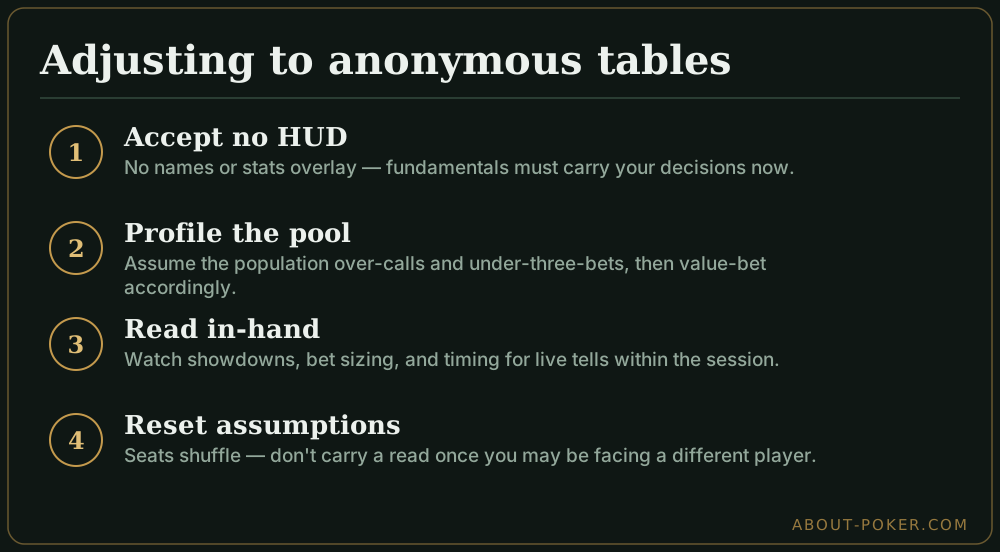
Without individual reads, you profile the pool. Most anonymous-table populations, especially at lower stakes, share predictable leaks:
- They call too much preflop and postflop, so value-bet relentlessly and bluff less.
- They under-three-bet, so your opens face fewer squeezes and can be a touch wider in position.
- They over-fold to big river bets while over-calling small ones, so size up when you have it.
- They limp and cold-call rather than raise, giving away hand strength through passivity.
These are defaults, not laws. But when you have no name to attach a note to, the population read is the best estimate you have for a random seat.
In-hand observation still works
You lose long-term tracking, not your eyes. Within a session you can still gather live tells:
- Showdowns reveal how loose someone got there and what they’ll stack off with.
- Bet sizing is a giant tell in soft pools — small usually means weak or drawing, huge over-bets are often polarized to nuts-or-air.
- Timing matters: instant bets can signal a plan (strong or drawing), long tanks before a call often mean marginal.
Keep mental notes for the current session even if you can’t save them. See table selection for how to seek out the seats where these live reads pay off most.
A worked example
You open A♥K♥ from the cutoff to 2.5bb at an anonymous 6-max table. The big blind — a player who’s limped twice and called a raise cold once this orbit — calls. Flop: K♠ 8♦ 4♣.
You have top pair, top kicker against a passive, calling-station-type from what little you’ve seen. Bet for value: about half pot. When called, keep barreling on most turns because this population under-folds. On a blank turn like the 2♠, bet again around two-thirds pot. You’re not bluffing here — you’re extracting from worse kings, eights, and floats. No HUD stat told you to do this; the player’s passive limping profile plus population over-calling did. That’s the anonymous-table mindset in miniature.
Common mistakes
The classic errors when adjusting are overcorrections:
- Bluffing too much to “make up for” no reads — the pool over-calls, so this bleeds chips.
- Playing scared and folding good hands because you feel blind. You’re not blind; you have position, ranges, and observation.
- Ignoring sizing tells because you’re used to reading a HUD number instead of the actual bet in front of you.
- Forgetting reads reset — don’t carry an assumption about “the loose guy” once seats shuffle, since it may be a different player.
A quick checklist
Before a session on anonymous tables, confirm:
- I have solid default ranges by position and don’t need a HUD to open, call, or three-bet.
- I’m value-betting more and bluffing less against an over-calling pool.
- I’m watching showdowns, sizing, and timing for live reads inside the session.
- I’m choosing tables and stakes where population leaks are largest.
Anonymous poker doesn’t take away your edge — it takes away the shortcut to an edge. Players who never had the shortcut, and just play well, often find these games are exactly where they profit most.
Frequently asked
Can you use a HUD on anonymous tables?
No. Anonymous tables hide player screen names and often block hand-history tracking, so a HUD has nothing to attach stats to. You have to rely on in-hand observation and general population tendencies instead of a stats overlay.
Are anonymous tables softer or tougher?
Usually softer for the average player. Removing HUDs and names strips away the tracking edge that strong regulars build, which levels the field and keeps recreational players comfortable. Your job is to replace HUD reads with solid fundamentals.
How do you get reads on anonymous tables?
Watch showdowns, bet sizing, and timing. Note who limps, who over-bets, and who folds to aggression. Because you may not see the same player again, weight these toward the pool's overall style rather than tracking one opponent long-term.