Dealer's Choice Formats
Dealer's choice formats explained: how the button picks the game, common rules for one hand vs one orbit, popular game menus, and how to pick to your edge.
On this page · 8 sections
What dealer’s choice means
Dealer’s choice is the home-game format where the player on the button picks which game the table plays. Instead of a fixed rotation like HORSE or 8-game, the choice of game moves around the table with the deal, so the mix is fluid and shaped by who is dealing. It is the traditional way mixed-game nights run in living rooms and it rewards players with broad knowledge. For the community and etiquette side of these nights, the mixed games dealer’s choice guide is a good companion; here we focus on the format’s structures and how to use the pick.
One hand or one orbit
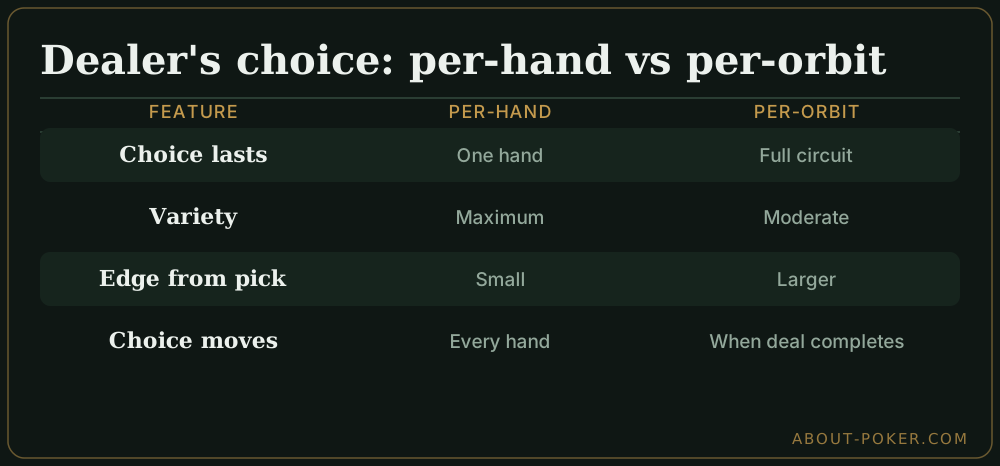
There are two common structures and you must agree on which before the cards come out. In the per-hand version, the dealer picks one game, that single hand is played, and the choice passes to the next player, giving maximum variety. In the per-orbit version, the dealer picks a game and the whole table plays it until the deal completes a full circuit, which gives each game room to breathe and lets you exploit an edge over several hands. Neither is better; agree in advance so nobody is caught off guard.
Building the menu
A dealer’s choice night is only as smooth as its agreed menu. Every player must know the rules of every game on the list, or the pick becomes a rules lesson that stalls the game. A friendly menu might include Hold’em, Omaha, Omaha hi-lo, seven-card stud, stud hi-lo, Razz, 2-7 triple draw, Badugi, and Big O. Write it down. If someone wants to add a wild variant, teach it first and add it only once the table is comfortable. For a structured alternative when the group prefers a fixed lineup, the 8-game mix rules show how a set rotation works.
Picking to your edge
The strategic heart of dealer’s choice is that the button chooses. If you know Big O or Badugi better than the rest of the table, choosing it when it is your deal is a legitimate advantage, especially in the per-orbit format where you get several hands of it. That said, read the room. In a social game, repeatedly forcing a game nobody else enjoys will sour the night and dry up your action. The best pickers balance edge with fun, choosing games they are strong in that the table still likes to play.
A worked pick
Imagine you are on the button in a per-orbit dealer’s choice game. You are comfortable in every game on the menu, but you have noticed two loose players who love to splash chips in Omaha-style games and consistently overvalue non-nut hands. Big O, a five-card Omaha hi-lo variant, magnifies exactly that leak because the extra hole card tempts weak players into second-best hands. Choosing Big O for your orbit puts those two opponents in the game where they make their biggest mistakes, over multiple hands. That is dealer’s choice used correctly: not just picking what you know, but picking where your opponents are weakest. The Big O poker rules cover the format if it is new to you.
Adjusting your game every hand
The hidden difficulty of dealer’s choice is that the game can change constantly, and each change resets your entire strategy. When the game flips from Hold’em to Razz, low becomes best and your instinct for high hands is suddenly a liability. When it moves from a limit game to a bomb pot or a no-limit round, bet sizing and commitment thresholds change completely. Strong dealer’s-choice players build a quick mental checklist for every new game: what wins, is it hi-lo or high-only, what is the betting structure, and what starting hands qualify. Running that checklist at the top of each hand prevents the single most expensive error in the format, which is playing the previous game’s strategy in the current game.
Common dealer’s choice mistakes
- Failing to agree on per-hand versus per-orbit up front, causing confusion when the button moves.
- Letting the menu grow to games half the table cannot follow, which stalls the night.
- Always picking your single best game and ignoring table enjoyment until the action dries up.
- Forgetting to state the stakes and any hi-lo qualifiers clearly at the start of each new game.
Running a smooth night
Set the menu, agree on the structure, and confirm stakes before the first deal. When it is your button, announce your game clearly and restate any special rules, then pick to your edge without alienating the table. Keep the pace up by choosing games everyone knows, and save the exotic picks for when the group is warmed up. Done well, dealer’s choice is the most enjoyable way to play mixed games, blending variety, sociability, and a genuine skill edge for the players who know the most games.
Frequently asked
How does dealer's choice work in poker?
In dealer's choice, the player on the button (the dealer position) chooses which game the table will play. Depending on house rules the choice lasts for a single hand or for a full orbit until the button passes. The chosen game must come from an agreed menu the whole table knows.
Does the dealer choose every hand or every orbit?
It depends on the house rule. Two common formats exist: pick a game for one hand, then the choice moves to the next player, or pick a game for a full round until the deal passes all the way around. Agree on this before starting so nobody is surprised.
What games are usually in a dealer's choice menu?
Typical menus include Hold'em, Omaha, Omaha hi-lo, seven-card stud, stud hi-lo, Razz, 2-7 triple draw, Badugi, and Big O, plus fun variants like pineapple and bomb pots. The exact list should be agreed and written down so every dealer picks from the same set.
Should you pick your best game in dealer's choice?
Yes, within reason. The button gets to choose, so selecting a game you understand better than the table is a real edge. Balance that against table harmony in a social home game, and avoid picking a game most players cannot follow, which slows the night and sours the mood.