Isolate vs Overlimp
Facing a limper, should you isolate with a raise or overlimp behind? Learn how hand strength, position, and the limper's tendencies decide the more profitable play.
On this page · 6 sections
Someone limps in front of you and you hold a playable hand. Now what? You have two profitable options and one that quietly loses money. You can isolate by raising to get heads-up against the weak player, or you can overlimp behind to see a cheap flop multiway. Calling the exact right one turns limpers into an ATM; calling the wrong one hands your edge back. The choice hinges on your hand type, your position, and who the limper is.
Why limpers are an opportunity
A player who limps instead of raising is usually telling you their hand isn’t strong enough to raise or that they play weakly. Either way, you are entering the pot with initiative and information they lack. That is why aggressive players love to attack limpers: you get to play bigger pots against the exact opponent you’d choose, often in position.
But the response has to match your hand. Some hands want a small field and a big raise; others want a big field and a small investment. Confusing the two is the core mistake, and it shows up constantly at low-stakes tables where players either never punish limpers or blast a raise with every hand.
Hands that want to isolate
Isolate with hands that dominate the limper’s range and play well heads-up: strong broadways, big aces, and premium pairs. AJ, KQ, AQ, and pairs like TT and up want to fold out the blinds and the other limpers so they can play a heads-up pot against a capped, passive range where their high-card and top-pair value shines.
The mechanics are simple. Raise to your normal open size plus one big blind per limper. In a 100 big blind cash game where you open to 3, one limper means raise to about 4, two limpers about 5, and add more in position or against sticky players. The goal is a heads-up pot where you have position and the betting lead, so you can continuation bet and pick up the pot when they miss, which passive players do most of the time.
Hands that want to overlimp
Overlimp with speculative hands that flop huge or fold: small and medium pocket pairs for set value, and suited connectors and suited gappers that make straights and flushes. These hands realize their equity best in multiway pots where the implied odds are large, because when you flop a set or the nuts you can stack multiple opponents.
Raising these hands is often a mistake. Isolating with 5c5d gets you heads-up, but heads-up your pair rarely improves and you’re left with an underpair and no plan; the whole point of a small pair is set mining, which needs the deep implied odds a multiway pot provides. Overlimping keeps your investment tiny and the field wide, exactly what your hand wants. For how these pots play after the flop, see multiway pot strategy.
A worked example
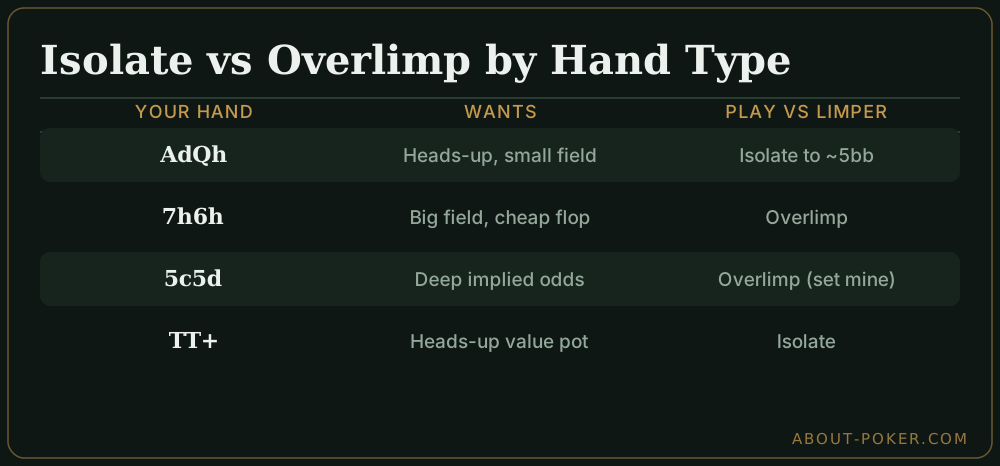
You are on the button. A loose-passive player in middle position limps for 1 big blind, and one more player overlimps behind. Action is on you 100 big blinds deep.
With Ad Qh, isolate. Raise to about 5. You dominate the limpers’ offsuit aces and kings, you have position, and folding out the blinds gives you a clean heads-up or three-way pot you control. With 7h 6h, overlimp for 1. You have a hand that wants three or four players in the pot and a cheap flop; raising only bloats a pot with a hand that needs to flop well to continue, and you throw away the implied odds that make suited connectors worth playing. Same seat, same opponents, opposite plays, dictated purely by hand type.
Position and opponent adjustments
Position magnifies everything. In position, isolation is stronger because you get to act last on every street, so lean toward raising a wider range against limpers. Out of position, tighten your isolation range and be more willing to overlimp or fold, since you’ll be guessing postflop; our guide to playing out of position postflop covers the added difficulty.
Opponent type matters just as much. Against a fit-or-fold limper who folds to c-bets, isolate wide and take the pot on the flop. Against a calling station who never folds, isolate only with real value that wants to get paid, because your bluffs won’t fold them out. And if aggressive players sit behind you, an overlimp can get raised, so factor in that you might not see a cheap flop after all.
A quick decision checklist
Ask: Does my hand dominate the limper heads-up and want a small field? Isolate with a raise. Does my hand flop big or nothing and want a large field with deep implied odds? Overlimp. Am I in position with a fold-happy opponent? Widen your isolations. Am I out of position or facing a station? Tighten up and lean toward value.
Get this fork right and every limp in front of you becomes a decision that adds to your win rate rather than a reflex. Isolate your dominating hands, overlimp your speculative ones, and never confuse the two, because the hand that wants a heads-up pot and the hand that wants a family pot could not want more different things.
Frequently asked
What does it mean to isolate a limper?
Isolating means raising over one or more limpers to fold out the other players and get heads-up with the weak limper. You raise to take the initiative, thin the field, and play a bigger pot in position against a player who has shown weakness by limping.
When should I overlimp instead of raising?
Overlimp when your hand plays well multiway and flops big or nothing, like small pairs and suited connectors, and when raising would only get called by better or blow you off cheap set-mining equity. Overlimping keeps the pot small and the field wide so your speculative hand can win a huge pot when it hits.
How much should I raise to isolate?
A common isolation size is the standard open raise plus one big blind for each limper. So if your open is 3 big blinds and one player limped, raise to about 4, and to about 5 with two limpers. Size up in position and against sticky opponents so the price to see a flop is real.