Poker Range vs Range Calculator: How to Use One
A range vs range calculator finds one hand group's equity against another. Learn how to enter ranges, read the output, and turn equity into decisions.
On this page · 11 sections
A poker range vs range calculator computes how much equity one group of hands holds against another group, rather than comparing two specific holdings. Because you almost never know your opponent’s exact cards, only the range of hands they’d play a certain way, this is the more honest way to measure who’s ahead. This guide shows how to enter ranges, read the output, and turn an equity number into a decision.
What “range” means first
Before the calculator makes sense, the core idea: a range is the full set of hands a player could hold in a given spot, not one hand. When someone opens under the gun, you don’t know if they have A-A or A-J suited — you know their range, the group of hands they’d open from that seat. If ranges are new to you, start with what is a poker range.
A range vs range calculator takes two of these groups and asks: across every possible matchup between them, who wins more of the pot?
How the calculator works under the hood
The tool does brute-force counting. It takes every combination in your range, pairs it against every combination in the opponent’s range, deals out all possible boards, and tallies who wins. Then it averages.
The combination math matters here:
- A pocket pair like 7-7 is 6 combos (six ways to pick two of the four sevens).
- An offsuit hand like A-K is 12 combos.
- A suited hand like A-K suited is 4 combos.
So a range of “A-A through T-T, A-K” isn’t five hands — it’s 6 + 6 + 6 + 6 + 6 + 12 + 4 = 46 combinations, and the calculator weighs each one when it averages. That’s why range equity differs from just eyeballing the “best hand” in each range.
Entering ranges: the grid and the syntax
Most calculators use the same 13x13 grid you see on a range chart — pairs down the diagonal, suited hands above it, offsuit below. You either click the cells or type shorthand:
| Notation | Means |
|---|---|
77+ | All pairs 7-7 and higher |
ATs+ | A-T suited through A-K suited |
KQo | King-queen offsuit only |
54s-98s | Suited connectors from 5-4s up to 9-8s |
Enter your range in one field, the opponent’s in the other, and the tool returns each side’s equity. For a walkthrough of how to read the grid itself, see poker range chart explained.
Free and paid tools that do this
There’s no need to build your own — several established tools compute range vs range equity, all using the 13x13 grid described above:
| Tool | Cost | Best for |
|---|---|---|
| Equilab | Free | Beginners; clean grid entry and instant range-vs-range equity |
| PokerStove | Free | The original, lightweight equity calculator (hand and simple ranges) |
| Flopzilla | Paid (one-time) | Seeing how a range connects with specific board textures |
| GTO+ | Paid (one-time) | Full solver output plus range-vs-range equity on any street |
Equilab is the usual starting point: it’s free, runs the exact grid-and-syntax workflow above, and reports each side’s equity in one click. Flopzilla and GTO+ add board-texture breakdowns and solver strategies once you want more than a raw equity number.
Reading the output
The headline number is equity — your share of the pot at showdown if the hand ended right now. If the calculator says your range has 55 percent equity, then averaged across every matchup and every runout, your range wins 55 percent of the pot.
Two ranges always sum to 100 percent (ignoring ties, which are split). So 55 percent for you means 45 percent for them. Equity above 50 percent means your range is ahead on average.
Turning equity into a decision
Equity alone doesn’t tell you to call — you compare it to the price. Suppose the pot is 100 and your opponent bets 50, so you must call 50 to win 150. Your pot odds are 50 / (150 + 50) = 25 percent. That’s the equity you need to break even on a call.
- If your range has more than 25 percent equity, calling is profitable on raw equity.
- If it has less than 25 percent, folding is better unless implied odds or fold equity change the math.
This is where the calculator connects to the broader math of the game — see the odds and math hub for how pot odds and equity fit together across streets.
A worked range vs range spot
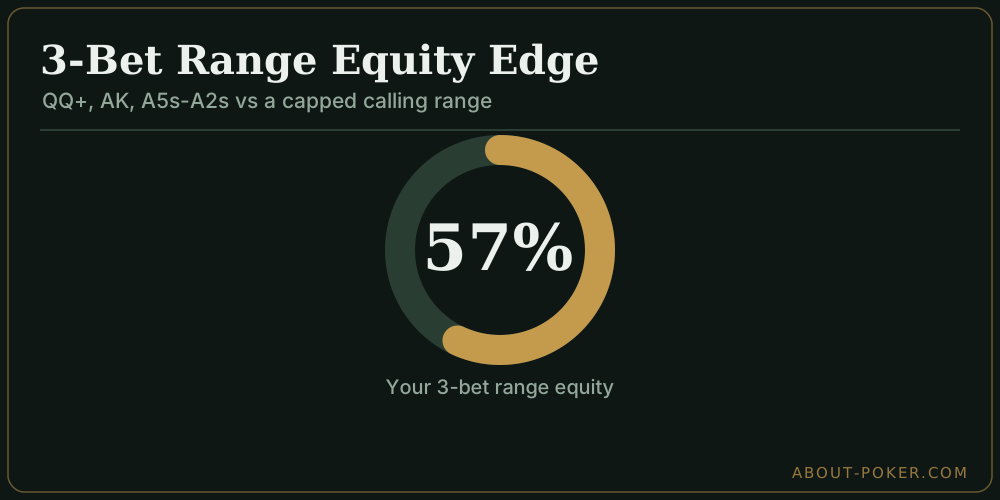
You 3-bet from the big blind and the original raiser calls. Roughly, your 3-betting range might be QQ+, AK, A5s-A2s (value plus suited-wheel-ace bluffs). Say their calling range is TT-88, AQs, AJs, KQs.
Plug both into the calculator. Your range is 50 combos (18 for QQ+, 16 for A-K, 16 for the four suited-wheel aces); their range is 30 combos (18 for the pairs, 12 for the three suited Broadways). Here’s the output you’d see:
| Range | Combos | Equity |
|---|---|---|
You: QQ+, AK, A5s-A2s | 50 | ~57% |
Them: TT-88, AQs, AJs, KQs | 30 | ~43% |
Your range holds roughly a 57 / 43 edge — a solid but not overwhelming lead, because your range contains the very top hands (A-A, K-K) while theirs is capped, topping out at Q-Q. The wheel-ace bluffs pull their weight too: they carry an ace blocker and can make the nut flush or a wheel straight.
The lesson isn’t the exact number; it’s the pattern. A range built with premium value plus disciplined bluffs holds an equity edge over a range that folded its best hands preflop. That edge is exactly what preflop range construction is designed to create.
Weighting and blockers: the features that matter
Two options in real range-vs-range tools go beyond plain grids and change the equity meaningfully.
Frequencies (weighting). You rarely play a hand 100 percent of the time. If you 3-bet A-Q offsuit only half the time, it shouldn’t count as a full 12 combos — it should count as 6. Tools like Equilab, Flopzilla, and GTO+ let you assign a weight (say 50 percent) to a cell, and the calculator scales that hand’s contribution to the average. Weighting a marginal hand down usually shifts the range’s equity a point or two, because you’re removing part of its worst holding.
Blockers (card removal). The calculator already respects removal: it never deals a matchup where both players hold the same card. That’s why holding an ace matters when you estimate how often the opponent has A-A or A-K — you’re holding a card they need. In the worked spot above, your A5s-A2s bluffs each hold an ace, which reduces the combos of A-A and A-K left in the opponent’s range. Good tools do this counting automatically; your job is to build ranges that use blockers deliberately.
Range vs range beyond preflop
The same tool works on every street — you just narrow the ranges as the hand develops:
- Preflop: wide ranges, small equity gaps between them.
- Flop: the board removes combos and shifts equity, sometimes dramatically, toward whoever the texture favors.
- Turn and river: ranges tighten to the hands that kept betting or calling, and equities polarize.
Re-running the calculator street by street shows how a range’s equity swings with the board — the foundation of the idea that some boards favor the raiser’s range and others favor the caller’s.
Common mistakes with range calculators
- Comparing single hands instead of ranges. Your opponent has a range, not one hand — model it that way.
- Building unrealistic opponent ranges. Assigning them only monsters or only air skews the equity. Use a plausible range.
- Treating equity as the whole answer. Position, implied odds, and future betting all move the true value of a call.
- Forgetting combos. Six combos of a pair weigh differently than four combos of a suited hand — the tool handles this, but your intuition should too.
Bringing it together
A range vs range calculator measures the equity of one group of hands against another, using combination math to average across every matchup. Enter both ranges on the grid, read the equity, then compare it to your pot odds to decide. It’s the most realistic equity tool in poker because it models what you actually face: a range, not a hand. Pair it with what is a poker range and the full preflop strategy framework to put the numbers to work.
Frequently asked
What is a range vs range calculator?
It's a tool that computes the equity, or share of the pot at showdown, that one range of hands holds against another range. Instead of comparing two specific hands, it averages across every combination in each range to give a realistic win percentage for a whole strategy.
How is that different from a hand equity calculator?
A hand calculator pits specific holdings against each other, like A-K versus Q-Q. A range calculator pits whole groups of hands against each other, which is closer to reality because you rarely know your opponent's exact cards, only the range they'd play a given way.
What does the equity number mean?
Equity is your share of the pot if the hand went to showdown right now with no more betting. A range with 55 percent equity wins 55 percent of the pot on average across all runouts against the opposing range.
Can a range calculator tell me whether to call?
It gives you the raw equity, which you then compare to the pot odds you're being offered. If your equity is higher than the price you're paying, calling is profitable on a pure-equity basis, before factoring in position and future streets.