Can You Bet Out of Turn
Can you bet out of turn in poker? No — it's a rules violation. Learn what happens to an out-of-turn bet, when it's binding, and how to avoid the penalty.
On this page · 7 sections
“I thought it was my turn and I bet — is that allowed?” No. Betting out of turn is a rules violation in every cardroom, because it hands free information to the players who should have acted before you. It rarely gets you thrown out, but it can bind you to an action you didn’t mean, and it can hurt your table image. This guide explains the rule, what the dealer does when it happens, and when a premature bet actually sticks.
The short answer: no, you must act in turn
Poker action moves clockwise, one player at a time. You are only allowed to bet, call, raise, check, or fold when the action reaches you. Betting before your turn is prohibited. The reason is simple: if you show what you plan to do early, players still to act can use that knowledge to make better decisions — a real, unfair edge. For the underlying principle, see acting in turn.
Why out-of-turn action is banned
Imagine three players still to act before you. If you announce a raise early, the player whose turn it actually is now knows a raise is coming and can fold a marginal hand they might otherwise have bet, saving chips. That’s information they were never entitled to. Poker’s turn order exists precisely to keep each player’s decision sealed until it is their moment. Acting early cracks that seal, which is why it’s a violation and not just bad manners. The deeper mechanics are covered in betting out of turn in poker.
What the dealer does
When someone acts out of turn, the dealer pauses the game and rewinds to the correct player. Your premature chips are held to the side, not swept into the pot. The game then proceeds normally through the players ahead of you. What happens to your held action depends entirely on one thing: does the action change before it legally reaches you?
When an out-of-turn bet is binding
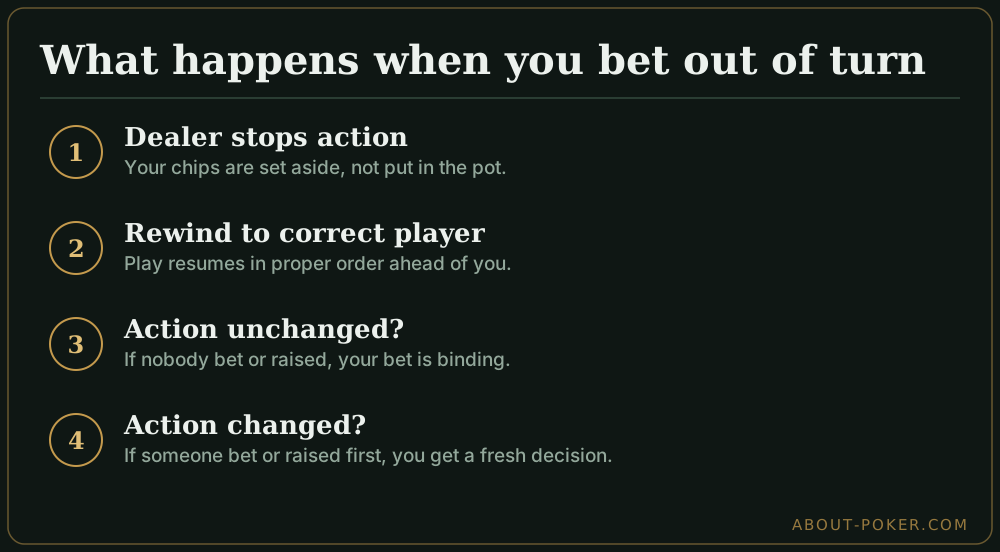
Here is the rule that trips people up. If the action comes around to you unchanged — meaning no one between you and the current action bet or raised in the interim — your out-of-turn bet generally becomes binding. You said it, the situation is the same, so you’re held to it. But if the action changes — a player ahead of you bets or raises before your turn — your premature action is released, and you get a completely fresh decision: call, fold, raise, whatever you like.
Worked example
You’re last to act. The board is checked around toward you, and thinking it’s on you, you toss out a $20 bet. But two players still had to act. The dealer stops you, sets your $20 aside, and returns to them. Case one: both of those players also check. Now the action reaches you unchanged — you already declared a bet, and it stands: your $20 goes in as intended. Case two: the first of them, seeing your chips out, decides to bet $15 instead of checking. The action has now changed. Your $20 is returned to you, and you may fold, call the $15, or raise — your early bet no longer binds you. Notice the accidental cost: in case two, your leaked bet may have inspired their bet in the first place. For the fuller breakdown of consequences, see what happens if you act out of turn.
Common mistakes to avoid
- Watching your cards instead of the table. Most out-of-turn errors come from tuning out. Track whose turn it is.
- Reacting before you’re prompted. Reaching for chips or announcing intentions early leaks information even if you don’t complete the bet.
- Assuming you can take it back. You can sometimes escape being bound, but you can never un-leak the information you gave.
- Doing it on purpose. Deliberate out-of-turn action to induce a fold is angle-shooting and will draw a penalty.
Quick checklist
Wait for the dealer or the natural flow to reach you. Confirm the player to your right has acted before you touch a chip. If you slip and act early, don’t argue — let the dealer sort it out, and accept that your bet may be binding. The cleanest habit in poker is also the simplest: act only when it is truly your turn.
Frequently asked
Can you bet out of turn in poker?
No. Betting out of turn is against the rules because it gives players ahead of you information they should not have. If it happens, the dealer will pause the game, the out-of-turn action is usually held pending the correct action, and it may become binding depending on what happens before your real turn.
What happens if you bet out of turn?
The dealer stops the action and rewinds to the correct player. If the action to you is unchanged when your turn actually arrives, your out-of-turn bet typically becomes binding. If the action changes — someone bets or raises before you — your premature action is released and you may act freely.
Is an out-of-turn bet binding?
It can be. Under standard rules, an out-of-turn action is binding if the action does not change before it legally reaches you. If a player between you and the action bets or raises first, your out-of-turn bet is no longer binding and you get a fresh decision.
Can you get penalized for acting out of turn?
Repeated or deliberate out-of-turn action can draw a warning or a formal penalty, since it can be used to angle-shoot. An honest one-off mistake is normally just corrected without punishment, but the information you leaked cannot be taken back.