Can You See a Folded Hand
Can you see a folded hand in poker? Usually no — folded cards are dead and private. But the show-one-show-all and called-hand rules create real exceptions.
On this page · 6 sections
Most of the time, no — you cannot see an opponent’s folded hand. When a player folds during the betting, their cards go face down into the muck, where they are dead and private. You have no general right to demand a look. The confusion usually comes from an old rule about the right to “see a called hand,” which most cardrooms have since removed or tightly restricted. There are a few real exceptions, but the default is that a folded hand stays hidden.
Folded cards are dead and private
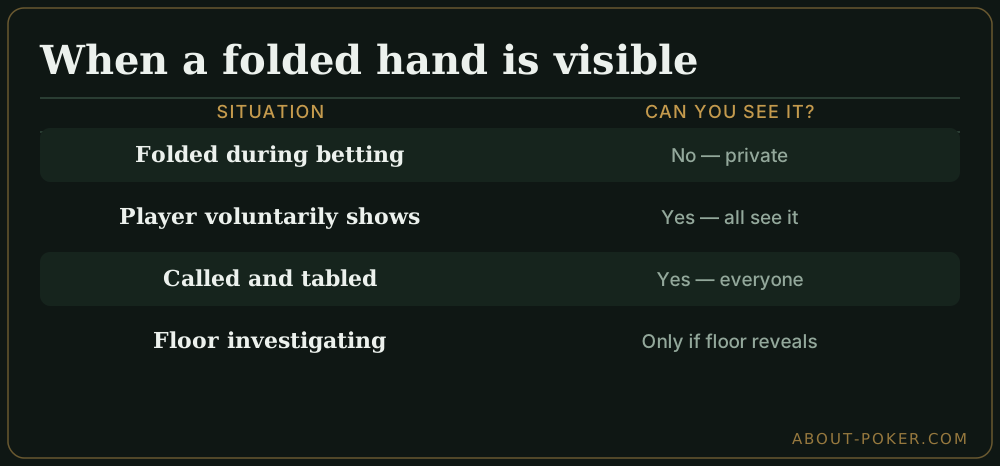
The instant a player folds, their cards become part of the muck — the dealer’s pile of dead cards — and they are no longer in play or on display. Poker protects the privacy of a folded hand for a good reason: revealing it would hand out free information about how that player folds, undermining the whole point of concealed cards. So in normal play, when someone mucks, you simply do not get to see what they had. This is closely tied to the rules on which hands must be shown at the end; see showdown rules: who shows first.
The old “right to see a called hand”
Older rulebooks gave any player still contesting the pot the right to ask to see a called hand at showdown — even a losing one that the owner wanted to muck. The idea was to police collusion. But players abused it to get free information, and it slowed the game, so most modern rooms have removed or restricted it. Where it survives, it typically applies only to players who were in the hand at showdown, and the floor may treat frivolous requests as a warning-worthy violation. It has never applied to hands folded earlier in the betting.
The show-one-show-all rule
The clearest way a folded hand becomes visible is voluntary: if a player chooses to show their cards to even one person, the dealer must then show them to everyone. This is the show-one-show-all rule, and it prevents selective sharing that could favor one opponent. It applies when someone decides to reveal — say, flashing a bluff to a neighbor — not to cards quietly folded into the muck. The related rules on when cards count as exposed are covered in rules for exposing cards.
A worked example
You raise preflop and everyone folds around to the big blind, who folds face down as well. The pot is yours uncontested. Curious, you ask the dealer to see the big blind’s cards. You have no right to them — the hand was folded during betting, it is dead, and the dealer will decline. Now change the scene: the big blind, annoyed, flips their cards face up to show you they folded a strong hand. The moment they show even you, show-one-show-all triggers, and the dealer will display those cards to the entire table. Same two cards, completely different outcome — because one path was a private fold and the other was a voluntary show.
Common misunderstandings
- “I can always ask to see the last hand.” No. The called-hand right is gone or restricted in most rooms and never covered early folds.
- “Showing my buddy is harmless.” It triggers show-one-show-all; the dealer must show the whole table.
- “The winner has to show even if everyone folded.” No — an uncontested pot can be won and mucked face down.
- “Folded cards are fair game to peek at.” They are dead and private; peeking at the muck is a serious breach.
- “The floor can never reveal a folded hand.” The floor can reveal cards to investigate a rules issue like suspected collusion — that is the one authority-driven exception.
Quick checklist
- Did the player fold during betting? Their hand is dead and private — you cannot see it.
- Did they voluntarily show anyone? Then show-one-show-all reveals it to all.
- Is it a called showdown? Tabled hands are visible to everyone.
- Is there a collusion concern? Only the floor may reveal cards to investigate.
- When unsure, ask the floor rather than reaching for the muck.
The short answer: a folded hand is private by default, and you cannot demand to see it. The exceptions — voluntary shows, show-one-show-all, called showdowns, and floor investigations — are narrow and specific. Respect the muck, and let the floor handle anything that smells like an integrity issue.
Frequently asked
Can you ask to see an opponent's folded hand?
Generally no. A hand folded during the betting is dead and private; you have no right to see it. The old right to see a called hand at showdown has been removed or restricted in most modern cardrooms to prevent abuse and slow play.
What is the show-one-show-all rule?
If a player voluntarily shows their cards to one person at the table, the dealer must show those cards to everyone. It prevents selective information sharing. It applies when someone chooses to reveal cards, not to hands folded quietly into the muck.
Can you see a hand that was called at showdown?
If a hand reaches a called showdown and is tabled, everyone can see it. The trickier case is asking to see a losing hand that was mucked at showdown; many rooms restrict this right to players who were in the hand, and only to protect against collusion.
Are folded cards ever revealed?
Only in specific cases: if a player chooses to show them, if show-one-show-all is triggered, or if the floor reveals a hand to investigate a rules issue like collusion. Otherwise folded cards go to the muck unseen and stay private.