What Happens If a Card Is Flashed
What a flashed card is in poker, how dealers handle a briefly exposed card during the deal, when it becomes a burn card, and when it forces a misdeal.
On this page · 7 sections
A flashed card is a card whose face gets briefly, accidentally exposed while the dealer is pitching it out — the corner flips up, it lands face-up for a moment, or the dealer lifts it high enough that players can read the rank. Once a card has been seen, it can’t be un-seen, so the rules exist to make sure nobody gains or loses from the accident. The good news for beginners: a single flashed card is a routine, low-drama situation. The dealer follows a fixed procedure and the hand plays on.
What counts as a flashed card
A card is “flashed” when its face is exposed enough that a player could have seen it — the standard is exposure, not proof that anyone actually looked. If the dealer flips a hole card face-up onto the felt for a split second, that’s flashed. If the top card of the deck peels back and shows the Ace of spades as it’s pitched, that’s flashed. A card only barely tilted, with no reasonable chance of being read, is usually not called.
The key distinction is whose card it is and when it happens. A dealer accidentally exposing your own hole card to only you is different from a card exposed to the whole table. And a card flashed during the deal is handled differently from one you deliberately reveal — see what happens if you show one card for the voluntary side of exposing cards.
The standard rule: it becomes the burn card
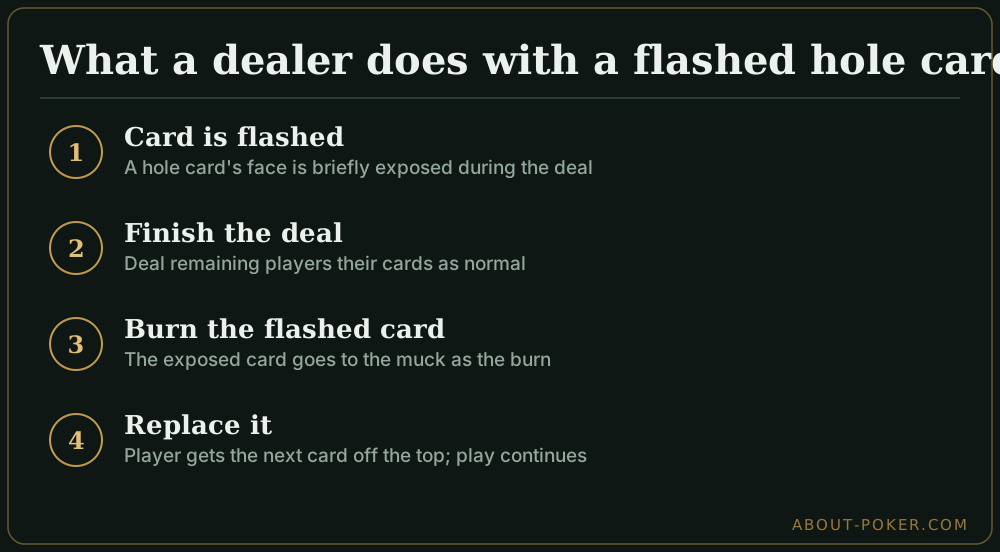
For a single flashed hole card during the deal, the near-universal casino rule is simple: the flashed card is not given to the player. Instead the dealer completes the deal to everyone else, then comes back and gives that player the next card off the top of the deck. The flashed card itself is set aside as the burn card.
This is elegant because the burn card is discarded face-down and never plays anyway, so turning a flashed card into a burn wastes nothing and gives no player an edge. The affected player still gets a fresh, unseen card, and the deck’s integrity is preserved.
A worked example at the table
You’re in seat 4 in a nine-handed Hold’em game. The dealer is pitching the second card around the table and, coming to seat 6, the card flips and lands face-up: the King of hearts. Everyone sees it.
Here’s what the dealer does: finish dealing the remaining players their second card as normal. Then take the exposed King of hearts and place it in the muck as the burn. Deal the very next card off the deck to seat 6 face-down. Seat 6 now has two clean hole cards, nobody got the King, and play proceeds to the pre-flop betting round with no penalty and no re-deal. The whole correction takes about five seconds.
When a flashed card DOES force a misdeal
The single-card rule has limits. A misdeal — where the cards are gathered, reshuffled, and re-dealt — is triggered when the error is too large to patch cleanly. Common triggers:
- Two or more cards flashed during the deal. One replacement is fine; multiple exposed cards compromise the deal.
- The first card off the deck flashed, in rooms that treat the opening pitch as sacrosanct (house rules vary here).
- The dealer exposing cards out of the correct dealing order, so replacement wouldn’t restore a fair deal.
Crucially, a misdeal can only be called before significant action. Once two or more players have acted on their hands, the hand stands regardless. This timing threshold is the same one that governs every dealing error — the full framework is covered in poker misdeals and irregularities.
Flashed community cards on the board
Flashing isn’t limited to hole cards. If a dealer flashes a card while spreading the flop, or exposes the turn or river prematurely, there’s a separate procedure. Typically the exposed community card is not used where it fell; the dealer reshuffles the remaining stub (or follows a fixed re-deal procedure for that street) so the board card comes out clean. Because community cards are shared, the fix is stricter than for a private hole card — you can’t just “burn and replace” a card the whole table is entitled to see fairly.
Common mistakes and misconceptions
- Thinking a flash always kills the hand. It rarely does. One flashed hole card is a burn-and-replace, not a re-deal.
- Peeking, then arguing. Players sometimes lean in to read a flashed card and then claim an edge. The ruling doesn’t change based on who looked; the card is removed from play regardless.
- Confusing flashed with boxed. A boxed card (one found face-up inside the deck) is set aside and the deal simply continues — it isn’t replaced the same way a flashed hole card is.
- Not calling the floor when unsure. If there’s any dispute about whether a card was truly flashed or how to correct it, stop and get the floor. That’s exactly what they’re there for — the same principle that governs how to deal poker cleanly.
Quick checklist for a flashed card
- Was it a single hole card? → Burn it, deal that player the next card, play on.
- Were two or more cards flashed? → Likely a misdeal; call it before action.
- Was it a community card? → Follow the board-exposure procedure, don’t use it as-is.
- Has significant action already occurred? → The hand almost certainly stands.
- In doubt about house rules? → Call the floor before anyone acts.
Handled correctly, a flashed card is a non-event. The procedure is designed so nobody profits and nobody is punished for a dealer’s slip — the accidental card simply becomes a burn, and the game moves on.
Frequently asked
What does it mean when a card is flashed in poker?
A flashed card is one whose face is briefly and unintentionally exposed during the deal — usually because the dealer lifts it too high or the card turns over as it slides. If any player could reasonably have seen the rank or suit, it counts as flashed and the dealer must deal with it under house rules.
Does a flashed card mean a misdeal?
Usually not. A single flashed hole card is normally replaced and the exposed card becomes the burn card for that street. Only when two or more cards are flashed during the deal — or the first card off the deck is flashed in some rooms — does it typically force a full misdeal and re-deal.
What is the difference between a flashed card and a boxed card?
A flashed card is one accidentally exposed face-up during dealing. A boxed card is one found turned face-up inside the deck itself. Both are treated as exposed and removed from play, but a boxed card is simply set aside and the deal continues, while a flashed hole card is replaced from the top of the deck.