What Is a Forced Bet
What is a forced bet in poker? Blinds, antes, bring-ins and straddles explained — what each one does, when it's posted, and why forced bets drive the action.
On this page · 8 sections
A forced bet is money you must put into the pot before the cards even matter. Blinds, antes, bring-ins and straddles all fall under this umbrella. They exist for one simple reason: if there were nothing in the pot, no one would ever play a hand except with the very best cards, and poker would grind to a halt. Forced bets seed the pot and manufacture action every single hand.
The core idea
At the start of a hand, certain players are required to wager a set amount no matter what they hold. That “dead money” in the middle is what everyone competes for. Because there’s always something to win, players are incentivized to enter pots, and the game has a heartbeat. Understanding forced bets is the first step to understanding why aggression is rewarded and why position matters so much.
Blinds
In flop games like Texas Hold’em and Omaha, the two players to the left of the dealer button post the small blind and the big blind before any cards are dealt. The big blind is the standard opening bet size; the small blind is usually half of it. These rotate clockwise each hand so everyone pays their share over time.
Blinds create an immediate reason to fight: the player who just posts and folds every hand slowly bleeds chips. For the full breakdown of amounts and rotation, see blinds and antes explained, and for the etiquette of posting when you join a game, see posting blinds rules and etiquette.
Antes
An ante is a small forced bet contributed by every player at the table, not just two of them. Antes are common in tournaments (often as a single “big blind ante” paid by one player on behalf of the table) and in stud games. Because everyone contributes, antes inflate the pot and reward players for entering more hands — they’re the main reason late-tournament play gets so aggressive.
Bring-ins
In stud games there are no blinds. Instead, after the first three cards are dealt, the player showing the lowest up-card must post a forced bring-in. This is a fixed small amount that starts the betting. The bring-in ensures there’s action even without positional blinds, and it’s determined purely by the cards on the table, not by seat position.
Straddles
A straddle is a voluntary forced bet, usually posted by the player to the left of the big blind, for at least double the big blind, before cards are dealt. Once posted it functions as an extra blind and gives the straddler the option to act last preflop. It effectively doubles the stakes for that hand and injects gambling energy into a game. Related forced-bet variations like the kill are covered in straddle and kill explained.
A worked example
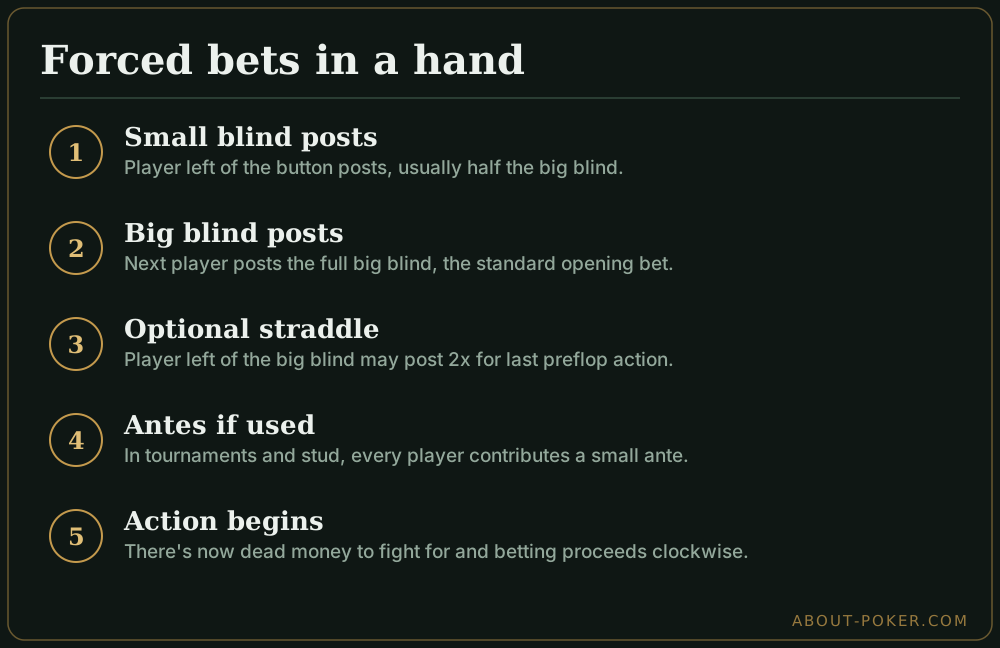
You’re at a $1/$2 Hold’em table, nine-handed.
- The small blind posts $1 and the big blind posts $2 before the deal. That’s $3 of forced money in the pot.
- The player under the gun straddles for $4. Now there’s $7 in the pot and the current bet to call is $4.
- Everyone folds to the button, who raises to $12. Action passes back around; the blinds and the straddler must now decide whether to defend the money they were forced to put in.
Notice how the forced bets did all the work: before a single voluntary decision was made, there was already $7 to fight over, and the straddle pushed the price of entry up. That’s exactly the pressure forced bets are designed to create.
Common mistakes
- Over-defending your blind. Being forced to post doesn’t mean you must call every raise. You’ll often correctly fold trash even after posting.
- Straddling out of boredom. A straddle is a losing play on average because you commit money out of position with random cards. Do it only when you understand the cost.
- Missing your blind. In live games, skipping your turn to post can require you to post a penalty blind or “dead” blind to re-enter. Know the house rule.
- Confusing antes with blinds. Antes come from everyone; blinds come from two players. They stack together in games that use both.
Quick checklist
- Identify which forced bets your game uses — blinds, antes, bring-in, or a mix.
- Know the amounts and how they rotate each hand.
- Post promptly and correctly when it’s your turn.
- Treat forced money as already gone — don’t over-defend just because you posted it.
- Only straddle when you accept the added cost and variance.
Forced bets are the engine of poker. They guarantee something worth playing for on every deal, which is why the game rewards the players who understand exactly what’s in the pot and why it’s there.
Frequently asked
What is a forced bet in poker?
A forced bet is a mandatory wager a player must put in before or at the start of a hand, regardless of their cards. Blinds, antes, bring-ins and straddles are all forced bets. They seed the pot and create action so players have something to fight for every hand.
What are the main types of forced bets?
The most common are blinds (small and big, in flop games like Hold'em), antes (a small amount from every player), bring-ins (a mandatory bet in stud based on the lowest up-card), and straddles (an optional extra blind that raises the stakes).
Why does poker use forced bets?
Without forced bets there'd be nothing in the pot, so the correct strategy would be to fold every hand until you're dealt a monster. Forced bets guarantee money to win each hand, which forces action and makes the game playable.
Is a straddle a forced bet?
A straddle is a voluntary forced bet — you choose to post it, but once posted it acts like a mandatory extra big blind that must be at least double the big blind, giving you last action preflop. It effectively raises the stakes for that hand.