What Is the Cutoff Card
The cutoff card is the solid plastic card the dealer places under the deck to hide the bottom card. Here's what it does, why it matters, and how it's used.
On this page · 6 sections
The “cutoff card” almost always refers to the cut card — the solid, opaque plastic card a dealer slides underneath the deck after cutting it. Its job is simple but important: it hides the bottom card of the deck so no player (and no dealer) can see or exploit it, and it protects the deck from accidental exposure while cards are being pitched around the table. If you’ve noticed a blank colored card stuck to the bottom of the deck in a casino, that’s it. It’s one of the small pieces of card-handling hygiene that keeps a live game honest.
Cut card versus cutoff position — don’t confuse them
Because the words sound alike, people sometimes mix up two totally different things:
- The cut card is a physical object — the plastic protector on the bottom of the deck.
- The cutoff is a seat at the table, one position to the right of the dealer button. It’s a strong, aggressive position to play from, but it has nothing to do with the plastic card.
This article is about the physical cut card, which is what “cutoff card” nearly always means when someone’s asking about equipment or dealing procedure. The seat is a strategy topic; the card is a rules-and-mechanics topic.
What the cut card does
The cut card serves two practical purposes during play:
- It hides the bottom card. Without a cut card, the bottom card of the deck is visible to anyone with a good angle. That’s information a sharp player or cheat could use. The solid card blocks the view completely.
- It protects the deck while dealing. As the dealer pitches cards, the cut card keeps the underside of the deck sealed so cards don’t flash or slip out the bottom.
It works hand-in-hand with the other integrity measures in a hand. The burn card, for instance, protects the top of the deck from being exploited — you can read the reasoning in why do dealers burn a card and the mechanics in what is a burn card. The cut card protects the bottom. Between the two, both ends of the deck are covered.
How and when it’s used
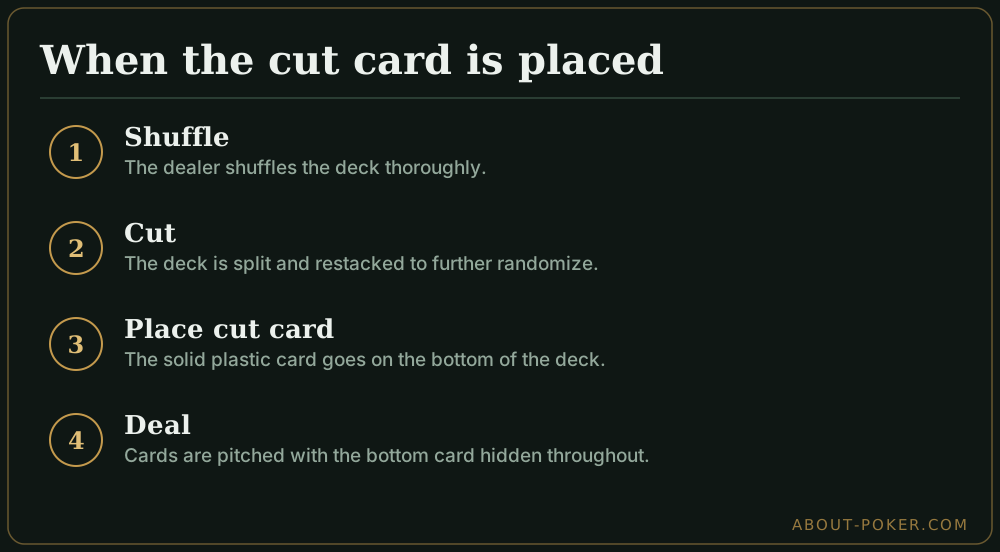
The cut card comes into play during deck preparation, which is part of every dealer’s routine covered in how to deal poker. The typical sequence:
- The dealer shuffles the deck thoroughly.
- The deck is cut — split and restacked — to further randomize it. In many rooms the player to the dealer’s right cuts, or the dealer uses the cut card to cut.
- The dealer places the cut card on the bottom of the reassembled deck.
- Dealing begins with the cut card sealing the underside the whole time.
That’s why it’s called a cut card: it’s tied to the cutting step of preparing the deck.
A worked example
Picture the deck sitting in the dealer’s hand as they pitch hole cards to a nine-handed table. Without a cut card, imagine the bottom card is the As. A player seated low and to the side might catch a glimpse of that ace peeking out the bottom of the deck. Knowing one ace is locked at the bottom and can’t come out until very deep in the deck is a small but real edge — and in the rare case the deck runs low, it becomes information about what’s left.
Now add the cut card. The dealer slides the solid plastic card under the deck, and that As is completely covered. No angle, no glimpse, no information. The card that was a potential leak is now invisible to everyone at the table for the entire hand. That single piece of plastic closes the gap.
Common questions and misconceptions
- “Is the cut card ever dealt to a player?” No. It’s not a playing card. If it ever surfaced during dealing, that would signal the dealer nearly ran out of usable cards — a cue to reshuffle the discards.
- “Does the cut card affect the odds?” No. It’s purely a physical protector; it doesn’t change any probabilities.
- “Is it the same as the burn card?” No. The burn is a real playing card discarded before each community deal. The cut card is a plastic blank that stays on the bottom.
- “Do online games use one?” No. There’s no physical deck online, so there’s nothing to hide or protect — the shuffle is done by software.
Quick reference
- The cut card (often loosely called the “cutoff card”) is a solid plastic card on the bottom of the deck.
- Its jobs: hide the bottom card and protect the deck during dealing.
- It’s placed after the deck is shuffled and cut.
- It is not the cutoff position (the seat right of the button).
- It’s a live-game tool; online play has no need for one.
Knowing what the cut card does rounds out your picture of how a dealer keeps a deck secure — top protected by the burn, bottom protected by the cut card — and it clears up a name that trips up a lot of newer players.
Frequently asked
What is the cutoff card in poker?
The cutoff card, more precisely called the cut card, is a solid plastic card the dealer slides underneath the deck. It hides the bottom card so nobody can see it, and it keeps the deck from being exposed while dealing.
Is the cutoff card the same as the cutoff position?
No. The cut card is the physical plastic card protecting the deck. The 'cutoff' is a seat — the position one to the right of the button. They sound similar but are unrelated concepts.
Why is it called a cut card?
It is used when the deck is cut after shuffling. The dealer cuts the deck and places the solid card on the bottom of the stack, so the name comes from the cutting step of preparing the deck.