Acting in Turn Live
Acting in turn live — why order matters, what happens when you act out of turn, the binding-action rule, and how to avoid the most common live mistake.
On this page · 6 sections
Acting in turn live is the procedural rule beginners break most, and it’s the one that most directly affects fairness. Action moves clockwise, one player at a time, and each player is entitled to make a decision without knowing what the players behind them will do. When you act early — even a small tell like reaching for chips or folding before it’s your turn — you leak information that changes the game for everyone still to act. Online software enforces turn order automatically; live, it’s on you.
Why turn order exists
Poker’s edge comes largely from information: the later you act, the more you know. Turn order preserves that structure. If a player behind you signals a fold before your turn, you now know you face one fewer opponent when you decide whether to bet — an advantage you didn’t earn. If a player reaches for a call, you know your bet will get action. Either way the early actor has corrupted the information flow the game depends on.
That’s why the penalty for acting out of turn isn’t about punishing you specifically — it’s about undoing the unfair edge you handed someone else. The rule sits at the heart of the broader live poker rules that keep a physical game honest.
The binding-action rule
Here’s the part that surprises new players. If you act out of turn and the action does not change before it legitimately reaches you, your action stands. Say you announce “check” out of turn, and every player ahead of you also checks — your check is now binding, because nothing changed and you gained no one anything.
But if the action changes before your turn — someone ahead of you bets or raises — your premature action is released. You are free to call, raise, or fold as you like, because the circumstances you “acted” under no longer exist. This is a crucial nuance: an out-of-turn call is not a guaranteed call if someone raises in front of you first.
Folds are the exception in most rooms. An out-of-turn fold is typically binding once noticed, because the very act of folding early has already leaked that you’re out — there’s no way to un-ring that bell.
A worked example
Five players see a flop. You’re in middle position holding 5c-5d, and the board comes Ah-Kd-9s — bad for your small pair. You’re certain you’ll fold, so out of turn, before the players ahead of you have acted, you slide your cards toward the muck.
The problem: two players still had to act before you. Seeing you fold early, the first player now knows they’re facing one fewer opponent and can bet more freely into the shrinking field. You’ve handed them information and likely drawn a warning from the dealer. Your fold stands — you’re out either way — but you’ve damaged the hand’s integrity. The correct play was to hold your cards, keep a poker face, and fold in turn when the action actually reached you, revealing nothing early.
Now reverse it. Same spot, but you announce “call” out of turn intending to peel. Before your turn, the player ahead raises big. Because the action changed, your out-of-turn “call” is void — you now correctly fold your 5c-5d to the raise, having lost nothing.
Common mistakes
The number-one leak is the early muck: folding the instant you see a bad flop. It feels efficient but it’s the classic out-of-turn violation. Train yourself to hold your capped cards until the action is genuinely on you, then fold.
The second is the visible chip-reach: grabbing chips to call while players ahead are still deciding. Even without releasing them, the motion telegraphs your intent. Keep your hands still until it’s your turn.
The third is verbal leakage — muttering “I’m done with this hand” before your turn. Any signal of intent, verbal or physical, counts. For the courtesy layer around clean, unrevealing table behavior, see the poker etiquette rules, and for the emotional discipline that keeps you patient, the wider tells-and-live pillar at tells and live play is worth a read.
How to always act in turn
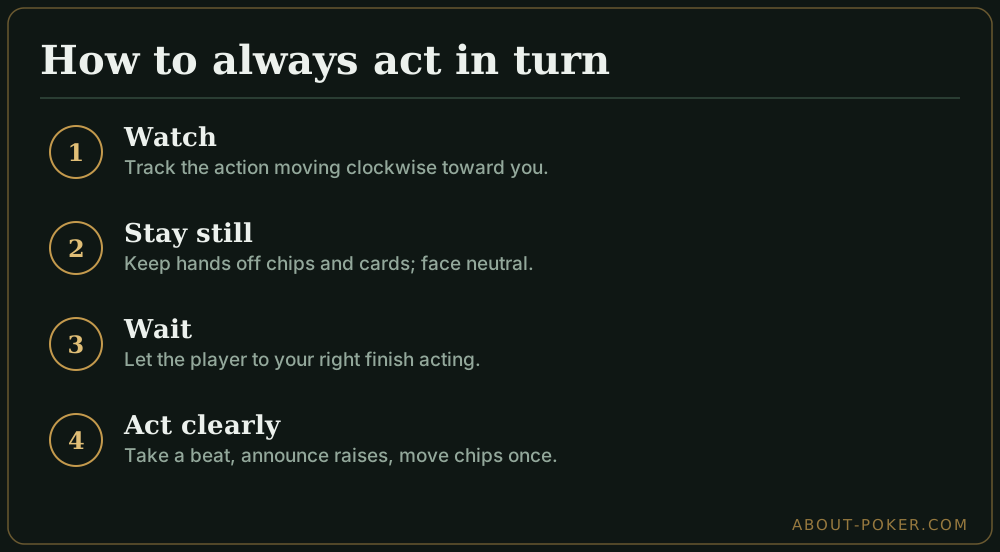
Build one habit: watch the action, and do nothing with your cards or chips until the player immediately to your right has completed their turn. Keep your hole cards capped and still, your hands off your stack, and your face neutral. When action arrives, take a beat, then act clearly — announce raises, and move chips in one motion.
Quick checklist
Wait until action is genuinely on you before doing anything. Never muck early, even on a hopeless flop. Keep your hands off your chips until it’s your turn. Remember: out-of-turn action stands only if nothing changed ahead of you — a raise releases you. Announce your action clearly when it’s finally your turn. Master this and you’ll never leak the game’s most valuable resource: information.
Frequently asked
What does acting in turn mean in poker?
Acting in turn means you only make your decision — check, bet, call, raise, or fold — when the action reaches you, moving clockwise from the player left of the big blind. Acting before your turn gives players ahead of you free information and is against the rules.
What happens if you act out of turn in poker?
Out-of-turn action is penalized to protect players who haven't acted. If no one has changed the action before it reaches you, your out-of-turn action stands. If the action changes — someone bets or raises before it's your turn — your premature action is no longer binding and you can act freely.
Is a fold out of turn binding?
In most rooms an out-of-turn fold is binding once the floor is aware, because folding gives away that you're not continuing and can't be undone. This is exactly why you should never muck early — wait for your turn even when you're certain you're folding.
Why is acting out of turn a problem?
It leaks information to players who still have to act. If you announce a fold early, players ahead of you know they face fewer opponents; if you reach for chips, they see you intend to call or raise. That unfair information is why the rule exists and why it's penalized.