Live Poker Table Selection
Learn live poker table selection — how to spot the softest game in the room, read the stacks and vibe, and use seat changes and table changes to boost your win rate.
On this page · 6 sections
Table selection is the highest-return skill in live poker that most players never practice. You can play perfectly and still barely win at a table full of tough regulars — or play a modest game and crush a table of loose recreational players. Choosing the right game, and the right seat, is often worth more than any strategy adjustment. This guide covers live poker table selection from the door to your seat.
Why table selection beats better play
Your win rate is a function of your edge over the field, and the field is different at every table. A single loose, losing player at your table can be worth several big blinds per hour; a table of tight regulars can be unbeatable after the rake. Because you get to choose where you sit, table selection is free money that requires no extra study — just attention and a willingness to move.
Before you even buy in, walk the room. When you sign up and buy in at a casino poker room, you often have a choice of tables or at least a spot on a waiting list. Use that moment to observe, not just to sit down at the first open seat.
Reading the room: what a soft game looks like
The softest games have a recognizable feel. Look for large multiway pots, lots of limping, and players who see nearly every flop. Listen for a social, relaxed mood — laughter, drinks, players chatting and not paying close attention to the action. These are recreational players enjoying a night out, and they lose money in predictable ways.
Watch the stacks, too. A table where the chips are spread evenly among careful players is usually tough. A table where one or two players have huge stacks and several others are short and reloading tells you money is moving — and where there is money moving, there is money to win. For more on identifying profitable spots, see live poker tips.
A worked example
You walk into the room and two 1/2 no-limit tables have open seats. Table A is quiet: six players, most with tidy stacks around 100 big blinds, folding a lot, few flops going multiway. Table B is loud: a player is celebrating a big pot, three others are laughing, several stacks are 300-plus big blinds and one player is buying in for the third time, and the last four pots all went five-handed to the flop.
Table B is the obvious choice, even though it looks chaotic. The deep stacks mean bigger pots to win, the multiway limped pots mean loose players giving away value, and the reloading player is the classic sign of someone losing money faster than they can fold. Table A’s tight, even game offers thin edges after the rake. In table selection, loud and loose beats quiet and tight almost every time.
Seat selection: where to sit at the right table
Getting to the right table is half the battle; the seat matters too. You want the aggressive, strong players on your right and the loose, weak, deep-stacked players on your left — because you act after the players on your right, and you want position on the money. Being to the left of a wild, aggressive player lets you see their action before you commit.
If you are seated poorly, ask the floor for a seat change or put your name on the change list, exactly as you would for a table change. This is standard and expected; use the floor as your resource, as described in calling the floor when and how. A better seat costs nothing and can meaningfully raise your win rate.
When to leave a table
Table selection does not end when you sit down — it is an ongoing decision. If the recreational players bust or leave and the seats fill with tight regulars, the game has changed and so should you. The best players are as willing to leave a game as to join one. Do not let sunk-cost thinking (“I have to win my money back here”) keep you in a table that has gone dry.
Signs it is time to move: the loose players are gone, the pots have shrunk, the mood has turned quiet and serious, and you are no longer sure you are the favorite. When those add up, request a table change or rack up. There is almost always a softer game somewhere in the room or on another night.
A quick table-selection checklist
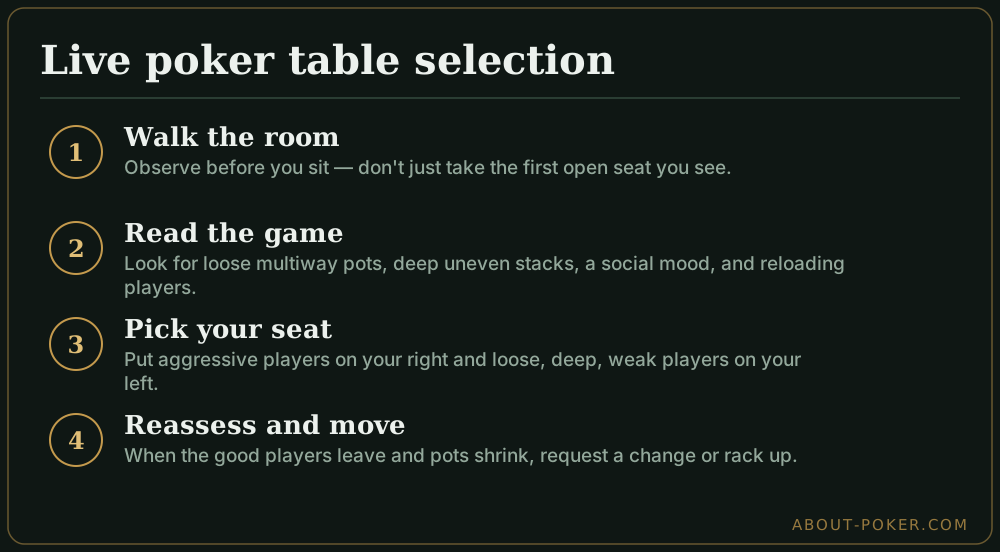
Walk the room before you sit. Look for loose, social games with big multiway pots, deep and uneven stacks, and reloading players. Choose the table with the most obvious losing players over the quiet, tight one. Once seated, position the strong and aggressive players on your right and the weak, deep players on your left, and request a seat change if needed.
Keep reassessing. When the good players leave or the game tightens up, be willing to change tables or leave entirely. Table selection is not a one-time choice at the door — it is a habit you run every orbit, and it may be the most profitable habit in your whole game.
Frequently asked
What makes a good poker table to sit at?
A good table has loose, recreational players, deep stacks relative to the blinds, and a relaxed, social mood with drinks and laughter. Signs of a soft game include limped multiway pots, players seeing lots of flops, and big chip disparities where one or two players have most of the money.
Can you change tables or seats in a casino poker room?
Yes. You can request a table change or a seat change from the floor or by putting your name on a change list. Seat changes let you position yourself to the left of the biggest stacks or the worst players, so you act after them. It is a normal, accepted part of live play.
Should I sit to the left or right of a strong player?
Sit to the left of strong or aggressive players so you act after them and can react to their bets with position. Try to have the loose, recreational players on your right for the same reason — you want the money and the aggression on your right, where you close the action.