Protecting Your Hand Live
Protecting your hand live — why you must guard your cards, how to use a card protector, and the situations where an unprotected hand gets killed.
On this page · 6 sections
Protecting your hand live means physically guarding your two hole cards so nothing — not the dealer’s sweep, not a neighbor’s stray reach, not your own carelessness — can foul them and kill your hand. It’s a habit that costs nothing and, a few times a year, saves you a pot you’d otherwise lose to a technicality. Online, the software protects your cards automatically. Live, that responsibility is entirely yours, and the rulebook is unforgiving: an unprotected hand that gets mucked is usually dead, even when it’s the winner.
Why protection matters
The dealer collects folded cards constantly, sweeping them toward the muck between actions. If your cards sit loose near the line and you’ve stepped mentally out of the hand, a busy dealer can catch them in that sweep. The moment your cards touch the muck, they’re dead — and in almost every card room, the ruling stands regardless of what you held. The house rule is blunt: it’s the player’s job to protect the hand.
Protection also guards against exposure. Cards left flat and loose can flip, slide, or be nudged by a neighbor. A chip or protector pinning them down keeps them square, face-down, and unmistakably yours. For the full framework of what makes a hand live or dead, see live poker rules.
How to protect your cards
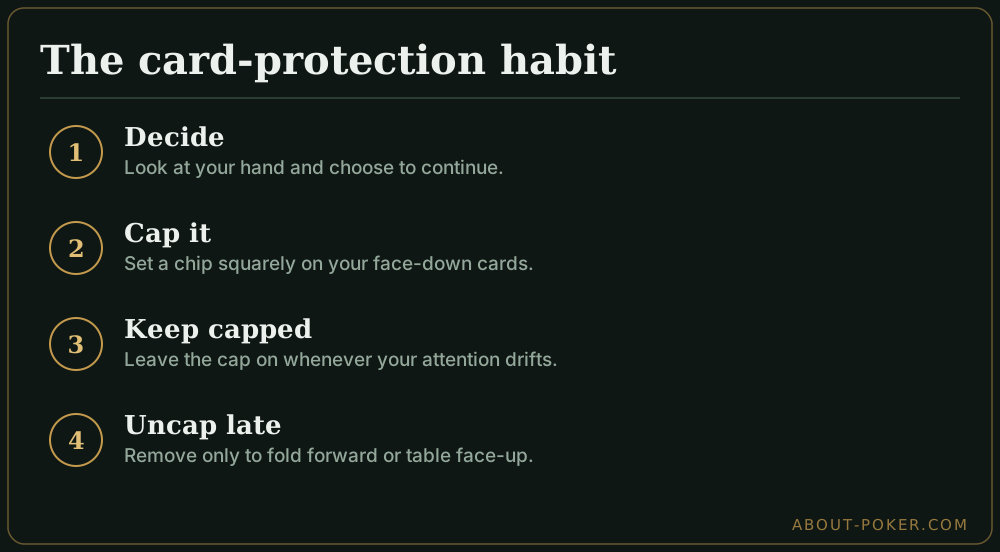
The method is simple: place a heavy object on top of your face-down cards whenever you intend to keep playing. A single casino chip is the universal default — pick one from your stack and set it squarely on the cards. Many players carry a dedicated card protector, a small metal or ceramic weight, which does the same job with a bit of personality.
The habit to build: the instant you look at your hand and decide to continue, cap it. Cap it before you look away to watch the action. Uncap it only when you’re folding (slide the cards forward, no chip) or at showdown. Make it automatic and you’ll never think about it again.
A worked example
You’re dealt Kh-Kd under the gun and raise. Three players call. The flop is Kc-8h-3s — you’ve flopped top set, a monster. You bet, get one caller, and then a big commotion breaks out at the next table. You turn to look, leaving your cards flat and uncapped near the betting line.
The dealer, gathering the folded hands from the players who mucked, sweeps a little wide and clips your two cards into the pile. Your set of kings is now indistinguishable in the muck. You protest, the floor is called, and the ruling is the standard one: an unprotected hand that touches the muck is dead. You lose a pot you had crushed — top set is roughly a 96% favorite against a lone flush draw on that board — because a single chip wasn’t sitting on your cards. That is the entire case for the habit.
When protection can’t save you
Capping your cards prevents accidental fouling, but it doesn’t override rule violations. If you act out of turn in a way the floor penalizes, expose your cards inappropriately, or your hand leaves the table, a chip won’t help. Protection is specifically insurance against the accidental muck and against exposure — the most common ways good hands die. For the etiquette side of handling cards cleanly at showdown and between streets, see the poker etiquette rules.
Also note the flip side: never protect a hand you don’t intend to play, and slide folds forward face-down without a cap so the dealer can collect them cleanly. Overcapping folds slows the game and confuses the dealer.
Common mistakes
The first is capping only your big hands. If you protect kings but leave your bluffs uncapped, observant opponents notice the pattern and read your strength before a card hits the flop. Cap every hand you play, uniformly.
The second is over-reaching and blocking the dealer or an opponent’s view of your bets — keep the protector small and centered on the cards, not sprawled across your betting space. The third is forgetting to remove it at showdown; you must table both cards face-up to be read, so lift the cap and turn them over promptly.
Quick checklist
The instant you decide to play a hand, put a chip on your cards. Keep them capped whenever your attention leaves the table. Cap every hand uniformly so you reveal no pattern. Slide folds forward uncapped. Remove the cap and table both cards face-up at showdown. Build the habit once and it protects you for the rest of your poker life.
Frequently asked
What does it mean to protect your hand in poker?
Protecting your hand means keeping your two hole cards on the table and covered — usually with a chip or card protector — so they can't be accidentally mucked by the dealer, mixed with folded cards, or grabbed by a neighboring player. An unprotected hand that gets fouled is dead, even if it was winning.
Do you need a card protector in poker?
A card protector isn't required, but it's strongly recommended. Any heavy object works — a casino chip is the most common. It marks your cards as live and prevents the dealer from sweeping them into the muck when collecting folded hands.
Can the dealer take my cards if I don't protect them?
Yes. If the dealer mistakenly sweeps unprotected cards into the muck while gathering folds, most house rules declare that hand dead with no recourse — the responsibility is on the player to protect their cards. A chip on top almost always prevents this.
When is a hand considered dead in live poker?
A hand is dead if the cards touch the muck, leave the table, are folded, or become impossible to identify as that player's cards. Acting out of turn or other rule violations can also kill a hand at the floor's ruling. Protection guards against the accidental cases.