Reading Physical Poker Tells
Learn to read physical poker tells the reliable way — baselines, the strong-means-weak principle, and the body-language cues that actually predict hand strength.
On this page · 7 sections
Physical tells are the reason live poker still rewards observation in a way online never can. But the popular image — a nervous twitch that instantly reveals a bluff — is mostly myth. Real tell-reading is about baselines, patterns, and a handful of reliable principles. This guide covers the cues that genuinely predict hand strength and how to use them without over-reading.
Start with a baseline
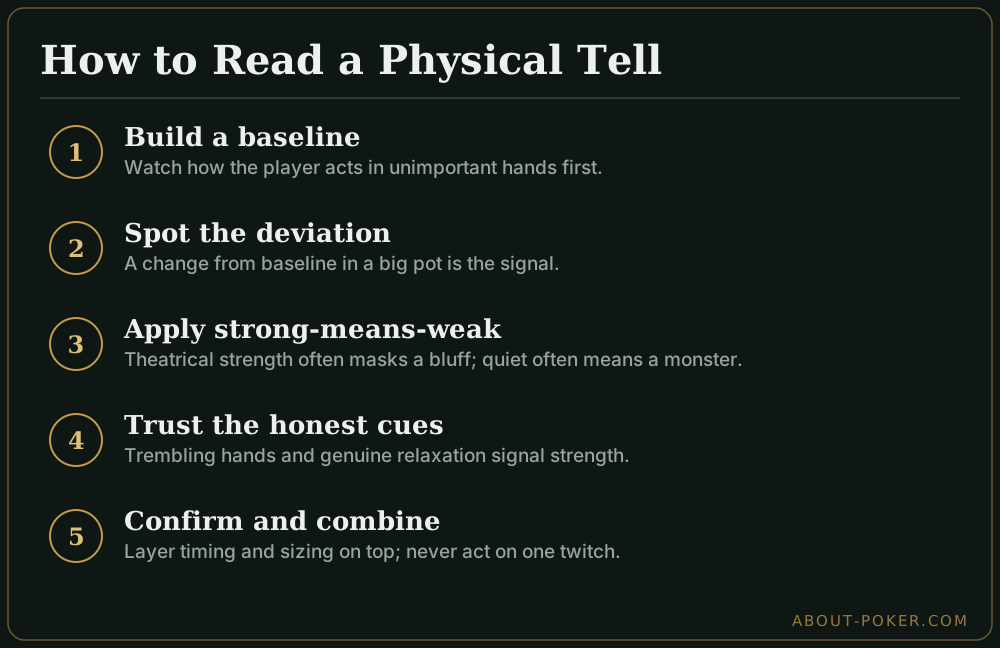
A tell means nothing in isolation. What matters is how a player deviates from their own normal behavior. Before you can read anyone, watch them in unimportant hands: How do they sit? How fast do they breathe? Do they always fidget with chips, or only sometimes? Once you have that baseline, a change — sudden stillness, a spike in breathing, a shift in posture — becomes meaningful.
This is why reading regulars is easier than reading strangers, and why the first orbit at a new table is for gathering baselines, not making hero calls. For the broader framework, see our overview of physical poker tells.
Strong means weak, weak means strong
The most durable principle in tell-reading, popularized by Mike Caro, is that players often act the opposite of their true holding. A person putting on a display of strength — staring you down, slamming chips, sighing loudly before betting big — is frequently bluffing and hoping the theater discourages a call. Conversely, a player who acts disinterested, looks away, or bets meekly is often holding a monster and trying not to scare you off.
It is not a law, but it is a strong tendency, because most players’ acting instinct runs contrary to their hand. Confirm it against the baseline before you commit chips.
The tells that actually hold up
A few physical cues are backed by consistent observation:
- Trembling hands = strength, usually. Shaking hands come from an adrenaline release, which floods a player when they have a big hand, not when they are calmly bluffing. A sudden hand tremor as someone bets big is far more often a monster than a bluff.
- Genuine relaxation = strength. After betting, a player with a strong hand tends to relax — looser shoulders, easier breathing, comfortable posture. Bluffers hold still and tense, trying not to give anything away.
- Frozen stillness during a bluff. When someone bets and then goes rigid, avoiding movement and holding their breath, they are often afraid any motion will betray them.
- Breathing changes. Shallow, rapid, or held breath under pressure is one of the hardest reactions to control and one of the most honest.
Worked example: the shaking-hand river bet
You are in a $2/$5 game against a tight regular whose baseline is calm and still. On the river he shoves for $400 into a $250 pot, and as he cuts out the chips his hand is visibly trembling. Your instinct screams “he’s nervous, he’s bluffing” — but the reliable read is the opposite. Trembling here is almost certainly an adrenaline spike from a huge hand: he flopped a set, rivered a flush, or holds the nuts. Against this baseline, the tremble is a fold signal, not a call signal. You lay down your top pair and, later, learn he had a rivered straight. The amateur reads the shake as fear; the experienced player reads it as excitement.
Timing and betting patterns count too
Physical tells rarely stand alone — combine them with timing and sizing. A snap-bet often means a planned, confident action; a long pause before a big bet can be genuine deliberation or manufactured drama. Bet sizing that suddenly changes from a player’s norm is itself a tell. These overlap with what we cover in how to read poker tells; use physical and behavioral cues together, never one alone.
Guard against false and reverse tells
Skilled opponents know all of the above and will fake it — a deliberate hand tremble, a staged sigh, a false glance at their chips. This is where baselines save you: a real tell is involuntary and consistent, while an act is performed for your benefit, usually a beat too cleanly. Treat any tell that seems conveniently obvious with suspicion, and read more in false tells and reverse tells.
Tell-reading checklist
Before you act on a read:
- Establish the player’s baseline first — never read a stranger cold.
- Watch for deviations, not absolute behaviors.
- Apply “strong means weak” but confirm against baseline.
- Trust trembling hands and genuine relaxation as strength.
- Combine physical cues with timing and sizing.
- Distrust any tell that looks too clean — it may be an act.
Physical tells will not win you a hand on their own, but layered onto solid strategy they turn close decisions your way. Read patterns, not single twitches, and let the baseline anchor every read.
Frequently asked
What is the most reliable physical poker tell?
The most reliable tells come from involuntary reactions once a player is done acting — genuine relaxation after betting a strong hand, or tension and stillness when bluffing. Trembling hands, in particular, usually signal a strong hand and a rush of adrenaline, not nervousness about bluffing.
Does 'strong means weak' really work?
Often, yes. Players putting on a show of strength — staring you down, betting aggressively with a flourish, or acting confident — are frequently weak and hoping to discourage a call. Genuine strength tends to look relaxed and quiet. But always confirm against the player's baseline.
How do I establish a baseline for tells?
Watch how a player behaves when they have nothing at stake — their resting posture, breathing, chip handling, and speech in unimportant hands. Deviations from that baseline during a big pot are the signal. A tell only means something relative to how that specific person normally acts.