Table Talk and Speech Play
Table talk and speech play explained — what you can legally say during a live poker hand, how speech play extracts value, and how to defend against it.
On this page · 6 sections
Table talk and speech play are the verbal layer of live poker: what you say, how you say it, and what you’re trying to make an opponent do by saying it. Unlike online play, a live table lets you interrogate opponents, project false confidence, and mine reactions in real time. Used well, speech play is a genuine edge. Used carelessly, it hands your opponents a stream of information about your hand. This guide covers the legal boundaries, the offensive tactics, and the defensive discipline that separates winning talkers from leaky ones.
What you’re allowed to say
The core rule is simple: you can say almost anything about your own hand, including outright lies, but you cannot discuss the contents of a hand while two players are heads-up on a betting street, and you cannot influence action with actual card information. Announcing “I have the nuts” as a bluff is fine. Flashing one card to a friend and asking “should I call?” is not.
Speech becomes binding only when it’s a declaration of action made in turn. Say “raise” in turn and you’re committed. Say “I might raise” and you’ve committed to nothing. The line between chatter and declaration matters, and floor staff will hold you to any clear statement of a bet or fold. For the mechanics of binding verbal action, see live poker rules.
Multiway pots tighten the rules further. Once three or more players are involved, most rooms enforce silence about hand strength to protect players still to act. A comment that helps one opponent decide is collusion, whether you meant it that way or not.
How speech play extracts value
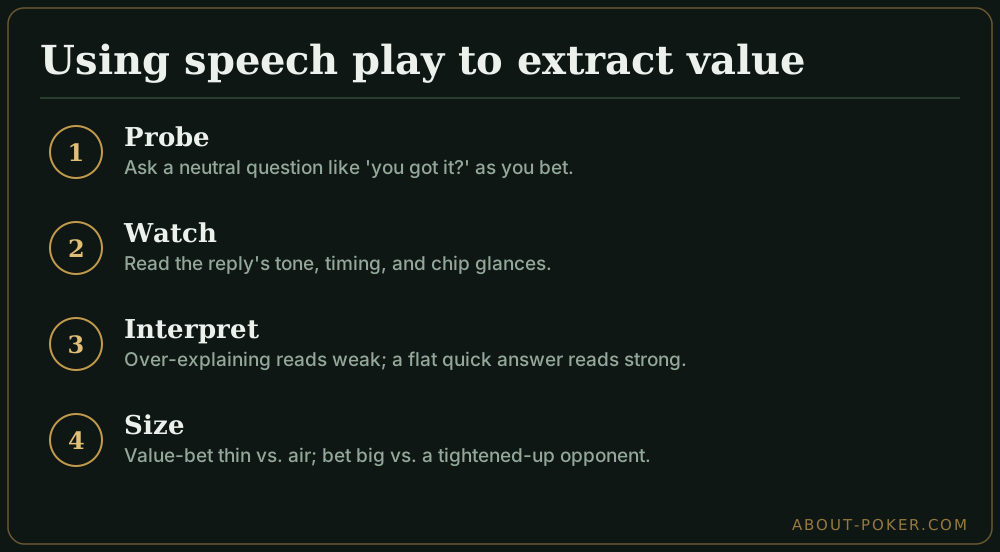
Offensive speech play has one goal: change what an opponent does, or reveal what they hold. The classic move is the innocent question — “how much do you have back there?” or “you got it?” — aimed at reading the reply. A player who snaps back “yeah I’ve got it” with steady eyes is often genuinely strong; a player who over-explains is frequently weak. This overlaps heavily with verbal tells and table talk, where the involuntary signals live.
The second tool is false confidence. Announcing your hand truthfully when strong, in a bored tone, can induce a hero call because opponents assume anyone with the nuts would stay quiet. Reverse that against observant players and you’ve built a two-level game.
A worked example
You raise with As-Ah, get called by one recreational player, and the flop comes Kd-7c-2s. You bet, he calls. The turn is a blank. Before betting, you sigh and say, “I guess I’ll fire again, you probably have the king.” You bet two-thirds pot.
The speech does two things. It plants the idea that you’re bluffing at a scary board, encouraging a light call from a weaker king or a pair. And it lets you watch his reaction to the word “king.” If he tightens up or glances at his chips defensively, he likely has exactly that hand and you have him crushed — value bet the river confidently. If he relaxes and calls quickly, he may be floating with air, and you can bet a thinner value size on the river. You’ve extracted information at no cost to your holding.
Common mistakes
The biggest leak is talking only when you’re comfortable. Recreational players go chatty with strong hands and silent when bluffing — a pattern any regular reads in one session. Your speech frequency must be independent of your hand strength.
The second mistake is answering questions truthfully under pressure. When an opponent asks “do you have it?”, many players’ honest hesitation leaks the answer. Decide in advance to either stay silent or give the same scripted non-answer every time.
The third is over-talking a bluff. Volume and detail spike when nervous players are lying. If your bluffs come with a speech and your value bets come in silence, you’re inverted from the pros and easy to exploit. Study common poker tells alongside this to see how physical and verbal signals combine.
Defending against speech play
When an opponent talks to you, treat it as a probe, not conversation. The default defense is silence — you owe no one an answer, and a stone-faced non-response gives nothing away while denying them the reaction they’re fishing for.
If you prefer to engage, script one neutral reply and use it every time regardless of your hand: a flat “we’ll see” works. Never let the timing, tone, or content of your reply vary with your strength. And never make a decision faster or slower because someone rattled you verbally — the entire point of aggressive speech play is to knock you off your natural rhythm.
Quick checklist
Before you talk during a hand, run through this: Is the pot heads-up or multiway? (Multiway means stay quiet about strength.) Am I about to make a binding declaration? (Say “raise” only if I mean it.) Does my speech pattern match what I do with the opposite hand type? If the answer to that last one is no, you’re building an exploit against yourself. When in doubt, say nothing — silence never costs you a chip.
Frequently asked
Is table talk allowed during a poker hand?
Talking is allowed, but it's restricted when a hand is heads-up on a betting street. In most cardrooms you may not discuss the contents of your hand or coach anyone while two players are still in the pot. Chatting is fine multiway before the action reaches you, and always fine between hands.
What is speech play in poker?
Speech play is deliberately talking to an opponent during a hand to draw out information or induce a specific action — a call, a fold, or a tell. Skilled live players use questions, false confidence, and misdirection to read reactions and shape decisions.
Can you lie about your hand at the poker table?
Yes. Verbally misrepresenting your holding is legal and part of the game; poker is a game of deception. What you cannot do is expose your actual cards to influence action, or bind yourself with an out-of-turn verbal declaration of a bet or raise you don't intend to make.
How do I stop giving away information when talking?
The safest default is silence during a hand you're contesting. If you do talk, keep your speech pattern, volume, and timing identical whether you're strong or weak. Inconsistency between your bluffs and value hands is what observant opponents exploit.