Your First Casino Poker Session
Your first casino poker session, step by step — buying in, table procedures, blinds, betting, and etiquette so you can sit down confidently and play.
On this page · 7 sections
Your first casino poker session is far less intimidating once you know the sequence: find the room, get on the list, buy in, take your seat, and play. The game itself is the same Texas Hold’em you may have played online or at home — what’s new is the physical procedure and the pace. This guide walks you through a real session start to finish so you can sit down, act in turn, and hold your own without giving away that it’s your first time.
Before you go
Pick a low-stakes game. Almost every room spreads $1/$2 No-Limit Hold’em, the standard entry point. Decide your budget before you leave: bring at least 40 big blinds ($80 at $1/$2) but ideally a full 100–200 big blind bankroll so a normal downswing doesn’t end your night. If you’re brand new to live play entirely, read the first time live poker guide first for the wider picture.
Dress comfortably and plan to be seated for a few hours. Bring cash — most rooms take cash at the table for your buy-in, and chips are exchanged back for cash at the cashier when you leave.
Getting a seat and buying in
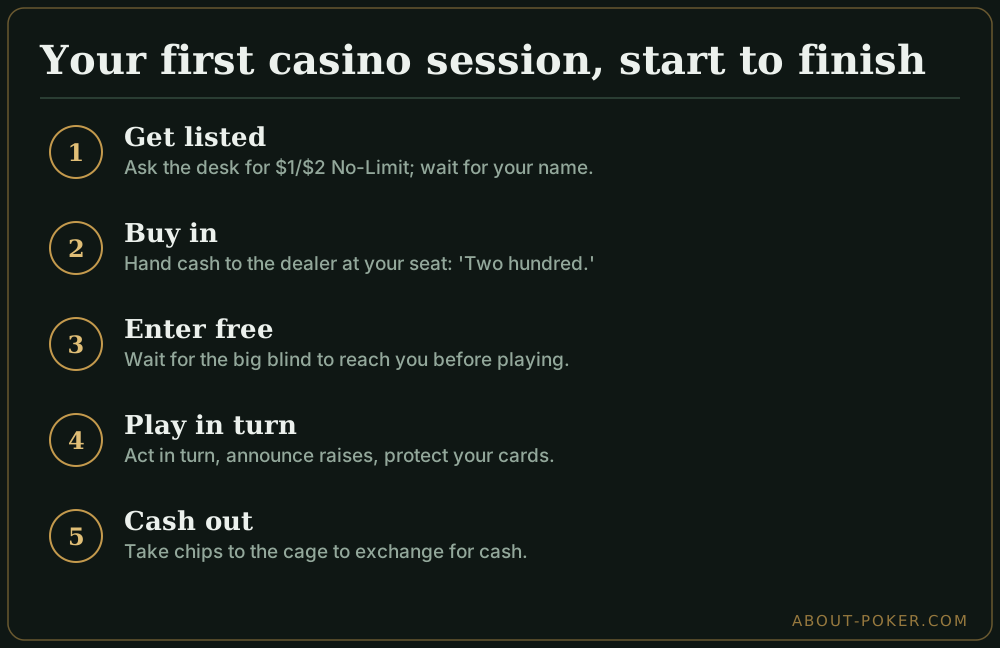
Walk to the poker room desk and say the game you want: “I’d like $1/$2 No-Limit, please.” They’ll either seat you right away or put your initials on a waitlist board and call you when a seat opens. When called, the floor tells you your table and seat number.
Sit down, and when the current hand ends, hand your cash to the dealer and say your buy-in amount: “Two hundred.” The dealer counts it, pushes you chips, and the money goes into a lockbox. You’re now playing table stakes — only the chips in front of you are live in any hand.
Understanding blinds and the button
Every hand, two players post forced bets: the small blind and the big blind, sitting to the left of the dealer button. The button is a round disc that marks the nominal dealer and moves one seat clockwise each hand. Position relative to the button is the single biggest strategic factor in Hold’em — acting last is a large edge.
When you first sit, you can wait for the big blind to reach you before playing, which costs nothing, or post a big blind immediately to jump in. Waiting is the beginner-friendly choice: you watch a few hands and learn the table’s rhythm for free.
A worked example: your first hand
You’re on the button with Ah-Kh, a premium hand. Two players limp in (just call the $2 big blind). The action reaches you. With a strong hand and position, you raise. A standard opening size is the big blind plus one per limper, so with two limpers you make it around $12–$15. You announce “Raise to fifteen” clearly and push out $15 in a single motion — no going back to your stack for more chips, which would be an illegal string bet.
The big blind calls; the limpers fold. Flop comes Ah-9c-4d, giving you top pair top kicker. It checks to you. You bet about two-thirds of the roughly $32 pot, so $20, again in one clean motion. Betting for value with the best hand and position is exactly the fundamental you want to lean on early. If the opponent folds, you scoop; if he calls, you reassess on the turn. Simple, position-driven value betting wins the most for beginners.
Table procedures that trip up beginners
A few live-only rules cause most first-timer mistakes. Always act in turn — folding or betting before it’s your turn gives players behind you free information and can be penalized. Announce your action verbally when raising to avoid ambiguity. Bring all your chips in one push to avoid string-bet calls. Protect your cards by setting a chip on top so they aren’t accidentally mucked. And keep your highest-denomination chips visible so opponents can see your stack, which is required.
For the full social ruleset — tipping the dealer, handling the pot, and courtesy — read the poker etiquette rules.
Etiquette and cashing out
Tip the dealer a dollar or two when you win a pot; it’s customary and expected. Don’t slow-roll (revealing a winning hand slowly after an opponent has committed), don’t discuss hands still in play, and keep your phone off the table while in a hand.
When you’re done, stack your chips, and either color up at the table or take them to the cashier’s cage to exchange for cash. There’s no obligation to announce you’re leaving, though it’s polite to finish out your current blind. That’s a complete session — and by the second one, none of it will feel unfamiliar.
Quick checklist
Bring a full buy-in plus rebuys in cash. Ask the desk for the lowest-stakes game. Wait for the big blind to enter for free. Act only in turn, announce raises, and move chips in one motion. Protect your cards, tip on wins, and cash out at the cage. Do those, and you’ll look like a regular on night one.
Frequently asked
How much money should I bring for my first casino poker session?
Bring at least 40 big blinds to buy in, and ideally 100 to 200 big blinds total so you can rebuy if needed. For a $1/$2 game that means a $200 buy-in with $300 to $400 in your pocket. Only bring money you're prepared to lose.
How do I get a seat at a casino poker table?
Go to the poker room desk and ask for the game you want, for example $1/$2 No-Limit Hold'em. They'll add you to a waitlist or seat you immediately. When your name is called, the floor points you to a table and seat number.
Do I have to post a blind when I sit down?
You can wait for the big blind to reach you and start playing for free, or post a blind immediately to play right away. Most beginners should wait for the big blind — it costs nothing extra and lets you observe a few hands first.
How do table stakes work in a casino?
You play only the chips you have on the table at the start of each hand. You can't add money mid-hand, and no one can bet you off a pot for more than you have in front of you. If you run low, top up between hands.